What Kind of Flooring Is Best for Your Dog?
The best flooring for your dog should provide good traction, durability, easy cleaning, and reasonable comfort. For many dog-owning households, textured luxury vinyl is a practical all-around choice because it is moisture-resistant and relatively easy to clean. However, the best option depends on your dog’s age, mobility, activity level, and your home’s needs.
What Makes a Floor Dog-Friendly?
A dog-friendly floor should allow your dog to walk and turn without frequently slipping. It should also tolerate claws, muddy paws, spilled water, and occasional accidents. For households with puppies or dogs prone to accidents, moisture resistance and easy cleaning can be especially useful.
Why Traction Matters for Dogs
Smooth flooring can make it harder for some dogs to maintain their footing, particularly when turning, running, or getting up. This becomes more important for senior dogs and dogs with mobility problems. Veterinary guidance recommends non-skid surfaces to improve traction for dogs affected by conditions such as osteoarthritis.
Best Overall Flooring for Many Dog Owners
There is no universally perfect flooring material, but textured, slip-resistant luxury vinyl is a strong option for many homes. It combines practical cleaning and moisture resistance with good durability, provided the particular product has an appropriate surface texture and is properly installed.
If your priority is maximum cushioning or traction rather than easy cleaning, carpet, cork, or suitable rubber flooring may be better choices for specific areas of the home.
Summary
The best flooring for a dog is one that balances traction, comfort, durability, and maintenance. For many households, textured luxury vinyl offers a useful combination of these qualities, while other materials may be better suited to puppies, senior dogs, or homes with specific needs.
Keypoints
- Choose flooring with reliable traction rather than a very smooth surface.
- Moisture resistance makes cleanup easier.
- Senior and mobility-impaired dogs benefit from non-slip surfaces.
- Textured luxury vinyl is a practical all-around option for many homes.
- The ideal flooring depends on your dog’s individual needs.
Best Types of Flooring for Dogs
Different flooring materials offer different combinations of traction, comfort, water resistance, durability, and cleaning convenience. The right choice depends on which features matter most for your dog and your household.
Luxury Vinyl Flooring
Textured luxury vinyl is one of the most practical choices for many dog owners. It is generally easy to clean, resistant to moisture, and available in surfaces that provide better traction than very smooth flooring.
Look for a product with a textured or slip-resistant surface rather than choosing vinyl based only on appearance. Installation quality also matters because loose or uneven flooring can create problems.
Carpet
Carpet provides excellent traction and cushioning, which can make it comfortable for puppies, active dogs, and dogs that struggle with slippery surfaces. It can also reduce the impact of movement on hard floors.
The main disadvantage is maintenance. Carpet can absorb urine, vomit, mud, and other messes, making thorough cleaning more difficult than with moisture-resistant flooring. Carpet tiles or washable rugs can be a practical alternative in areas where accidents are common.
Cork Flooring
Cork is softer underfoot than many hard flooring materials and can provide useful traction. Its cushioning can make it appealing for homes where comfort is a priority.
However, cork requires appropriate sealing and maintenance because prolonged exposure to moisture can damage some cork flooring products. Always check the manufacturer’s care and water-resistance specifications before using it in accident-prone areas.
Rubber Flooring
Rubber flooring provides strong traction and cushioning, making it particularly useful in areas where dogs exercise, play, or need extra grip. It can work well in dedicated pet areas, mudrooms, utility rooms, or indoor exercise spaces.
Its appearance and cost may make it less appealing for whole-home installation, so it is often more practical as a targeted flooring solution.
Laminate Flooring
Laminate can be durable and relatively easy to clean, but its suitability for dogs depends heavily on the surface finish. Some smooth laminate floors can become slippery, especially for older dogs.
If choosing laminate, prioritize a product with good traction and follow the manufacturer’s recommendations for moisture and pet use.
Hardwood Flooring
Hardwood can work in homes with dogs, but scratches, moisture, and slipping are important considerations. Dog nails can mark softer wood species, while water or urine left on the surface can damage some finishes.
If you already have hardwood, strategically placed non-slip rugs or runners can provide additional traction in areas where your dog frequently walks or turns. The AKC recommends rugs and runners as practical ways to help dogs navigate slippery hardwood and other hard surfaces.
Tile Flooring
Tile is highly durable and easy to clean, making it useful for homes where spills or accidents are a concern. However, smooth tile can provide poor traction, and hard tile offers little cushioning.
If choosing tile for a dog-friendly space, consider a surface with suitable texture and traction rather than highly polished tile.
Summary
There is no single flooring material that wins in every category. Textured luxury vinyl offers a strong balance for many homes, while carpet and cork can provide more cushioning, rubber can offer excellent traction, and tile can make cleanup easier. Surface texture and actual traction are just as important as the material itself.
Keypoints
- Luxury vinyl is a practical all-around option for many dog homes.
- Carpet offers strong traction and cushioning but is harder to clean.
- Cork provides softness but requires appropriate moisture protection.
- Rubber offers excellent traction for selected areas.
- Hardwood and laminate need careful consideration of surface traction.
- Tile is easy to clean but can be hard and slippery when highly polished.
More about Dog Visit : Dogs Info
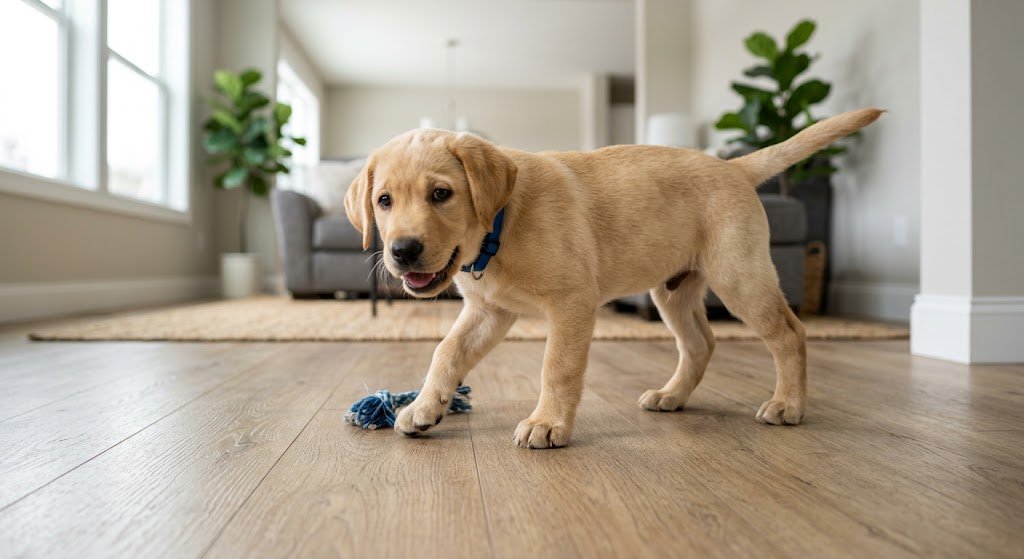
Which Flooring Is Best for Puppies?
Puppies need flooring that provides good traction, is reasonably comfortable, and can withstand accidents and active play. A floor that is easy to clean is especially valuable during house-training, while excessive slipperiness can make movement more difficult.
Best Features for Puppies
Look for flooring with:
- Good surface traction
- Easy cleanup
- Resistance to moisture
- Reasonable cushioning
- Good durability
- A surface that does not become excessively slippery when wet
Textured luxury vinyl, suitable cork, and carpet can all work well depending on the room. For play areas, washable rugs or mats can add traction and cushioning without requiring a complete flooring change.
Flooring for House-Training Accidents
House-training can involve urine and other messes, so moisture-resistant flooring is generally easier to manage than absorbent materials. Luxury vinyl and properly sealed hard flooring can be convenient because accidents can usually be cleaned from the surface more easily.
Carpet offers excellent traction but can absorb accidents and odors, making thorough cleaning more difficult. If carpet is already installed, washable rugs or removable carpet tiles can help protect frequently used areas.
Why Traction Matters for Growing Puppies
Puppies are still developing coordination and can move quickly while playing. A slippery surface can make running, stopping, and turning more difficult.
For that reason, avoid relying solely on a highly polished surface. Adding non-slip runners or mats in high-activity areas can improve traction without replacing the entire floor.
Summary
For puppies, prioritize traction, easy cleanup, moisture resistance, and durability. Textured luxury vinyl can be a practical choice for many households, while carpet, cork, and washable mats can provide additional cushioning and grip in suitable areas.
Keypoints
- Choose flooring with good traction for active puppies.
- Easy-to-clean surfaces are useful during house-training.
- Avoid highly slippery or polished surfaces.
- Washable rugs and mats can improve traction and protect existing floors.
- Consider both accident cleanup and long-term durability.
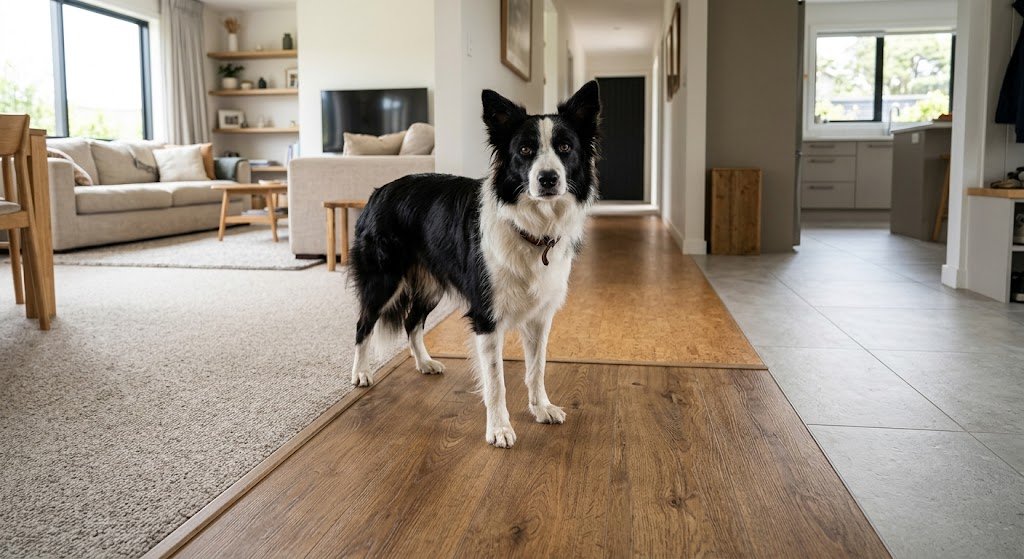
Which Flooring Is Best for Senior Dogs?
Senior dogs may benefit from flooring that provides reliable traction and reduces the need to walk across slippery surfaces. Age-related mobility changes can make getting up, turning, or walking on smooth floors more difficult, so flooring should be chosen with stability and comfort in mind. Veterinary guidance recommends non-skid surfaces for dogs with osteoarthritis and mobility problems.
Why Slippery Floors Can Be a Problem
Smooth floors can be challenging for dogs that have reduced strength, balance, or mobility. Repeated slipping may also make a dog hesitant to move around the home.
Pay particular attention to areas where your dog gets up from a resting position, turns around furniture, climbs stairs, or approaches food and water bowls.
Best Flooring for Dogs With Arthritis or Mobility Problems
The priority should be traction rather than simply choosing a particular flooring material. Textured vinyl, carpet, cork, or suitable rubber surfaces can provide better grip than highly polished hardwood or tile.
If replacing the floor is not practical, non-slip runners and rugs can create safer walking paths. VCA specifically recommends non-skid surfaces to help dogs with osteoarthritis move around more safely.
Create Safe Walking Paths
You do not necessarily need to cover an entire room. Focus on the areas your dog uses most, such as the route between the bed, food and water bowls, doors, and favorite resting areas.
Secure rugs and runners so they do not slide or bunch up under your dog’s feet. This can improve traction while keeping the existing flooring intact.
Summary
For senior dogs, flooring with reliable traction is more important than choosing a specific material. Non-slip rugs, runners, textured surfaces, and appropriately cushioned flooring can make frequently used areas easier to navigate.
Keypoints
- Prioritize traction for senior dogs.
- Avoid highly slippery or polished surfaces where possible.
- Non-slip runners can improve existing hard floors.
- Secure rugs firmly so they do not move under your dog’s feet.
- Dogs with significant mobility problems should receive appropriate veterinary guidance.
Which Flooring Is Easiest to Clean With Dogs?
Dogs can bring mud, water, hair, and occasional accidents into the home, so easy maintenance is an important part of choosing flooring. In general, smooth, moisture-resistant surfaces are easier to clean than absorbent materials, but traction should still be considered.
Best Options for Accidents and Mud
Luxury vinyl and appropriately finished tile are practical choices when easy cleanup is a priority. Liquid and dirt can generally be removed from their surfaces without the absorption concerns associated with carpet.
Properly sealed cork can also be considered, but homeowners should follow the manufacturer’s cleaning and moisture-care instructions.
Why Carpet Requires More Maintenance
Carpet can provide excellent traction and comfort, but it can absorb urine, water, mud, and other messes. Odors and stains may therefore be harder to remove completely.
If you prefer carpet, consider using washable rugs or removable runners in areas where your dog frequently eats, drinks, plays, or enters the house after outdoor activity.
Water Resistance vs. Comfort
There is often a trade-off between easy cleaning and softness. Hard, moisture-resistant flooring is convenient for accidents, while carpet and other softer surfaces can provide greater cushioning and traction.
A practical approach is to combine materials or use washable, non-slip mats in areas where your dog spends the most time.
Summary
For easy cleanup, moisture-resistant flooring such as suitable luxury vinyl and tile can be convenient choices. However, the easiest floor to clean is not automatically the best floor for every dog. Traction, comfort, and your dog’s mobility should be considered alongside maintenance.
Keypoints
- Moisture-resistant flooring is generally easier to clean after accidents.
- Luxury vinyl and suitable tile are practical for high-mess areas.
- Carpet provides comfort and traction but can absorb accidents.
- Washable rugs can add comfort without making the entire floor difficult to maintain.
- Consider both cleaning and traction before choosing flooring.
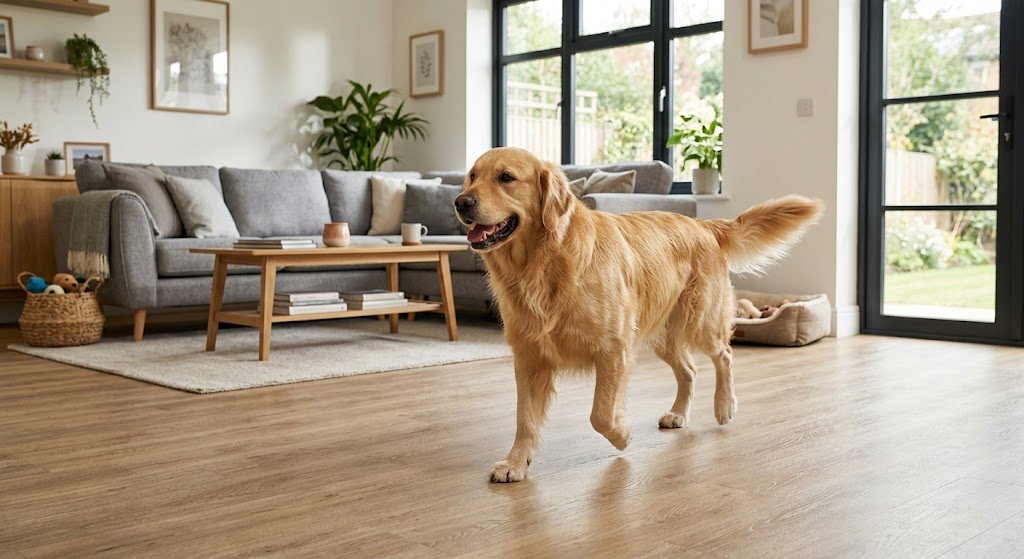
Which Flooring Is Most Resistant to Dog Scratches?
Dog nails can leave marks on some flooring materials, particularly when a dog runs, turns quickly, or repeatedly uses the same areas. However, scratch resistance should not be considered separately from traction because an extremely hard or smooth surface may be durable but less comfortable or secure for some dogs.
Dog Nails and Floor Damage
Hard surfaces such as tile generally resist scratches well, while some hardwood species and finishes can show marks more easily. Laminate and quality luxury vinyl can also provide good resistance to everyday wear, although performance varies between products.
Keeping your dog’s nails appropriately trimmed can reduce the amount of contact and pressure they place on the floor.
Durability vs. Traction
A highly scratch-resistant floor is not automatically the best dog-friendly floor. For example, polished surfaces may be durable and easy to clean but can provide less traction.
When comparing flooring, consider these factors together:
| Factor | Why It Matters |
|---|---|
| Traction | Helps your dog maintain footing |
| Scratch resistance | Reduces visible nail marks |
| Water resistance | Helps with spills and accidents |
| Comfort | Makes resting and walking more comfortable |
| Cleanability | Makes routine messes easier to manage |
Best Choices for Active Dogs
For active dogs, prioritize a flooring product that combines durability with adequate surface traction. Textured luxury vinyl, suitable laminate, and some tile products can work well when their surfaces provide sufficient grip.
If your existing floor is durable but slippery, adding secure non-slip runners in high-traffic areas can be a better solution than replacing the entire floor.
Summary
Scratch resistance is useful, but it should not be the only consideration when choosing flooring for a dog. The best option balances durability with traction, moisture resistance, comfort, and ease of cleaning.
Keypoints
- Dog nails can mark some flooring materials.
- Tile generally offers strong scratch resistance.
- Hardwood can be more vulnerable to visible scratches depending on the species and finish.
- Luxury vinyl and laminate can offer good everyday durability.
- Choose traction and comfort alongside scratch resistance.
How to Make Slippery Floors Safer for Dogs
If replacing your flooring is not practical, you can often make an existing hard floor more comfortable and secure for your dog. This is especially useful in homes with hardwood, laminate, tile, or other smooth surfaces.
Use Non-Slip Area Rugs and Runners
Place securely anchored rugs or runners along the routes your dog uses most often. Useful locations include hallways, around beds, near food and water bowls, and in areas where your dog turns frequently.
The AKC recommends rugs and runners as a practical way to give dogs better traction on slippery flooring.
Choose products with non-slip backing or secure them so they cannot slide or bunch up. A loose rug can create its own tripping hazard.
Keep Nails Properly Trimmed
Overgrown nails can make it harder for a dog to maintain comfortable footing on hard surfaces. Regular nail care can help reduce excessive contact between the nails and floor.
If you are unsure how short your dog’s nails should be or how to trim them safely, ask your veterinarian or a qualified professional for guidance.
Add Traction in High-Traffic Areas
You do not necessarily need to modify the entire floor. Concentrate traction improvements where they provide the most benefit.
Create a continuous, secure path between important areas such as:
- Sleeping areas
- Food and water bowls
- Doors
- Favorite resting areas
- Frequently used hallways
For senior dogs or dogs with mobility problems, reducing the amount of slippery flooring they must cross can make movement around the home easier. VCA recommends non-skid surfaces for dogs with osteoarthritis and mobility difficulties.
When to Talk to Your Veterinarian
Occasional difficulty on a slippery floor does not necessarily indicate a medical problem. However, if your dog suddenly begins slipping, struggles to stand, avoids stairs, shows pain, or has noticeable changes in walking or balance, veterinary evaluation is appropriate.
Flooring modifications can improve traction, but they should not be used as a substitute for addressing an underlying mobility or health problem.
Summary
You can improve a slippery floor without replacing it completely. Secure non-slip rugs, runners, appropriate nail care, and targeted traction improvements can make frequently used areas safer and more comfortable for many dogs.
Keypoints
- Use secure, non-slip rugs and runners on smooth floors.
- Focus traction improvements on your dog’s most-used paths.
- Keep your dog’s nails appropriately maintained.
- Avoid loose rugs that can slide or bunch up.
- Seek veterinary advice for sudden or significant mobility changes.
How to Choose the Best Flooring for Your Dog
The best flooring for your dog depends on more than appearance or durability. Consider your dog’s age, mobility, activity level, accident risk, and how much traction and comfort the floor provides.
Consider Your Dog’s Age and Mobility
Puppies, healthy adult dogs, and senior dogs can have very different flooring needs. Puppies may benefit from surfaces that provide good traction while also being easy to clean during house training.
For senior dogs or dogs with arthritis and mobility difficulties, prioritize stable, non-slip flooring with good traction. Smooth surfaces can make movement more difficult, particularly when a dog is turning, getting up, or walking across a large open area.
If your dog already struggles with mobility, improving traction throughout frequently used areas may be more useful than choosing flooring based only on its appearance or scratch resistance.
Consider Cleaning and Accident Risk
If your dog is still being house-trained, has frequent accidents, or regularly comes inside with muddy or wet paws, choose flooring that can tolerate moisture and be cleaned easily.
Textured luxury vinyl and tile can be practical choices for areas where spills and accidents are common. Carpet can provide excellent traction and comfort, but stains, moisture, and odors may require more intensive cleaning.
Also consider where the flooring will be installed. A highly washable surface may be more useful in an entryway, kitchen, or feeding area, while a softer option may be preferable in a quiet resting space.
Consider Scratches and Durability
Dog nails can gradually leave marks on some flooring surfaces, especially in homes with large or highly active dogs. Look for flooring with a durable wear layer or finish if scratch resistance is a major concern.
However, scratch resistance should not be the only deciding factor. A very durable floor can still be a poor choice if its surface is excessively smooth and gives your dog little traction.
The ideal balance is flooring that can withstand normal dog activity while still providing a secure walking surface.
Consider Comfort and Traction
Traction should be one of the most important factors when choosing flooring for a dog-friendly home. A floor that is comfortable and easy to maintain but consistently slippery may not be suitable for every dog.
Consider the surface texture, finish, and how your dog actually moves across it. If your dog frequently slips, struggles to stand, or avoids certain areas, adding non-slip rugs or runners can improve traction without requiring a complete flooring replacement.
For dogs with mobility problems, veterinary guidance from VCA recommends non-skid surfaces to help provide safer footing.
Summary
When choosing flooring for your dog, balance traction, comfort, cleaning requirements, durability, and moisture resistance rather than focusing on a single feature. Your dog’s age, mobility, activity level, and accident risk should guide the final choice.
Keypoints
- Choose flooring according to your dog’s age and mobility.
- Prioritize traction for senior dogs and dogs with mobility difficulties.
- Consider moisture resistance and cleaning needs.
- Balance scratch resistance with comfortable, secure footing.
- Use rugs or runners when existing flooring is too slippery.
Summary
The best flooring for a dog-friendly home should provide a practical balance of traction, comfort, durability, moisture resistance, and easy maintenance. There is no single flooring material that is ideal for every dog or household.
Textured luxury vinyl can be a strong all-around choice for many homes, while carpet, cork, or suitable rubber flooring may offer advantages when traction and cushioning are higher priorities. Hardwood, laminate, and tile can also work well when the specific surface provides adequate traction and meets the household’s cleaning and durability needs.
Keypoints
- Prioritize traction over appearance alone.
- Consider your dog’s age, mobility, and activity level.
- Choose moisture-resistant flooring when accidents are a concern.
- Balance scratch resistance with paw comfort and stability.
- Use rugs and runners to improve traction on existing hard floors.
Conclusion
The best flooring for your dog is not necessarily the hardest, most expensive, or most durable option. The right choice is the one that provides a good balance of traction, comfort, durability, moisture resistance, and easy cleaning for your dog’s specific needs.
For many households, textured luxury vinyl is a practical all-around option. Carpet, cork, and suitable rubber flooring can be especially useful when cushioning and traction are priorities. Hardwood, laminate, and tile can also work when their surface provides adequate grip and the flooring is maintained properly.
If replacing your floor is not practical, non-slip rugs, runners, and mats can make existing slippery surfaces safer. Most importantly, consider your dog’s age, mobility, activity level, and accident risk before making a final flooring decision.
FAQs
What kind of flooring is best for dogs?
Textured, slip-resistant luxury vinyl is a strong all-around option for many dog-owning households because it can provide durability, moisture resistance, and easy cleaning. However, carpet, cork, and rubber flooring may be better when traction and cushioning are the main priorities.
What is the safest flooring for dogs?
The safest flooring is generally one that provides good traction without being excessively slippery, while also offering appropriate durability and comfort. For senior dogs or dogs with mobility problems, non-skid surfaces are particularly important.
Is vinyl flooring good for dogs?
Yes, suitable luxury vinyl flooring can be a good choice for dogs. It is generally easy to clean and resistant to moisture, but a textured or slip-resistant surface is preferable to a very smooth finish because traction matters for dog safety.
Are hardwood floors bad for dogs?
Hardwood floors are not necessarily bad for dogs, but smooth or highly polished surfaces can be difficult for some dogs to walk on. Scratches from dog nails can also occur. Non-slip rugs and runners can improve traction on existing hardwood floors.
Is carpet better for dogs?
Carpet can be better for dogs when traction and cushioning are the main concerns. It provides a naturally grippy surface and can be comfortable under a dog’s paws, but it is generally more difficult to clean after urine accidents, muddy paws, or spills.
What flooring is best for dogs with arthritis?
Dogs with arthritis may benefit from flooring that provides secure traction and some cushioning. Carpet, cork, suitable rubber flooring, or hard flooring covered with securely anchored non-slip runners can help create more stable walking paths. Dogs with significant mobility difficulties should also receive appropriate veterinary guidance.
What flooring is easiest to clean with dogs?
Moisture-resistant surfaces such as suitable luxury vinyl and tile are generally easier to clean than carpet. They can be practical for homes where muddy paws, water spills, shedding, or accidents are common. However, the specific product’s surface, finish, and maintenance requirements should also be considered.
References
- American Kennel Club (AKC) — guidance on choosing dog-friendly flooring, including traction, durability, moisture resistance, and the use of rugs and runners on slippery surfaces.
- VCA Animal Hospitals — guidance on improving traction and using non-skid surfaces for dogs with osteoarthritis and mobility difficulties.
- DVM360 — veterinary guidance discussing slip resistance and the importance of flooring surface and finish for animals.