False Pregnancy in Dogs: Symptoms & What to Do is a common concern among dog owners because false pregnancy in dogs is a hormonal condition in which an unspayed female dog shows physical and behavioral signs of pregnancy despite not carrying puppies. Also known as phantom pregnancy, pseudopregnancy, or pseudocyesis, false pregnancy in dogs typically develops several weeks after a heat cycle due to normal hormonal changes rather than fertilization.
Most cases of false pregnancy in dogs resolve naturally within a few weeks. However, some dogs experience more severe symptoms, including milk production, enlarged mammary glands, nesting behavior, or excessive maternal instincts, which may require veterinary evaluation and treatment.
Definition of False Pregnancy in Dogs
False pregnancy in dogs is a non-pregnant reproductive condition that occurs after a female dog’s heat cycle. Hormonal fluctuations—particularly changes in progesterone and prolactin—trigger the body to behave as though pregnancy has occurred, even though no puppies are present.
Because the hormonal changes closely resemble those of a real pregnancy, dogs with false pregnancy in dogs may develop enlarged mammary glands, produce milk, gain mild abdominal fullness, or display strong maternal behaviors such as nesting and caring for toys.
Unlike a true pregnancy, false pregnancy in dogs does not involve developing fetuses, and the condition generally resolves as hormone levels return to normal.
How False Pregnancy Differs from a Normal Pregnancy
Although false pregnancy in dogs can closely mimic a real pregnancy, there is one critical difference: no embryos or puppies are developing inside the uterus.
During a normal pregnancy, fertilized eggs implant in the uterus and puppies continue to grow until birth. In contrast, false pregnancy in dogs results solely from hormonal changes following ovulation.
Some signs—including swollen nipples, milk production, nesting behavior, reduced appetite, and increased affection—can appear almost identical in both conditions. Because of these similarities, a veterinary examination, ultrasound, or X-ray may be necessary to confirm whether a dog is truly pregnant.
| Feature | False Pregnancy in Dogs | Real Pregnancy |
|---|---|---|
| Puppies present | No | Yes |
| Hormonal changes | Yes | Yes |
| Milk production | Possible | Common before birth |
| Nesting behavior | Common | Common |
| Mammary enlargement | Common | Common |
| Ultrasound detects puppies | No | Yes |
| X-ray shows fetuses | No | Yes |
How Common Is False Pregnancy in Dogs?
False pregnancy in dogs is relatively common in intact (unspayed) female dogs. Veterinary research indicates that many unspayed females experience some degree of pseudopregnancy during their reproductive years, although symptoms vary from barely noticeable to more pronounced.
The condition most often develops 6–12 weeks after the heat cycle, when progesterone levels naturally decline and prolactin levels increase. These normal hormonal changes can trigger the physical and behavioral signs associated with false pregnancy in dogs.
Dogs that have experienced one episode may develop false pregnancy in dogs again after future heat cycles, making recurrence fairly common in some individuals.
Summary
False pregnancy in dogs is a hormone-driven condition that causes an unspayed female dog to display pregnancy-like symptoms without actually being pregnant. It commonly occurs several weeks after the heat cycle and may include behavioral changes, mammary enlargement, milk production, and nesting behavior. While false pregnancy in dogs is usually self-limiting, persistent or severe symptoms should be evaluated by a veterinarian to rule out other reproductive conditions.
Key Points
- False pregnancy in dogs is also called phantom pregnancy, pseudopregnancy, or pseudocyesis.
- It occurs in unspayed female dogs due to normal hormonal changes after the heat cycle.
- False pregnancy in dogs can mimic a real pregnancy but does not involve developing puppies.
- Common signs include nesting behavior, enlarged mammary glands, milk production, and maternal behavior.
- The condition usually develops 6–12 weeks after the heat cycle.
- Most cases of false pregnancy in dogs resolve naturally, but veterinary evaluation is recommended if symptoms are severe, prolonged, or accompanied by illness.
For more expert dog health advice, check out our detailed guide on Dog UTI Symptoms and discover practical tips for responsible pet care.
What Causes False Pregnancy in Dogs?
False pregnancy in dogs is caused by normal hormonal changes that occur after a female dog’s heat cycle. Unlike many reproductive disorders, false pregnancy in dogs is not caused by mating, infection, or disease. Instead, it develops because the body temporarily behaves as if pregnancy has occurred, even when no fertilization has taken place.
After ovulation, every intact female dog experiences similar hormonal changes regardless of whether she becomes pregnant. In some dogs, these hormonal fluctuations trigger the physical and behavioral signs associated with false pregnancy in dogs.
Hormonal Changes After the Heat Cycle
The primary cause of false pregnancy in dogs is the natural hormonal cycle that follows estrus (heat). After the heat cycle ends, the ovaries produce high levels of progesterone, the hormone responsible for supporting pregnancy.
If the dog is not pregnant, progesterone levels gradually decline over several weeks. As progesterone decreases, the body responds by increasing prolactin, another hormone involved in milk production and maternal behavior.
In dogs prone to false pregnancy in dogs, this hormonal shift can convince the body that puppies are present, leading to pregnancy-like symptoms despite the absence of fetuses.
The Role of Progesterone and Prolactin
Two hormones play the biggest role in false pregnancy in dogs:
| Hormone | Function | Effect During False Pregnancy |
|---|---|---|
| Progesterone | Supports pregnancy after ovulation | Naturally decreases after the heat cycle if pregnancy does not occur. |
| Prolactin | Stimulates milk production and maternal instincts | Increases as progesterone falls, triggering signs of false pregnancy in dogs such as lactation, nesting, and maternal behavior. |
The balance between these hormones explains why false pregnancy in dogs can closely resemble a real pregnancy. Elevated prolactin may cause enlarged mammary glands, milk production, nesting, carrying toys like puppies, and protective behavior.
Which Dogs Are More Likely to Experience False Pregnancy?
Although false pregnancy in dogs can affect any intact female dog, some dogs are more likely to develop the condition.
Risk factors include:
- Intact (unspayed) female dogs.
- Dogs that recently completed a heat cycle.
- Dogs with a previous history of false pregnancy in dogs.
- Middle-aged females that experience repeated estrous cycles.
- Certain breeds may appear more susceptible, although false pregnancy in dogs can occur in any breed.
Dogs that have experienced false pregnancy in dogs once are more likely to experience it again after future heat cycles because the same hormonal pattern repeats with each reproductive cycle.
Can Spaying Trigger False Pregnancy?
In some cases, false pregnancy in dogs can occur shortly after spaying if the surgery is performed during the diestrus phase of the reproductive cycle, when progesterone levels are naturally high. Removing the ovaries causes progesterone to drop suddenly, which may lead to a temporary rise in prolactin and trigger signs of pseudopregnancy.
For this reason, veterinarians may recommend delaying elective spaying until hormonal levels have stabilized if a dog is actively showing signs of false pregnancy in dogs. The ideal timing depends on the individual dog’s health and reproductive status, so it should be discussed with a veterinarian.
Summary
False pregnancy in dogs is caused by natural hormonal changes following the heat cycle, particularly the decline in progesterone and the rise in prolactin. These hormones can cause an unspayed female dog’s body to behave as though she is pregnant, resulting in physical and behavioral changes even though no puppies are developing. While false pregnancy in dogs is a normal biological response, some dogs experience more noticeable symptoms than others.
Key Points
- False pregnancy in dogs is caused by hormonal changes, not by disease or failed pregnancy.
- The condition usually develops after the heat cycle in intact female dogs.
- Falling progesterone and rising prolactin are the primary hormonal triggers.
- Prolactin stimulates milk production and maternal behaviors associated with false pregnancy in dogs.
- Dogs that have had false pregnancy in dogs before are more likely to experience it again.
- Spaying during certain stages of the reproductive cycle may temporarily trigger signs of false pregnancy in dogs, so timing should be discussed with a veterinarian.

False Pregnancy in Dogs Symptoms
False pregnancy in dogs symptoms usually appear 6–12 weeks after a female dog’s heat cycle. The severity varies from dog to dog. Some dogs develop only mild behavioral changes, while others experience obvious physical symptoms such as enlarged mammary glands and milk production.
Because false pregnancy in dogs symptoms closely resemble those of a real pregnancy, recognizing the complete range of signs can help owners determine when home monitoring is appropriate and when veterinary evaluation is necessary.
Behavioral Symptoms
Behavioral changes are often the earliest and most noticeable false pregnancy in dogs symptoms. These behaviors result from hormonal changes that stimulate maternal instincts, even though the dog is not pregnant.
Common behavioral false pregnancy in dogs symptoms include:
- Nesting or preparing a sleeping area.
- Collecting blankets, towels, or soft bedding.
- Carrying toys or other objects as if they were puppies.
- Guarding toys, bedding, or specific areas.
- Increased affection toward family members.
- Seeking extra attention and reassurance.
- Restlessness or pacing.
- Mild anxiety or nervousness.
- Reduced interest in exercise.
- Changes in appetite, including eating less or occasionally eating more.
- Increased vocalization or whining.
- Mild irritability around other pets.
Some dogs become unusually protective of toys or bedding, while others simply appear quieter and more attached to their owners. These behavioral false pregnancy in dogs symptoms generally improve as hormone levels return to normal.
Physical Symptoms
Physical false pregnancy in dogs symptoms are caused by hormonal changes that prepare the body for puppies that are not actually present.
Common physical false pregnancy in dogs symptoms include:
- Enlarged mammary glands.
- Swollen nipples.
- Milk production (lactation).
- Clear or milky nipple discharge.
- Mild abdominal enlargement.
- Weight gain due to fluid retention or increased appetite.
- Licking the mammary glands frequently.
- Reduced energy levels.
- Occasional vomiting in some dogs.
Milk production is one of the most recognizable false pregnancy in dogs symptoms. However, allowing a dog to repeatedly lick her mammary glands can stimulate additional milk production and prolong the condition.
| Behavioral Symptoms | Physical Symptoms |
|---|---|
| Nesting behavior | Enlarged mammary glands |
| Carrying toys | Swollen nipples |
| Guarding objects | Milk production |
| Increased affection | Mild abdominal enlargement |
| Anxiety or restlessness | Weight gain |
| Reduced activity | Frequent licking of mammary glands |
| Appetite changes | Occasional vomiting |
When Symptoms Usually Begin
Most false pregnancy in dogs symptoms begin approximately 6–12 weeks after the heat cycle. This timing corresponds with the natural decline in progesterone and the increase in prolactin, which stimulate maternal behaviors and milk production.
Symptoms usually develop gradually rather than appearing all at once. Behavioral changes often appear first, followed by physical signs such as mammary enlargement and lactation.
If pregnancy status is uncertain, a veterinarian can confirm whether the symptoms are caused by false pregnancy in dogs or a true pregnancy through a physical examination and diagnostic imaging.
How Long False Pregnancy Symptoms Last
In most cases, false pregnancy in dogs symptoms last 2–3 weeks, although some dogs recover sooner while others experience symptoms for up to 4–6 weeks.
Mild cases often resolve without treatment as hormone levels normalize. More severe cases involving heavy milk production, significant behavioral changes, or complications such as mastitis may require veterinary treatment.
Owners should monitor the duration and severity of false pregnancy in dogs symptoms. Symptoms that worsen, persist beyond several weeks, or are accompanied by fever, pain, lethargy, foul-smelling discharge, or loss of appetite should be evaluated promptly by a veterinarian.
Summary
False pregnancy in dogs symptoms include both behavioral and physical changes caused by natural hormonal fluctuations after the heat cycle. Common signs include nesting behavior, carrying toys, enlarged mammary glands, swollen nipples, and milk production. Most false pregnancy in dogs symptoms appear within 6–12 weeks after heat and resolve naturally within a few weeks, although persistent or severe symptoms require veterinary attention.
Key Points
- False pregnancy in dogs symptoms usually appear 6–12 weeks after the heat cycle.
- Behavioral signs include nesting, carrying toys, guarding objects, increased affection, anxiety, and appetite changes.
- Physical false pregnancy in dogs symptoms include enlarged mammary glands, swollen nipples, milk production, and mild abdominal enlargement.
- Most cases resolve within 2–3 weeks, but some may last up to 6 weeks.
- Persistent, severe, or worsening false pregnancy in dogs symptoms should always be evaluated by a veterinarian.
- Recognizing false pregnancy in dogs symptoms early helps distinguish the condition from a true pregnancy and other reproductive disorders, allowing appropriate care and timely veterinary intervention.
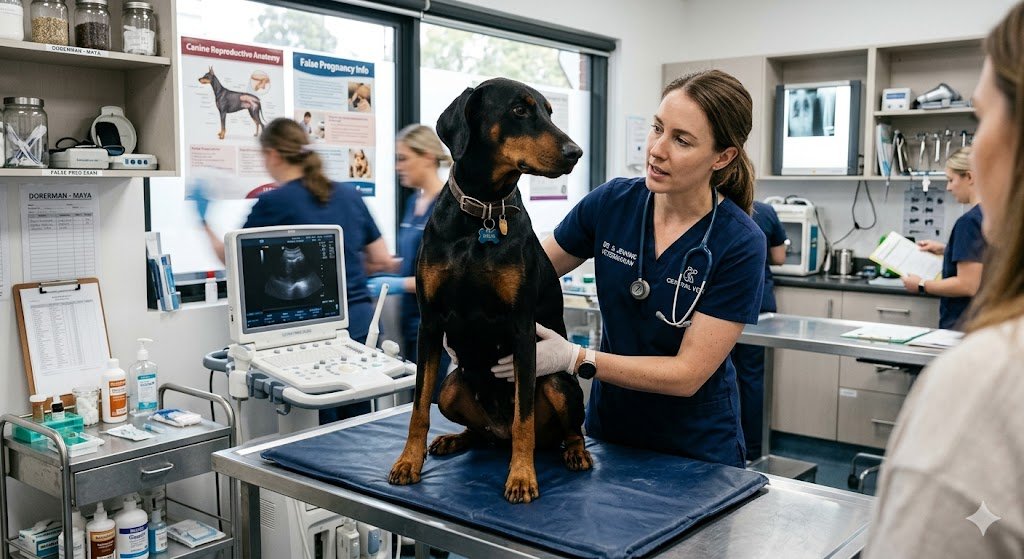
False Pregnancy in Dogs vs Real Pregnancy
False pregnancy in dogs and a real pregnancy can look remarkably similar during the early stages. Both conditions may cause enlarged mammary glands, nesting behavior, appetite changes, and milk production. However, false pregnancy in dogs does not involve developing puppies, while a real pregnancy results in fetal development and the birth of a litter.
Because the symptoms often overlap, it is not always possible to distinguish false pregnancy in dogs from an actual pregnancy based on appearance or behavior alone. A veterinary examination and diagnostic imaging are the most reliable ways to confirm whether a dog is pregnant.
Key Differences
The biggest difference between false pregnancy in dogs and a real pregnancy is the presence of developing fetuses.
In false pregnancy in dogs, hormonal changes following the heat cycle trigger pregnancy-like symptoms without fertilization. In a real pregnancy, fertilized eggs implant in the uterus and puppies continue developing throughout the gestation period.
While both conditions may produce similar outward signs, several important differences can help owners understand what is happening.
| Feature | False Pregnancy in Dogs | Real Pregnancy |
|---|---|---|
| Puppies present | No | Yes |
| Fertilization | No | Yes |
| Cause | Hormonal changes after heat | Successful breeding and fertilization |
| Milk production | Possible | Common during late pregnancy and after birth |
| Nesting behavior | Common | Common before whelping |
| Enlarged mammary glands | Common | Common |
| Abdominal enlargement | Usually mild | Progressive as puppies grow |
| Fetal movement | Not present | Often detectable later in pregnancy |
| Ultrasound | No fetuses detected | Developing puppies visible |
| X-ray | No fetal skeletons | Fetal skeletons visible after about 45 days |
| Outcome | Symptoms resolve naturally or with treatment | Puppies are delivered after gestation |
How Veterinarians Confirm Pregnancy
When a dog shows signs consistent with false pregnancy in dogs, veterinarians use several methods to determine whether she is actually pregnant.
The diagnostic approach may include:
| Diagnostic Method | Purpose | Most Useful Timing |
|---|---|---|
| Physical examination | Evaluate overall health and reproductive changes | Any time |
| Abdominal palpation | Detect developing fetuses in some dogs | Around 3–4 weeks after breeding |
| Ultrasound | Confirm pregnancy and detect fetal heartbeats | Approximately 25–30 days after breeding |
| X-ray (Radiographs) | Count puppies and assess fetal skeletons | After about 45 days of pregnancy |
| Medical history | Determine heat cycle timing and breeding history | Initial consultation |
Ultrasound is commonly used for early pregnancy confirmation, while X-rays become more accurate later in gestation when fetal skeletons have mineralized.
If no fetuses are identified despite pregnancy-like symptoms, the veterinarian may diagnose false pregnancy in dogs after ruling out other reproductive conditions.
Why an Accurate Diagnosis Matters
Correctly identifying false pregnancy in dogs is important because several medical conditions can resemble pregnancy.
Veterinary evaluation helps rule out conditions such as:
- Pyometra, a serious uterine infection requiring immediate treatment.
- Mastitis, an infection of the mammary glands.
- Hormonal disorders affecting the reproductive system.
- Abdominal masses or fluid accumulation.
- A normal pregnancy.
An accurate diagnosis ensures that dogs with false pregnancy in dogs receive appropriate care while preventing delays in treating more serious conditions.
Summary
Although false pregnancy in dogs closely resembles a real pregnancy, the two conditions differ in one essential way: false pregnancy in dogs does not involve developing puppies. Because many physical and behavioral signs overlap, veterinary examination, ultrasound, and X-rays are the most reliable methods for confirming pregnancy and excluding other reproductive disorders.
Key Points
- False pregnancy in dogs causes pregnancy-like symptoms without puppies.
- Both conditions can cause nesting behavior, mammary enlargement, and milk production.
- Ultrasound and X-rays are the most accurate methods for confirming a real pregnancy.
- False pregnancy in dogs should be distinguished from conditions such as pyometra and mastitis.
- Veterinary diagnosis helps ensure appropriate treatment and prevents potentially serious reproductive diseases from being overlooked.

How Veterinarians Diagnose False Pregnancy in Dogs
Diagnosing false pregnancy in dogs involves confirming that pregnancy-like symptoms are caused by hormonal changes rather than an actual pregnancy or another reproductive condition. Since false pregnancy in dogs can closely mimic a real pregnancy, veterinarians use a combination of medical history, physical examination, and diagnostic tests to reach an accurate diagnosis.
The primary goal is to rule out pregnancy and identify any underlying health issues that may require immediate treatment.
Physical Examination
A physical examination is the first step in diagnosing false pregnancy in dogs. The veterinarian will assess your dog’s overall health while looking for signs commonly associated with pseudopregnancy.
During the examination, the veterinarian may evaluate:
- Enlarged or swollen mammary glands.
- Milk production or nipple discharge.
- Mild abdominal enlargement.
- Body weight and body condition.
- Behavioral changes such as nesting or maternal instincts.
- Signs of pain, fever, or illness.
The veterinarian will also ask questions about:
- The date of your dog’s last heat cycle.
- Whether breeding occurred.
- Previous episodes of false pregnancy in dogs.
- Recent behavioral or physical changes.
- Current medications and medical history.
This information helps determine whether the symptoms are consistent with false pregnancy in dogs or another reproductive disorder.
Ultrasound and X-rays
Diagnostic imaging is one of the most reliable ways to distinguish false pregnancy in dogs from a real pregnancy.
Ultrasound can detect developing puppies early in pregnancy, making it an excellent tool when pregnancy status is uncertain.
X-rays (radiographs) become more useful later in pregnancy, once fetal skeletons have developed enough to be visible.
| Diagnostic Test | Purpose | What It Shows |
|---|---|---|
| Ultrasound | Confirms pregnancy | Detects developing fetuses and fetal heartbeats |
| X-ray (Radiograph) | Confirms later pregnancy | Shows fetal skeletons and estimates litter size |
If imaging shows no developing puppies despite pregnancy-like symptoms, the diagnosis is more consistent with false pregnancy in dogs.
Laboratory Tests
Blood tests are not usually required to diagnose false pregnancy in dogs, but they may be recommended if the veterinarian suspects another medical condition.
Laboratory testing may include:
- Complete blood count (CBC).
- Blood chemistry profile.
- Urinalysis.
- Hormonal testing in selected cases.
These tests help evaluate your dog’s overall health and identify infections, inflammation, metabolic disorders, or other diseases that could contribute to similar symptoms.
Conditions That Must Be Ruled Out
Several medical conditions can produce signs similar to false pregnancy in dogs. Ruling out these conditions is an important part of the diagnostic process.
| Condition | Similar Symptoms | Why It Must Be Ruled Out |
|---|---|---|
| Real pregnancy | Mammary enlargement, nesting, weight gain | Requires different management and prenatal care |
| Pyometra | Abdominal enlargement, lethargy, appetite changes | Life-threatening uterine infection requiring urgent treatment |
| Mastitis | Swollen mammary glands, milk production, pain | Mammary gland infection requiring veterinary care |
| Mammary tumors | Mammary swelling or lumps | May require imaging, biopsy, or surgery |
| Hormonal disorders | Behavioral and physical changes | Can mimic reproductive conditions |
Because pyometra can become life-threatening if left untreated, veterinarians often prioritize excluding this condition when evaluating an intact female dog with reproductive symptoms.
Summary
Diagnosing false pregnancy in dogs requires more than observing pregnancy-like symptoms. Veterinarians combine medical history, physical examination, ultrasound, X-rays, and, when necessary, laboratory tests to confirm false pregnancy in dogs while ruling out pregnancy, pyometra, mastitis, and other reproductive disorders. An accurate diagnosis ensures that dogs receive the most appropriate care and helps prevent serious conditions from being overlooked.
Key Points
- False pregnancy in dogs is diagnosed through medical history, physical examination, and diagnostic imaging.
- Ultrasound and X-rays are the most reliable methods for distinguishing false pregnancy in dogs from a real pregnancy.
- Blood tests may be used to rule out infections or other medical conditions.
- Veterinarians also evaluate for serious disorders such as pyometra, mastitis, and mammary tumors.
- An accurate diagnosis allows appropriate treatment and helps prevent complications associated with reproductive diseases.
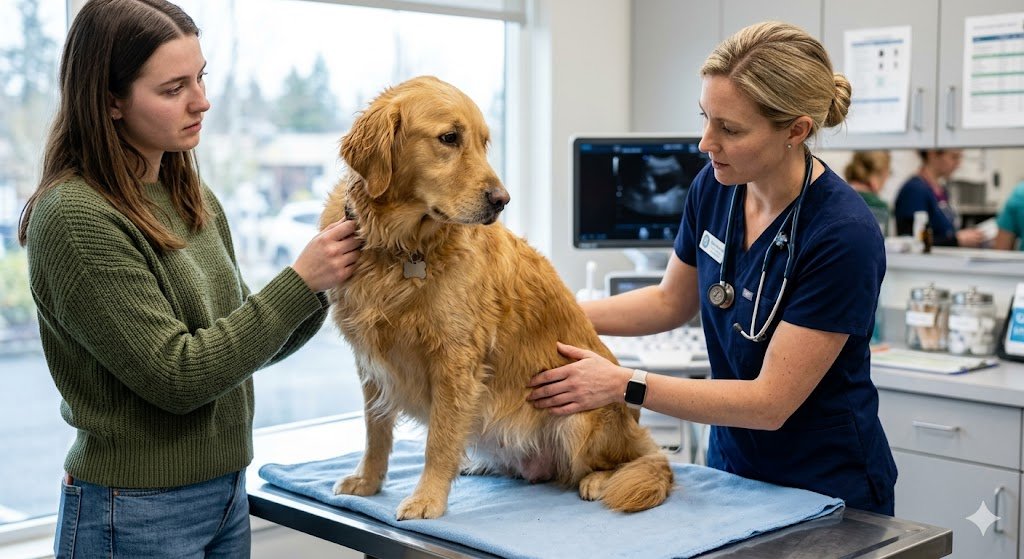
What to Do If Your Dog Has a False Pregnancy
If your dog develops false pregnancy in dogs, the first step is to remain calm and monitor her symptoms closely. Most cases of false pregnancy in dogs are mild and resolve naturally as hormone levels return to normal. However, supportive home care and regular observation can help keep your dog comfortable while reducing the risk of complications.
If symptoms become severe, last longer than expected, or your dog appears unwell, schedule a veterinary examination to confirm false pregnancy in dogs and rule out more serious reproductive conditions.
Home Care Tips
Most dogs with false pregnancy in dogs recover without medication. The goal of home care is to minimize discomfort while avoiding actions that may prolong symptoms.
Follow these practical home care tips:
- Provide a quiet, comfortable place for your dog to rest.
- Maintain her normal daily routine to reduce stress.
- Offer regular exercise to help distract her from maternal behaviors.
- Feed a balanced diet and ensure fresh water is always available.
- Monitor her appetite, energy level, and behavior each day.
- Observe the mammary glands for excessive swelling, redness, or pain.
- Contact your veterinarian if symptoms worsen or persist.
Avoid making major changes to your dog’s environment unless advised by your veterinarian, as consistency often helps reduce stress-related behaviors associated with false pregnancy in dogs.
Managing Maternal Behavior
Many dogs experiencing false pregnancy in dogs display strong maternal instincts. They may collect toys, guard bedding, or prepare nesting areas as though caring for puppies.
To help reduce these behaviors:
- Gently remove toys or objects your dog treats as puppies if doing so does not increase anxiety.
- Redirect her attention with walks, training sessions, puzzle toys, or interactive play.
- Encourage normal daily activities and mental stimulation.
- Avoid rewarding excessive nesting or guarding behaviors.
- Give reassurance without reinforcing obsessive maternal behavior.
Most behavioral signs gradually decrease as hormone levels normalize.
Reducing Milk Production Safely
Milk production is one of the most common signs of false pregnancy in dogs. While it may be tempting to express or massage the mammary glands, doing so can actually stimulate additional milk production.
To safely manage lactation:
| Recommended | Avoid |
|---|---|
| Prevent excessive licking of the mammary glands. | Do not express or squeeze milk unless instructed by a veterinarian. |
| Use an Elizabethan collar if constant licking becomes a problem. | Avoid massaging swollen mammary glands. |
| Monitor for redness, heat, swelling, or pain. | Do not apply home remedies without veterinary guidance. |
| Contact your veterinarian if milk production becomes excessive. | Do not ignore signs of infection or discomfort. |
If your dog develops painful mammary glands, fever, or abnormal discharge, seek veterinary care promptly, as these may indicate mastitis rather than uncomplicated false pregnancy in dogs.
What Not to Do
Certain well-intentioned actions can prolong false pregnancy in dogs or increase the risk of complications.
Avoid these common mistakes:
- Do not punish your dog for nesting or carrying toys.
- Do not manually express milk.
- Do not massage enlarged mammary glands.
- Do not give hormonal medications or supplements without veterinary advice.
- Do not assume every pregnancy-like symptom is caused by false pregnancy in dogs.
- Do not delay veterinary care if your dog develops fever, severe lethargy, vomiting, abdominal pain, foul-smelling vaginal discharge, or significant mammary swelling.
When Home Care Is Enough
Home care is generally appropriate when:
- Symptoms are mild.
- Your dog remains bright, alert, and active.
- She continues eating and drinking normally.
- Milk production is minimal.
- There are no signs of infection or severe pain.
- Symptoms gradually improve over two to three weeks.
If symptoms become more severe, recur frequently, or significantly affect your dog’s quality of life, your veterinarian may recommend medical treatment or discuss whether spaying is appropriate after recovery.
Summary
Most cases of false pregnancy in dogs improve with supportive home care and careful monitoring. Maintaining a normal routine, managing maternal behaviors appropriately, and avoiding stimulation of the mammary glands can help shorten recovery. Although false pregnancy in dogs often resolves without treatment, veterinary care is essential if symptoms are severe, prolonged, or accompanied by signs of infection or illness.
Key Points
- Most cases of false pregnancy in dogs resolve naturally within a few weeks.
- Provide a calm environment, regular exercise, and consistent daily routines.
- Redirect nesting and maternal behaviors without punishment.
- Never express milk or massage the mammary glands, as this can increase milk production.
- Monitor for signs of mastitis, pyometra, or other complications.
- Seek veterinary care if false pregnancy in dogs symptoms become severe, persist beyond several weeks, or your dog appears unwell.
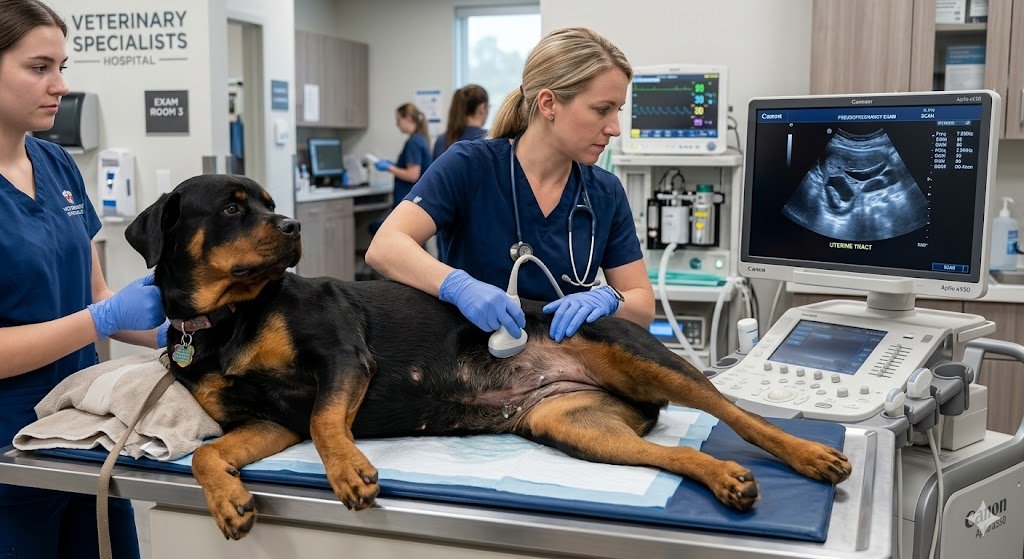
Treatment for False Pregnancy in Dogs
Most cases of false pregnancy in dogs do not require medical treatment because the condition resolves naturally as hormone levels return to normal. However, treatment may be necessary when false pregnancy in dogs causes severe physical symptoms, significant behavioral changes, recurring episodes, or complications such as mastitis.
The treatment approach depends on the severity of symptoms, your dog’s overall health, and whether complications are present. A veterinarian will determine the most appropriate management plan after confirming the diagnosis.
When Veterinary Treatment Is Necessary
Veterinary treatment is recommended when false pregnancy in dogs causes symptoms that interfere with your dog’s health or quality of life.
Your veterinarian may recommend treatment if your dog has:
- Excessive or persistent milk production.
- Painful or severely enlarged mammary glands.
- Mastitis (mammary gland infection).
- Severe anxiety or obsessive maternal behavior.
- Loss of appetite lasting several days.
- Persistent symptoms beyond four to six weeks.
- Frequent episodes of false pregnancy in dogs after multiple heat cycles.
- Signs suggesting another reproductive disease.
Prompt veterinary care helps relieve discomfort while reducing the risk of complications.
Common Medications
There is no single medication that cures false pregnancy in dogs, but veterinarians may prescribe treatments to reduce symptoms and speed recovery.
Common treatment options include:
| Medication Type | Purpose | When It May Be Used |
|---|---|---|
| Prolactin-inhibiting medications | Reduce milk production and maternal behavior | Moderate to severe cases |
| Anti-inflammatory medications | Relieve pain and inflammation | Painful mammary gland enlargement |
| Antibiotics | Treat bacterial infections | Mastitis or other confirmed infections |
| Mild sedatives or anti-anxiety medications | Reduce severe behavioral distress | Dogs with significant anxiety or obsessive behaviors |
Medication should always be prescribed and monitored by a veterinarian. Never give human medications or hormone products to treat false pregnancy in dogs, as they can be harmful.
Treating Complications
Although false pregnancy in dogs is usually harmless, complications require prompt veterinary attention.
| Complication | Possible Treatment |
|---|---|
| Mastitis | Antibiotics, pain relief, and supportive care |
| Severe milk production | Prolactin-inhibiting medication and prevention of mammary stimulation |
| Mammary gland inflammation | Anti-inflammatory medication and monitoring |
| Behavioral distress | Behavioral management with medication if necessary |
| Suspected pyometra | Emergency veterinary treatment, often including surgery |
Early treatment improves recovery and helps prevent more serious health problems.
Recovery Timeline
The outlook for false pregnancy in dogs is generally excellent.
Most dogs:
- Begin improving within one to three weeks.
- Recover completely without lasting health effects.
- Resume normal behavior as hormone levels stabilize.
- Do not experience long-term fertility problems.
Dogs receiving veterinary treatment often improve more quickly when symptoms are severe.
If false pregnancy in dogs occurs repeatedly after every heat cycle, your veterinarian may recommend spaying after the current episode has completely resolved. Spaying is considered the most effective long-term method for preventing future episodes in dogs that are not intended for breeding.
Can False Pregnancy Return?
Yes. False pregnancy in dogs can recur after future heat cycles because the same hormonal changes occur each time an intact female dog goes through her reproductive cycle.
Dogs with recurring episodes may experience:
- Repeated nesting behavior.
- Milk production after each heat cycle.
- Enlarged mammary glands.
- Recurring maternal behaviors.
For dogs that are not part of a breeding program, discussing long-term prevention with a veterinarian is recommended.
Summary
Treatment for false pregnancy in dogs depends on symptom severity. Mild cases usually resolve without medication, while severe or recurring cases may require veterinary treatment to reduce milk production, relieve discomfort, and manage behavioral changes. Prompt treatment of complications such as mastitis helps ensure a full recovery and protects your dog’s long-term health.
Key Points
- Most cases of false pregnancy in dogs resolve naturally without medication.
- Veterinary treatment is recommended for severe, prolonged, or recurring symptoms.
- Medications may reduce milk production, inflammation, pain, and behavioral distress.
- Complications such as mastitis and pyometra require immediate veterinary care.
- The prognosis for false pregnancy in dogs is excellent with appropriate management.
- Dogs with repeated episodes may benefit from spaying after the current false pregnancy in dogs has completely resolved.
Preventing False Pregnancy in Dogs, When to See a Veterinarian & Final Takeaways
While false pregnancy in dogs is usually a harmless condition, understanding how to reduce recurrence and recognize warning signs can help protect your dog’s long-term reproductive health. Most episodes resolve without complications, but some dogs require veterinary treatment, especially if symptoms become severe or persistent.
Can False Pregnancy in Dogs Be Prevented?
The most effective way to prevent false pregnancy in dogs is spaying (ovariohysterectomy) in dogs that are not intended for breeding. Removing the ovaries eliminates the hormonal cycle responsible for triggering pseudopregnancy, preventing future episodes.
If your dog is used for breeding, complete prevention is generally not possible because the hormonal changes that cause false pregnancy in dogs occur naturally after each heat cycle.
To help reduce complications:
- Keep regular veterinary wellness appointments.
- Monitor your dog after every heat cycle.
- Avoid stimulating the mammary glands by expressing milk.
- Provide regular exercise and mental enrichment.
- Follow your veterinarian’s recommendations if your dog has recurring episodes.
Possible Complications of False Pregnancy in Dogs
Although false pregnancy in dogs is usually self-limiting, complications can occasionally develop.
Watch for:
- Mastitis (infection of the mammary glands)
- Excessive milk production
- Painful mammary swelling
- Persistent behavioral changes
- Recurrent false pregnancies after multiple heat cycles
Prompt veterinary care reduces the risk of more serious health problems and speeds recovery.
When Should You Contact a Veterinarian?
Seek veterinary advice if your dog experiences any of the following:
- Symptoms lasting longer than 4–6 weeks
- Severe mammary gland swelling or pain
- Heavy or persistent milk production
- Fever or lethargy
- Loss of appetite lasting more than a day or two
- Foul-smelling vaginal discharge
- Abdominal pain or significant abdominal enlargement
- Bloody nipple discharge
- Repeated episodes of false pregnancy in dogs
These symptoms may indicate complications such as mastitis, pyometra, or another reproductive disorder that requires immediate medical attention.
Long-Term Outlook
The prognosis for false pregnancy in dogs is excellent. Most dogs recover completely within a few weeks without permanent health effects or reduced fertility.
However, dogs that repeatedly experience false pregnancy in dogs after every heat cycle may continue having episodes unless they are spayed. If breeding is not planned, discussing the appropriate timing of spaying with your veterinarian is the most effective long-term solution.
Summary
False pregnancy in dogs is a common hormonal condition that causes pregnancy-like physical and behavioral changes without the presence of puppies. Although the symptoms can be concerning, most cases resolve naturally with supportive home care. Recognizing the signs early, understanding the hormonal cause, monitoring for complications, and seeking veterinary care when necessary can help ensure a safe recovery. For dogs with recurring episodes, spaying remains the most reliable method of preventing false pregnancy in dogs in the future.
Key Points
- False pregnancy in dogs is usually temporary and resolves naturally.
- Spaying is the most effective long-term prevention for dogs not intended for breeding.
- Monitor for complications such as mastitis and pyometra.
- Seek veterinary care if symptoms are severe, persistent, or accompanied by fever, pain, or abnormal discharge.
- Most dogs make a full recovery and have an excellent long-term prognosis.
- Early recognition and appropriate management help minimize discomfort and prevent complications associated with false pregnancy in dogs.
Conclusion
False pregnancy in dogs is a common hormonal condition that can closely resemble a real pregnancy, causing behavioral changes, enlarged mammary glands, and even milk production in dogs that are not pregnant. While most cases resolve naturally within a few weeks, understanding the symptoms, providing appropriate home care, and recognizing when veterinary attention is needed are essential for your dog’s well-being. If your dog experiences recurring episodes of false pregnancy in dogs, consult your veterinarian about long-term management options, including spaying, to help prevent future occurrences.
FAQs
1. What is false pregnancy in dogs?
False pregnancy in dogs, also called pseudopregnancy or phantom pregnancy, is a hormonal condition in which an unspayed female dog displays signs of pregnancy despite not carrying puppies.
2. What are the most common false pregnancy in dogs symptoms?
Common false pregnancy in dogs symptoms include nesting behavior, carrying toys, enlarged mammary glands, swollen nipples, milk production, appetite changes, anxiety, and increased maternal behavior.
3. How long does false pregnancy in dogs last?
Most cases of false pregnancy in dogs resolve within 2–3 weeks, although some dogs may experience symptoms for up to 4–6 weeks.
4. Can false pregnancy in dogs be dangerous?
False pregnancy in dogs is usually not dangerous. However, complications such as mastitis or pyometra require immediate veterinary care. Persistent or severe symptoms should always be evaluated by a veterinarian.
5. Can a dog produce milk without being pregnant?
Yes. During false pregnancy in dogs, hormonal changes can stimulate milk production even though the dog is not pregnant.
6. Will false pregnancy in dogs happen after every heat cycle?
Not always, but some dogs experience false pregnancy in dogs after multiple or even every heat cycle due to recurring hormonal changes.
7. Does spaying prevent false pregnancy in dogs?
Yes. For dogs that are not intended for breeding, spaying is the most effective long-term method for preventing future episodes of false pregnancy in dogs.
References
The information in this article is based on guidance and educational resources from recognized veterinary authorities, including: