A dog food calculator helps estimate how much food your dog should eat each day based on factors such as body weight, age, activity level, diet type, and weight goals. Instead of relying solely on general feeding charts, it provides a more personalized recommendation to support your dog’s nutritional needs.
Whether you feed dry kibble, wet food, or use a raw dog food calculator for a homemade or raw diet, calculating the correct portion can help prevent overfeeding, underfeeding, and unhealthy weight changes. Since every dog has different energy requirements, feeding amounts should be adjusted as your dog’s lifestyle and health change.
In this guide, you’ll learn how a dog food calculator works, the factors that affect daily food intake, how to calculate accurate portions for different diets, and feeding recommendations for puppies, adults, seniors, and weight management.
Summary
A dog food calculator estimates your dog’s daily food intake using key factors like weight, age, activity level, and diet type. It provides a practical starting point for feeding the right amount of food and maintaining a healthy weight.
Key Points
- A dog food calculator estimates the correct daily feeding amount.
- Calculations are based on weight, age, activity level, diet type, and feeding goals.
- It can be used for dry, wet, and raw diets.
- Accurate portion sizes help support healthy weight and balanced nutrition.
- Feeding recommendations should be adjusted as your dog’s needs change.
Want to know how your dog’s daily energy needs are calculated? Use our Dog Calorie Calculator to estimate the number of calories your dog needs before converting them into the correct food portions.
How a Dog Food Calculator Works
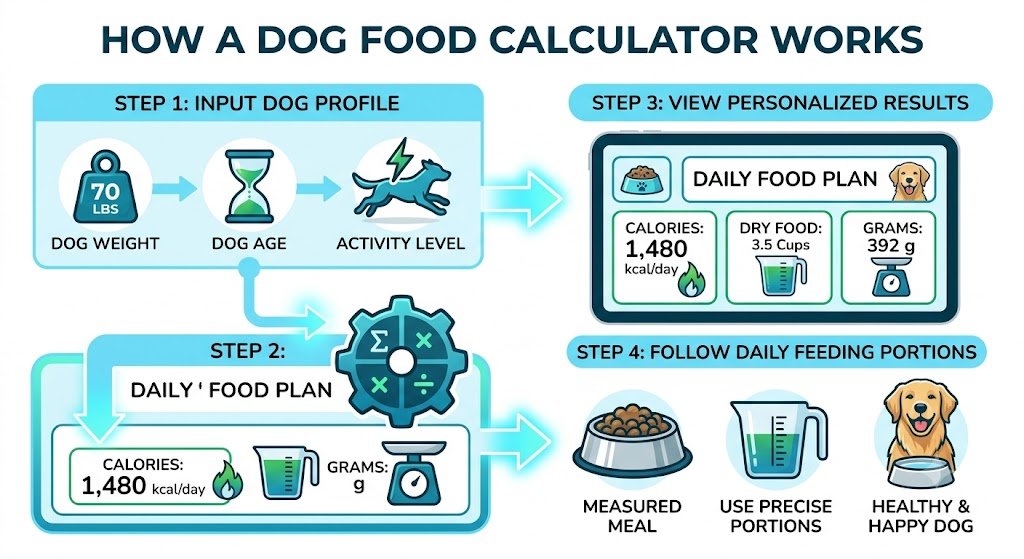
A dog food calculator estimates how much food your dog should eat each day by combining its daily calorie needs with the calorie content of its food. It uses key information about your dog to recommend a feeding amount that supports healthy weight and balanced nutrition.
What the Calculator Measures
Most dog food calculators evaluate several factors that influence your dog’s daily food requirements, including:
- Current body weight
- Age or life stage
- Activity level
- Diet type (dry, wet, or raw)
- Body Condition Score (BCS)
- Weight goal (maintenance, loss, or gain)
- Reproductive status (if applicable)
These details help generate a feeding recommendation tailored to your dog’s individual needs.
Information You Need
Providing accurate information improves the reliability of the feeding estimate.
| Information | Why It’s Important |
|---|---|
| Body weight | Determines daily energy requirements |
| Age | Affects growth and maintenance needs |
| Activity level | Influences calorie expenditure |
| Diet type | Converts calories into food portions |
| Body Condition Score | Helps adjust feeding amounts |
| Weight goal | Supports weight loss, maintenance, or gain |
How Feeding Amounts Are Calculated
Most calculators follow a simple process:
- Estimate your dog’s daily calorie requirement.
- Check the calorie content of the selected dog food.
- Convert daily calories into cups, grams, cans, or raw food portions.
- Adjust the result based on your dog’s weight goal and activity level.
For dogs on a raw diet, a raw dog food calculator may also estimate feeding amounts using a percentage of body weight, making it easier to plan balanced raw meals.
Why the Results May Change
Your dog’s food requirements are not fixed. Feeding recommendations should be recalculated whenever your dog’s weight, age, activity level, diet, or health changes to ensure it continues receiving the appropriate amount of food.
Summary
A dog food calculator combines your dog’s daily calorie needs with the calorie density of its food to estimate accurate feeding portions. By considering factors such as weight, age, activity level, and diet type, it provides a personalized feeding recommendation.
Key Points
- Dog food calculators estimate daily feeding amounts based on individual factors.
- Body weight, age, activity level, and diet type all affect food requirements.
- Feeding amounts are calculated by converting daily calories into food portions.
- Raw dog food calculators often use body weight percentages for raw diets.
- Recalculate feeding amounts whenever your dog’s needs or diet change.
Factors That Affect How Much Food Your Dog Needs
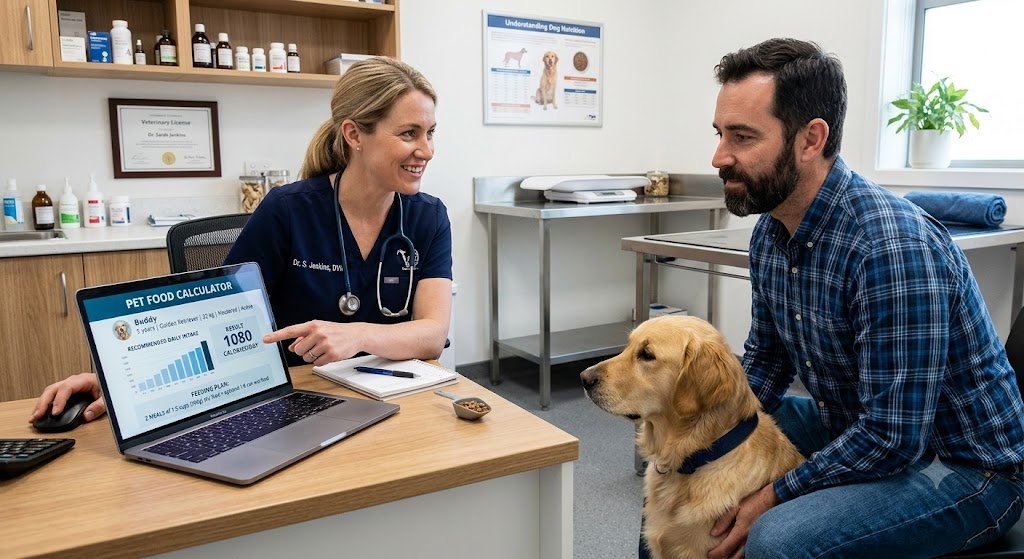
The amount of food your dog needs each day depends on several factors beyond body weight. Understanding these variables helps you use a dog food calculator more accurately and choose the right feeding amount for your dog’s individual needs.
Body Weight
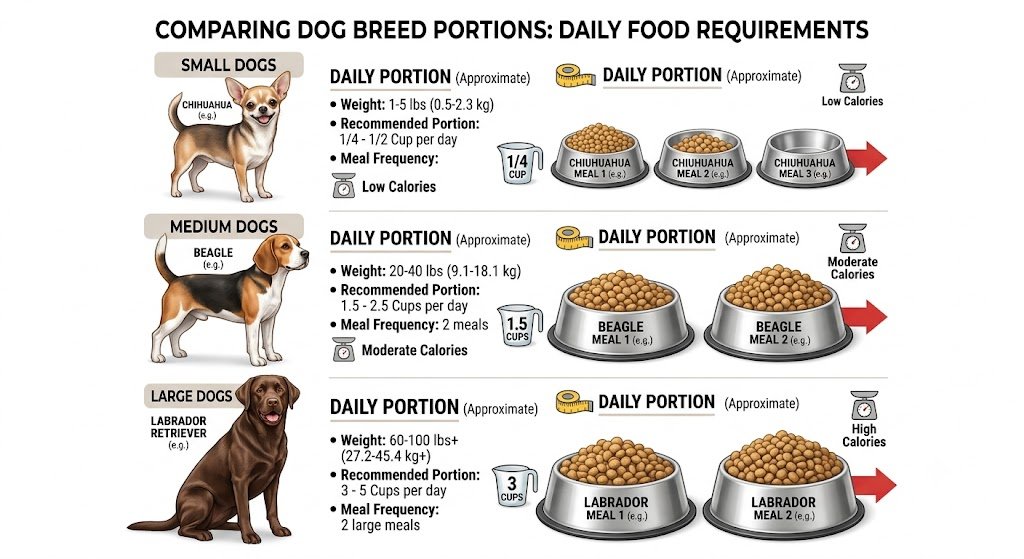
Body weight is the starting point for calculating daily food intake. In general, larger dogs require more food than smaller dogs, although the exact amount depends on their calorie needs and the type of food being fed.
Age and Life Stage
A dog’s nutritional requirements change throughout its life.
- Puppies need more food to support rapid growth and development.
- Adult dogs require balanced portions to maintain a healthy weight.
- Senior dogs often need smaller portions due to lower activity levels and slower metabolism.
Breed Size
Small, medium, and large breeds have different growth rates and energy requirements. While small breeds often require more calories per kilogram of body weight, large breeds generally consume more food overall.
Activity Level
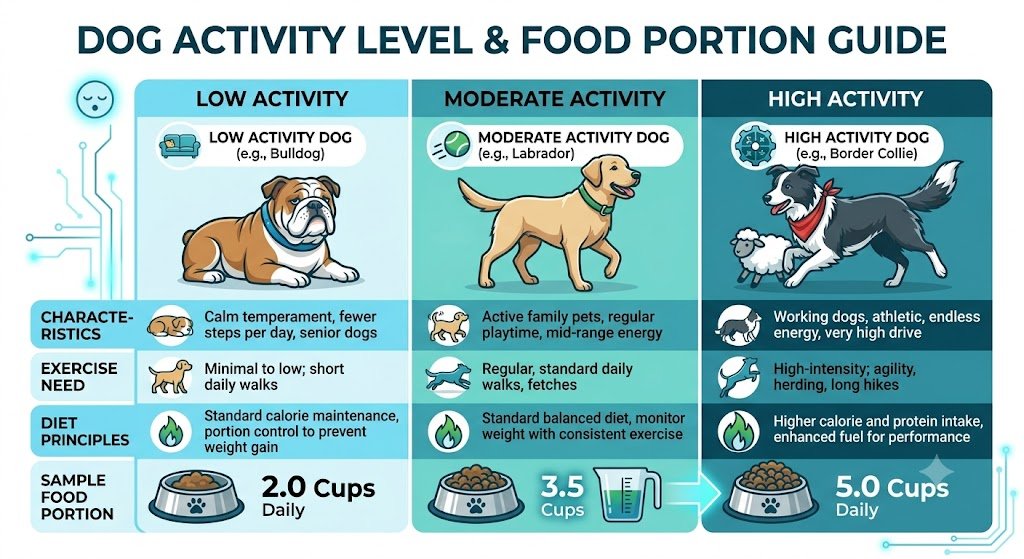
A dog’s daily activity significantly affects how much food it needs. Dogs that exercise frequently or participate in working or sporting activities burn more calories and typically require larger food portions.
| Activity Level | Feeding Adjustment |
|---|---|
| Low | Smaller daily portions |
| Moderate | Standard feeding amount |
| High | Increased food intake |
| Working or athletic | Highest food requirements |
Diet Type
The type of food you feed also influences portion size because calorie density varies between diets.
- Dry food (kibble) is more calorie-dense, so smaller portions are usually needed.
- Wet food contains more moisture and generally requires larger serving sizes.
- Raw diets are often calculated as a percentage of body weight using a raw dog food calculator.
Body Condition Score (BCS)
Body Condition Score helps determine whether your dog is underweight, overweight, or at an ideal weight. If your dog’s body condition changes, adjust feeding amounts rather than continuing with the same daily portion.
Health and Medical Conditions
Certain health conditions can affect appetite, digestion, and energy requirements. Dogs recovering from illness, managing chronic diseases, or following prescription diets may require specialized feeding plans recommended by a veterinarian.
Summary
A dog’s daily food intake is influenced by body weight, age, breed size, activity level, diet type, body condition, and overall health. Considering all these factors helps ensure accurate feeding recommendations and supports long-term health.
Key Points
- Body weight provides the foundation for food calculations.
- Puppies and active dogs generally require larger portions.
- Senior and less active dogs often need less food.
- Dry, wet, and raw diets require different serving sizes.
- Body Condition Score helps determine whether feeding amounts should be adjusted.
- Health conditions may require a customized feeding plan.
How Much Should You Feed Your Dog?
The right amount of food depends on your dog’s daily calorie needs and the calorie density of the food you’re feeding. While feeding charts on dog food packaging provide general recommendations, a dog food calculator offers a more personalized estimate based on your dog’s weight, age, activity level, and lifestyle.
The table below shows approximate daily feeding amounts for healthy adult dogs with moderate activity levels. Actual portions may vary depending on the brand and calorie content of the food.
Daily Feeding Guide by Weight
| Dog Weight | Estimated Daily Calories | Dry Food (Approx.)* | Wet Food (Approx.) |
|---|---|---|---|
| 2 kg (4.4 lb) | 165–190 kcal | ½ cup | ¾–1 can |
| 5 kg (11 lb) | 325–375 kcal | ¾–1 cup | 1–1½ cans |
| 10 kg (22 lb) | 550–630 kcal | 1½–2 cups | 2–2½ cans |
| 15 kg (33 lb) | 750–855 kcal | 2–2½ cups | 2½–3½ cans |
| 20 kg (44 lb) | 925–1,060 kcal | 2½–3 cups | 3–4 cans |
| 25 kg (55 lb) | 1,090–1,250 kcal | 3–3½ cups | 4–5 cans |
| 30 kg (66 lb) | 1,255–1,435 kcal | 3½–4 cups | 5–6 cans |
| 40 kg (88 lb) | 1,550–1,775 kcal | 4–5 cups | 6–7 cans |
| 50 kg (110 lb) | 1,820–2,085 kcal | 5–6 cups | 7–8 cans |
*Dry food estimates assume approximately 350–400 kcal per cup. Wet food portions vary by product and calorie content.
How to Use This Feeding Guide
- Find your dog’s current body weight.
- Identify the estimated daily calorie requirement.
- Compare the calorie content of your dog’s food with the recommended calories.
- Divide the total daily amount into two or more meals if preferred.
- Monitor your dog’s weight and adjust portions as needed.
Why Feeding Charts Can Differ
Different dog foods have different calorie densities and ingredient compositions. Two brands may recommend different serving sizes even for dogs of the same weight. For the most accurate results, always check the food label and use a dog food calculator to determine the correct daily portion.
Summary
Daily feeding amounts depend on your dog’s calorie requirements and the energy density of its food. A dog food calculator provides a more personalized recommendation than standard feeding charts, helping you feed the right amount for your dog’s individual needs.
Key Points
- Daily food portions are based on calorie requirements, not weight alone.
- Use the calorie content on the food label to determine accurate serving sizes.
- Dry and wet foods require different portion amounts.
- Feeding charts are general guidelines and may vary by brand.
- Review your dog’s feeding amount regularly as its weight, activity level, or diet changes.
Raw Dog Food Calculator
A raw dog food calculator estimates how much raw food your dog should eat each day based on body weight, age, activity level, and weight goals. Unlike calculators for commercial dog food, raw feeding calculators often use a percentage of your dog’s body weight to determine daily portions.
While these calculations provide a useful starting point, the ideal feeding amount should be adjusted based on your dog’s body condition, energy level, and overall health.
How Raw Feeding Is Calculated
Most raw feeding plans calculate the daily food amount as a percentage of your dog’s current or ideal body weight.
Daily Raw Food = Dog’s Body Weight × Feeding Percentage
The result is the total amount of raw food your dog should consume each day, which can then be divided into multiple meals.
Raw Feeding Percentage Guidelines
The appropriate feeding percentage depends on your dog’s age, activity level, and weight goal.
| Dog Category | Recommended Daily Feeding |
|---|---|
| Adult (maintenance) | 2–3% of body weight |
| Active or working dog | 3–5% of body weight |
| Weight loss | 1.5–2% of ideal body weight |
| Weight gain | 3–4% of body weight |
| Puppies | 5–10% of body weight (or based on expected adult weight) |
These percentages are general guidelines and may vary between individual dogs.
Example Raw Feeding Calculation
Suppose your dog:
- Weighs 20 kg (44 lb)
- Is a healthy adult
- Eats 2.5% of its body weight daily
Calculation:
20 kg × 2.5% = 0.5 kg (500 grams) of raw food per day.
If you feed twice daily, each meal would contain approximately 250 grams of raw food.
BARF vs PMR Diets
The two most common raw feeding approaches are BARF and PMR.
| Feature | BARF Diet | PMR Diet |
|---|---|---|
| Meaning | Biologically Appropriate Raw Food | Prey Model Raw |
| Includes vegetables | Yes | No |
| Includes fruits | Often | Rarely |
| Focus | Balanced variety | Whole prey-style feeding |
| Best for | Owners wanting a varied raw diet | Owners following prey-based feeding principles |
Regardless of the approach, meals should provide complete and balanced nutrition to help prevent nutrient deficiencies.
Transitioning to a Raw Diet
If you’re switching from commercial food to a raw diet, introduce the new food gradually over several days. Monitor your dog’s digestion, appetite, and body condition, and adjust feeding amounts if necessary.
Summary
A raw dog food calculator estimates daily feeding amounts using your dog’s body weight and an appropriate feeding percentage. It simplifies portion planning for raw diets, but regular monitoring and balanced meal planning are essential for long-term health.
Key Points
- Raw dog food calculators typically use a percentage of body weight.
- Adult dogs commonly eat 2–3% of their body weight daily.
- Puppies and active dogs generally require higher feeding percentages.
- BARF and PMR are the two most common raw feeding approaches.
- Adjust raw food portions based on your dog’s body condition, activity level, and health.
How to Calculate Food Portions
Once you know your dog’s daily food or calorie requirement, the next step is converting that amount into the correct serving size. A dog food calculator makes this easier by using the calorie content of your dog’s food to estimate the number of cups, grams, cans, or raw food portions needed each day.
Using Calories per Cup
Dry dog food labels typically list calories as kilocalories (kcal) per cup. To calculate the daily feeding amount, divide your dog’s daily calorie requirement by the calories in one cup of food.
Formula:
Daily Cups = Daily Calories Needed ÷ Calories per Cup
Example:
- Daily calorie requirement: 800 kcal
- Dog food: 400 kcal per cup
800 ÷ 400 = 2 cups per day
Using Grams
Some dog foods provide calorie information per 100 grams or per kilogram, making it easier to measure portions with a kitchen scale.
Formula:
Daily Grams = (Daily Calories Needed ÷ Calories per 100 g) × 100
Using grams is often more accurate than measuring by cups, especially for small dogs or dogs on weight management plans.
Using Food Labels
Always check the product label before calculating portions. Look for:
- Calories (kcal) per cup
- Calories (kcal) per can or pouch
- Calories per kilogram or 100 grams
- Manufacturer’s feeding guide
The calorie value is more important than the suggested serving size because different brands have different energy densities.
Example Portion Calculation
| Daily Calories Needed | Food Calories | Daily Feeding Amount |
|---|---|---|
| 400 kcal | 400 kcal per cup | 1 cup |
| 600 kcal | 300 kcal per cup | 2 cups |
| 800 kcal | 400 kcal per cup | 2 cups |
| 1,000 kcal | 500 kcal per cup | 2 cups |
| 1,200 kcal | 400 kcal per cup | 3 cups |
Measure Portions Accurately
For the most accurate feeding:
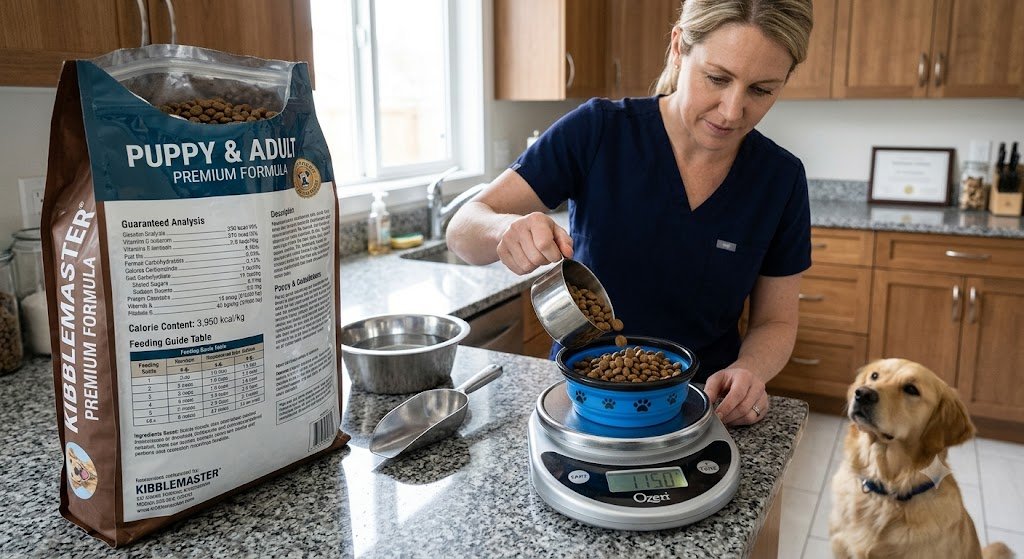
- Use a digital kitchen scale whenever possible.
- Measure food consistently using the same cup or container.
- Recalculate portions if you change dog food brands or recipes.
- Divide the daily amount into one or more meals based on your feeding schedule.
Summary
Calculating food portions involves matching your dog’s daily calorie needs with the calorie content of its food. Whether you measure by cups or grams, using accurate measurements helps maintain a healthy weight and prevents overfeeding or underfeeding.
Key Points
- Convert daily calories into cups or grams using the food’s calorie content.
- Measuring by grams is generally more accurate than using cups.
- Always check the calorie information on the dog food label.
- Recalculate portions when changing foods or adjusting calorie needs.
- Consistent portion measurements support healthy weight management.
Dog Feeding Recommendations by Life Stage
A dog’s feeding requirements change throughout its life. Age, growth rate, activity level, and metabolism all influence how much food should be offered each day. A dog food calculator helps adjust feeding amounts to match each life stage and maintain a healthy body condition.
Puppies
Puppies require more food relative to their body weight because they are growing rapidly. They also benefit from multiple smaller meals throughout the day to support steady growth and digestion.
General feeding recommendations:
- Feed a complete and balanced puppy formula.
- Divide daily food into 3–4 meals.
- Recalculate feeding amounts regularly as your puppy grows.
Adult Dogs
Healthy adult dogs should receive enough food to maintain an ideal weight and Body Condition Score (BCS). Most adult dogs thrive on 1–2 meals per day, with portions adjusted according to activity level and calorie requirements.
Senior Dogs
Senior dogs often become less active and may need fewer calories than younger adults. However, some older dogs lose muscle mass or have medical conditions that require dietary adjustments.
Monitor weight regularly and adjust food portions as needed to maintain a healthy body condition.
Working and Highly Active Dogs
Working, sporting, hunting, and highly active dogs expend more energy and generally require larger food portions. Depending on their workload, they may also benefit from additional meals or energy-dense diets.
Pregnant and Nursing Dogs
Pregnant and nursing dogs require substantially more nutrients and calories than adult maintenance dogs. Food intake should increase gradually during pregnancy and may rise significantly during lactation to support both the mother and her puppies.
Life Stage Feeding Comparison
| Life Stage | Typical Feeding Needs | Recommended Meals |
|---|---|---|
| Puppy | Higher food intake for growth | 3–4 meals/day |
| Adult | Balanced portions for maintenance | 1–2 meals/day |
| Senior | Often reduced portions | 1–2 meals/day |
| Working or athletic | Increased food intake | 2–3 meals/day |
| Pregnant or nursing | Significantly higher food intake | Multiple meals as needed |
Summary
A dog’s feeding requirements change throughout its life. Puppies, working dogs, and nursing mothers typically need more food, while many senior dogs require smaller portions. Regularly adjusting feeding amounts helps support healthy growth, weight management, and overall well-being.
Key Points
- Puppies need frequent meals and higher food intake.
- Adult dogs require balanced portions based on activity level.
- Senior dogs often benefit from reduced feeding amounts.
- Working and athletic dogs need additional food to meet higher energy demands.
- Pregnant and nursing dogs require significantly more nutrients and calories.
- Review feeding amounts regularly as your dog progresses through different life stages.
Using a Dog Food Calculator for Weight Management
Maintaining a healthy weight is one of the most important aspects of your dog’s overall health. A dog food calculator helps adjust daily food portions based on your dog’s weight goals, making it easier to prevent obesity or support healthy weight gain.
Weight Loss
If your dog is overweight, reducing food portions gradually can help achieve safe and sustainable weight loss. A dog food calculator estimates a lower daily food intake while still providing essential nutrients.
For the best results:
- Reduce portions gradually rather than making drastic changes.
- Increase daily exercise where appropriate.
- Limit high-calorie treats and table scraps.
- Monitor weight every few weeks and adjust portions if necessary.
Weight Maintenance
Dogs at an ideal weight should receive enough food to maintain their current Body Condition Score (BCS). Continue monitoring your dog’s weight and adjust feeding amounts if activity levels, age, or diet changes.
Weight Gain
Underweight dogs often require larger food portions or more calorie-dense diets. Increase food gradually to avoid digestive upset, and monitor progress until your dog reaches a healthy weight.
If your dog continues to lose weight despite eating enough food, consult a veterinarian to identify any underlying medical conditions.
Monitor Progress Regularly
A dog food calculator provides an estimate, but every dog responds differently to food intake. Weigh your dog regularly and assess its Body Condition Score to determine whether feeding amounts should be increased or decreased.
Small adjustments over time are generally more effective than making large changes all at once.
Weight Management Guide
| Goal | Feeding Adjustment | Recommended Approach |
|---|---|---|
| Weight loss | Reduce daily food portions | Feed measured meals and increase activity |
| Weight maintenance | Maintain current feeding amount | Monitor weight and Body Condition Score |
| Weight gain | Increase food portions gradually | Use nutrient-dense food and monitor progress |
Summary
A dog food calculator helps determine appropriate food portions for weight loss, maintenance, or weight gain. Regular weight checks, portion control, and gradual feeding adjustments are essential for achieving and maintaining a healthy body weight.
Key Points
- Use a dog food calculator to adjust food portions based on your weight goals.
- Reduce portions gradually for safe weight loss.
- Maintain consistent feeding to preserve a healthy body condition.
- Increase food slowly when helping an underweight dog gain weight.
- Monitor your dog’s weight and Body Condition Score regularly.
- Consult a veterinarian if your dog’s weight changes unexpectedly or does not improve with dietary adjustments.
When to Consult a Veterinarian
A dog food calculator is a valuable tool for estimating your dog’s daily food intake, but it cannot account for every health condition or nutritional need. If your dog has unique dietary requirements or experiences ongoing feeding issues, professional veterinary guidance is recommended.
Signs Your Dog May Need Professional Advice
Consult a veterinarian if your dog:
- Gains or loses weight unexpectedly.
- Refuses food or has a poor appetite.
- Eats excessively without gaining weight.
- Experiences frequent vomiting or diarrhea.
- Has a chronic medical condition that affects nutrition.
- Requires a prescription or therapeutic diet.
- Is pregnant, nursing, or recovering from surgery.
Use the Calculator as a Starting Point
A dog food calculator provides an estimate based on your dog’s weight, age, activity level, and diet type. However, factors such as metabolism, medical conditions, and individual nutritional needs may require adjustments beyond the calculated feeding amount.
Regularly monitoring your dog’s weight, Body Condition Score (BCS), energy level, and overall health will help you determine whether its feeding plan is working effectively.
Summary
A dog food calculator makes it easier to estimate daily feeding amounts for dry, wet, and raw diets. By considering body weight, age, activity level, life stage, and feeding goals, it helps you provide balanced portions that support healthy growth, weight management, and overall well-being. While the calculator offers a reliable starting point, regularly reviewing your dog’s condition and seeking veterinary advice when needed will ensure its nutritional needs continue to be met.
Key Points
- A dog food calculator estimates personalized daily feeding amounts.
- Feeding requirements vary based on weight, age, activity level, diet type, and health.
- Accurate portion sizes help prevent overfeeding and underfeeding.
- Recalculate feeding amounts whenever your dog’s lifestyle, weight, or diet changes.
- Monitor Body Condition Score and weight regularly for the best results.
- Consult a veterinarian for medical conditions, prescription diets, or unexpected weight changes.
Conclusion
A dog food calculator is a practical tool for determining how much food your dog should eat each day. By considering factors such as body weight, age, activity level, diet type, and weight goals, it provides a personalized feeding recommendation that supports healthy growth, weight management, and overall well-being.
Whether you feed dry kibble, wet food, or use a raw dog food calculator, accurate portion sizes are essential for preventing overfeeding and underfeeding. Regularly monitor your dog’s weight and Body Condition Score (BCS), adjust feeding amounts as needed, and consult a veterinarian if your dog has special dietary or medical needs.
Frequently Asked Questions
How much food should I feed my dog each day?
The amount depends on your dog’s weight, age, activity level, diet type, and health. A dog food calculator provides a personalized estimate based on these factors.
How does a dog food calculator work?
It estimates your dog’s daily calorie needs and converts them into the correct amount of dry food, wet food, or raw food using the calorie content of the diet.
Can I use a dog food calculator for a raw diet?
Yes. A raw dog food calculator estimates daily raw food portions, usually as a percentage of your dog’s body weight.
Is it better to measure dog food by cups or grams?
Grams are generally more accurate because cup sizes can vary. Using a digital kitchen scale provides the most consistent feeding measurements.
How often should I adjust my dog’s feeding amount?
Recalculate your dog’s feeding amount whenever its weight, age, activity level, diet, or health changes. Regular weight checks help ensure you’re feeding the right amount.
Do treats count toward my dog’s daily food intake?
Yes. Treats and table scraps contribute to your dog’s daily calorie intake and should be considered when determining total food portions.
Can two dogs of the same weight eat different amounts of food?
Yes. Activity level, metabolism, breed, body condition, age, and health all influence how much food a dog needs, even if two dogs weigh the same.