A Whelping Checklist for First-Time Breeders is a preparation guide that helps first-time breeders organize everything needed before a dog gives birth. Having a checklist reduces stress, prevents last-minute problems, and ensures both the mother and puppies receive proper care during and after delivery.
For first-time breeders, preparation is especially important because labor can begin unexpectedly, and missing essential supplies or emergency contacts can create unnecessary risks. A well-planned checklist helps you stay focused and ready throughout the whelping process.
Why First-Time Breeders Need a Whelping Plan
Unlike experienced breeders who may already have supplies and routines in place, first-time breeders often underestimate how much preparation is required before labor begins.
A whelping plan helps you:
- Gather all necessary supplies in advance
- Prepare a safe and comfortable whelping area
- Monitor the mother more effectively
- Respond quickly to emergencies
- Provide immediate care for newborn puppies
Proper planning can also reduce panic during labor and allow you to focus on supporting the mother dog.
When to Start Preparing for Whelping
Preparation should ideally begin at least one to two weeks before the expected due date. This gives you enough time to assemble supplies, set up the whelping box, and make any necessary adjustments.
Tasks to complete before labor include:
- Setting up the whelping area
- Purchasing essential supplies
- Recording veterinary contact information
- Learning common signs of labor
- Preparing emergency backup plans
Waiting until labor starts can lead to unnecessary stress and may leave you without important items when they are needed most.
Summary
A whelping checklist helps first-time breeders prepare for labor, delivery, and newborn puppy care. By organizing supplies, creating a whelping plan, and preparing ahead of the due date, breeders can provide a safer and more comfortable environment for both the mother dog and her puppies.
Key Points
- A whelping checklist keeps breeders organized and prepared.
- First-time breeders benefit from having a clear whelping plan.
- Preparation should begin one to two weeks before the due date.
- Essential supplies and emergency contacts should be ready before labor starts.
- Proper planning helps support a smoother whelping experience.
More About Dogs : Dog Gestation Guide
Essential Whelping Supplies Checklist
Having the right supplies ready before labor begins is one of the most important parts of a whelping checklist for first-time breeders. Preparing everything in advance helps ensure the mother dog remains comfortable and allows you to respond quickly if assistance is needed during delivery.
Must-Have Supplies for the Mother Dog
The mother dog should have a clean, safe, and comfortable environment throughout labor and recovery. These supplies help support her health and comfort during the whelping process.
| Supply | Purpose | Essential |
|---|---|---|
| Whelping Box | Safe area for labor and nursing | Yes |
| Digital Thermometer | Monitor pre-labor temperature changes | Yes |
| Clean Towels | Dry puppies and clean the area | Yes |
| Washable Bedding | Comfort and cleanliness | Yes |
| Disposable Gloves | Maintain hygiene during assistance | Yes |
| Puppy Pads | Absorb fluids and simplify cleanup | Yes |
| Water Bowl | Keep the mother hydrated | Yes |
Supplies Needed for Newborn Puppies
Newborn puppies are unable to regulate their body temperature and require immediate monitoring after birth. Having these supplies available helps support their early development and survival.
Essential puppy supplies include:
- Soft clean towels
- Digital puppy scale
- Heating pad or heat source
- Puppy identification collars or markers
- Puppy formula (if needed)
- Feeding syringe or nursing bottle
- Record-keeping notebook
These items help breeders track growth, maintain warmth, and provide supplemental feeding if necessary.
Emergency Supplies to Keep Nearby
Although most whelpings progress normally, first-time breeders should be prepared for unexpected situations. Keeping emergency supplies within reach can save valuable time.
Recommended emergency items include:
- Veterinary emergency contact information
- 24-hour emergency clinic number
- Sterile scissors
- Umbilical cord clamps or dental floss
- Antiseptic solution approved by your veterinarian
- Flashlight
- Extra batteries for digital equipment
Emergency supplies should remain easily accessible throughout labor and the first few days after birth.
Complete Whelping Supply Checklist
| Category | Essential Items |
|---|---|
| Mother Dog Care | Whelping box, bedding, towels, thermometer, water bowl |
| Puppy Care | Towels, scale, heating pad, puppy formula, feeding supplies |
| Hygiene Supplies | Gloves, puppy pads, disinfectants |
| Emergency Items | Vet contacts, sterile scissors, cord clamps, flashlight |
| Monitoring Tools | Notebook, pen, thermometer, puppy identification markers |
Summary
A successful whelping begins with proper preparation. Essential supplies include a whelping box, clean bedding, towels, a thermometer, puppy care items, and emergency equipment. Having these supplies ready before labor helps first-time breeders manage delivery more confidently and safely.
Key Points
- Gather all whelping supplies before the due date.
- Prepare separate supplies for the mother and puppies.
- Keep emergency items easily accessible.
- A digital thermometer and whelping box are essential.
- Monitoring tools help track puppy health and development.
- Proper preparation reduces stress during labor and delivery.
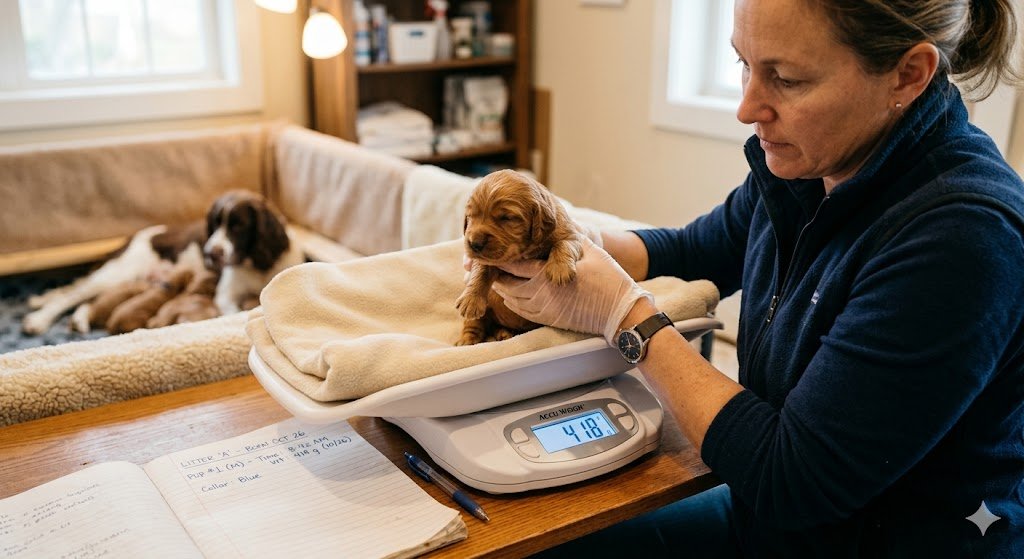
Whelping Box Setup Checklist
A properly prepared whelping box provides a safe, clean, and comfortable space for the mother dog to deliver and care for her puppies. Setting up the whelping area before labor begins allows the mother to become familiar with the environment and reduces stress during delivery.
Choosing the Right Whelping Box
The whelping box should be large enough for the mother to stretch out comfortably while still providing enough space for the puppies to nurse and rest safely.
When selecting a whelping box, look for:
- Easy-to-clean surfaces
- Low entrance for the mother
- High enough sides to contain puppies
- Non-slip flooring
- Adequate space for the breed size
The box should prioritize safety and comfort rather than appearance.
Preparing a Safe Whelping Area
The location of the whelping box is just as important as the box itself. The area should be quiet, low-traffic, and free from distractions.
A suitable whelping area should provide:
- Privacy for the mother dog
- Protection from other pets
- Minimal household noise
- Easy access for monitoring
- Good ventilation without drafts
Introducing the mother to the area several days before her due date helps her feel more comfortable when labor begins.
Temperature and Comfort Requirements
Newborn puppies cannot regulate their body temperature effectively during the first weeks of life. Maintaining a warm environment is essential for their survival and health.
Recommended setup considerations include:
- Clean and dry bedding
- A safe heat source if needed
- Regular temperature monitoring
- Protection from cold drafts
- Frequent replacement of soiled bedding
The goal is to keep puppies warm without overheating them.
Whelping Box Setup Checklist
| Requirement | Recommended Setup |
|---|---|
| Location | Quiet, low-traffic area |
| Flooring | Non-slip, easy to clean |
| Bedding | Soft, washable materials |
| Temperature | Warm and draft-free |
| Accessibility | Easy for mother, safe for puppies |
| Hygiene | Regular cleaning and bedding changes |
Summary
A well-prepared whelping box helps create a safe environment for both the mother dog and her puppies. Proper sizing, a quiet location, clean bedding, and appropriate temperature control are key factors in a successful whelping setup.
Key Points
- Set up the whelping box before the expected due date.
- Choose a box that is safe, spacious, and easy to clean.
- Place the box in a quiet and private location.
- Maintain a warm, draft-free environment.
- Keep bedding clean and dry throughout the whelping period.
- Allow the mother time to become familiar with the whelping area before labor begins.
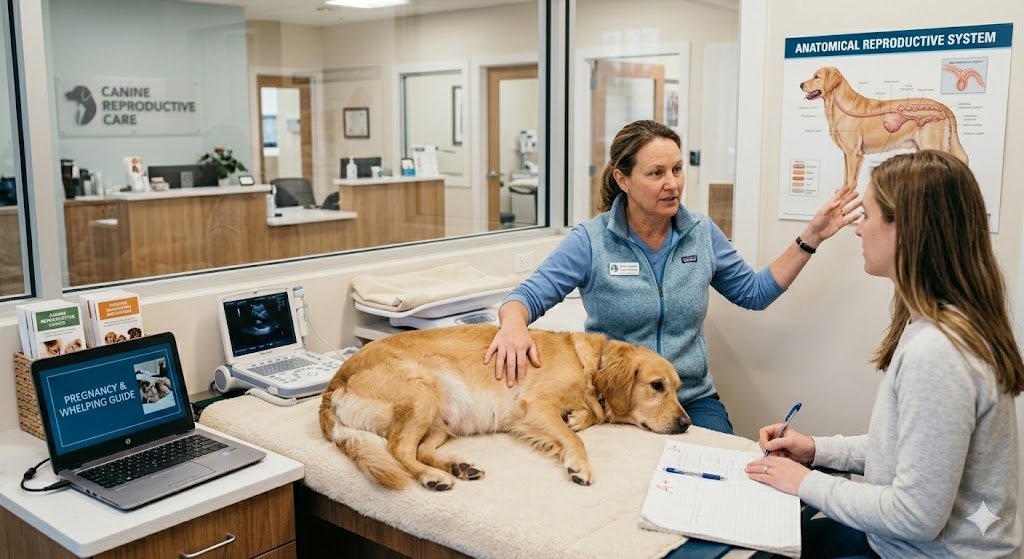
Pre-Whelping Preparation Checklist
The days leading up to whelping are critical for ensuring a smooth delivery. First-time breeders should closely monitor the mother dog, confirm that all supplies are ready, and have a clear plan in place before labor begins.
Signs Labor Is Approaching
Recognizing the signs of impending labor helps breeders know when whelping is likely to begin. While timing varies between dogs, several common indicators typically appear within the final 24 to 48 hours.
Common pre-labor signs include:
- Drop in body temperature
- Nesting behavior
- Restlessness
- Reduced appetite
- Increased clinginess
- Panting or pacing
These signs suggest the mother is entering the final stage of pregnancy and should be monitored closely.
Monitoring the Mother Before Delivery
Regular observation allows breeders to detect changes that may indicate labor is near or that veterinary attention is needed.
Important things to monitor include:
- Body temperature
- Eating and drinking habits
- Activity level
- Vaginal discharge
- Overall comfort
Keeping notes can help track changes and provide useful information if veterinary advice is needed.
Preparing Veterinary Contacts
Every first-time breeder should have veterinary support arranged before labor begins. Even normal deliveries can develop complications unexpectedly.
Prepare the following information:
- Primary veterinarian contact number
- Emergency veterinary clinic number
- After-hours contact details
- Clinic address and directions
- Transportation plan for emergencies
Having this information readily available can save valuable time if complications arise.
Final Pre-Whelping Checklist
| Task | Status Before Labor |
|---|---|
| Whelping box prepared | Complete |
| Supplies organized | Complete |
| Emergency contacts recorded | Complete |
| Thermometer available | Complete |
| Puppy care supplies ready | Complete |
| Mother monitored daily | Complete |
Summary
Proper pre-whelping preparation helps first-time breeders approach labor with confidence. Monitoring the mother dog, recognizing labor signs, organizing supplies, and preparing emergency contacts can help reduce stress and improve readiness for delivery.
Key Points
- Watch for signs that labor is approaching.
- Monitor the mother’s temperature and behavior daily.
- Keep veterinary contact information easily accessible.
- Ensure all supplies are prepared before labor begins.
- Create an emergency plan before the due date.
- Early preparation reduces last-minute stress and confusion.
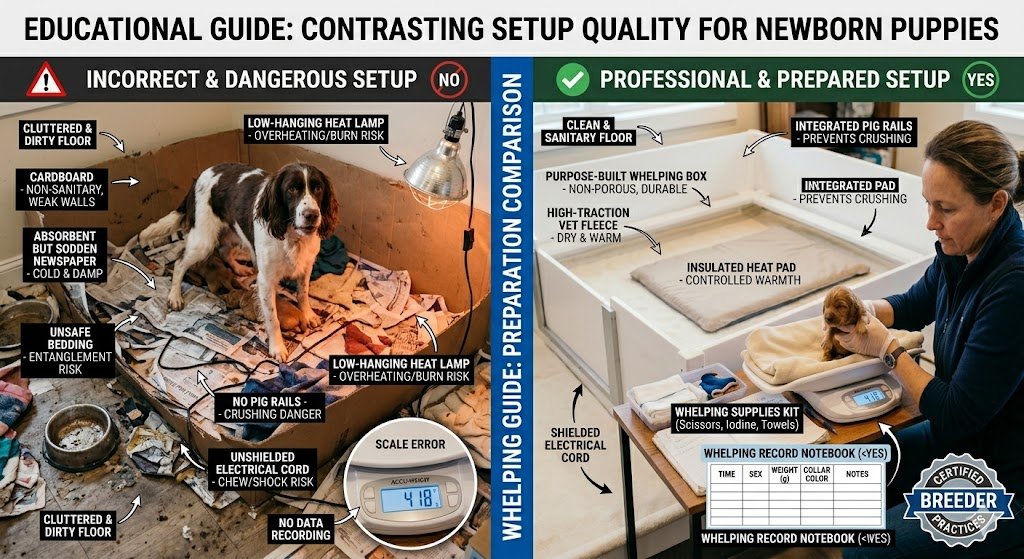
Checklist for During Whelping
Once labor begins, the breeder’s role is to observe, provide a calm environment, and monitor both the mother and puppies. Most dogs can whelp without assistance, but first-time breeders should be prepared to identify potential problems and know when veterinary help is needed.
Items to Keep Within Reach
Having essential supplies nearby prevents unnecessary disruptions during labor and allows quick access if assistance becomes necessary.
Keep these items within reach:
- Clean towels
- Disposable gloves
- Digital thermometer
- Sterile scissors
- Umbilical cord clamps or dental floss
- Puppy scale
- Notebook and pen
- Emergency veterinary contact information
Organizing supplies before labor begins helps keep the process calm and efficient.
What First-Time Breeders Should Monitor
Careful observation is important throughout the whelping process. While some variation is normal, significant changes may indicate a complication.
Monitor:
- The mother’s comfort and behavior
- Progress of labor
- Time between puppies
- Puppy breathing and movement after birth
- Nursing activity
- Signs of distress in the mother
Recording the birth time and basic information for each puppy can also be helpful.
Situations That Require Veterinary Assistance
Although many deliveries proceed normally, certain warning signs should never be ignored.
Contact a veterinarian immediately if you notice:
- Strong contractions without a puppy being delivered
- Excessive bleeding
- Extreme weakness or collapse
- A puppy visibly stuck in the birth canal
- Prolonged labor with no progress
- Signs of severe distress in the mother
Prompt veterinary intervention can help protect both the mother and her puppies.
Emergency Signs During Whelping
| Warning Sign | Action Needed |
|---|---|
| Strong contractions with no puppy delivered | Contact veterinarian |
| Excessive bleeding | Seek immediate veterinary care |
| Puppy stuck in birth canal | Emergency veterinary assistance |
| Mother collapses or becomes unresponsive | Emergency veterinary care |
| Labor stops unexpectedly for an extended period | Contact veterinarian |
| Severe distress or pain | Immediate evaluation |
Summary
During whelping, breeders should focus on monitoring labor, supporting the mother, and ensuring puppies are born safely. Having supplies organized and recognizing emergency warning signs can help first-time breeders respond appropriately if complications occur.
Key Points
- Keep all whelping supplies within easy reach.
- Monitor the mother’s behavior and labor progress.
- Record basic information for each puppy.
- Most dogs can whelp naturally with minimal assistance.
- Learn the warning signs that require veterinary intervention.
- Quick action can help prevent serious complications during delivery.
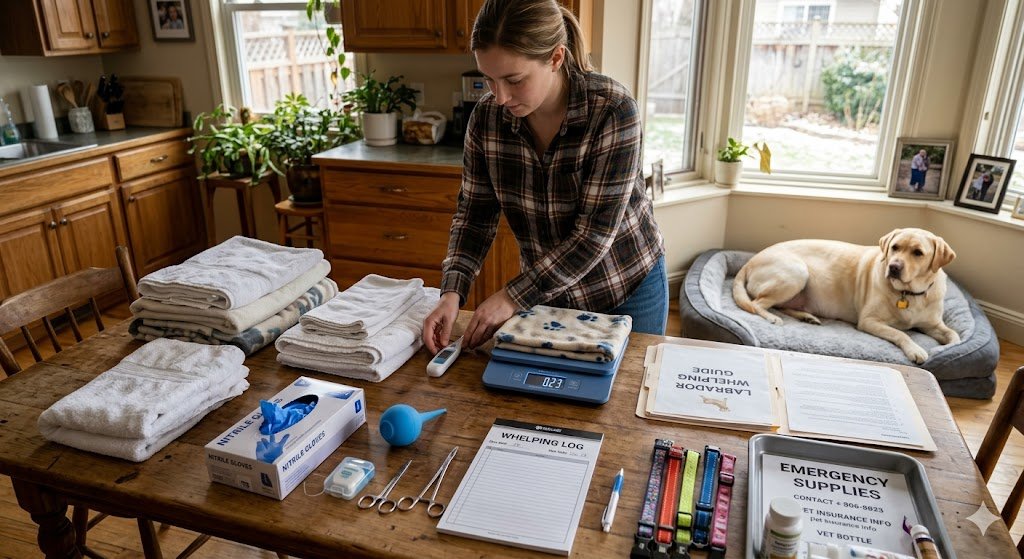
Newborn Puppy Care Checklist
The first hours and days after birth are critical for puppy survival and development. Newborn puppies rely entirely on their mother and breeder for warmth, nutrition, and monitoring. A structured care checklist helps first-time breeders ensure every puppy gets the best possible start.
Immediate Care After Birth
Each puppy should be checked shortly after delivery to confirm it is breathing normally and appears active. The mother usually handles much of the cleaning and stimulation, but breeders should observe to ensure everything is progressing properly.
Immediate priorities include:
- Confirm normal breathing
- Dry the puppy if necessary
- Ensure the puppy stays warm
- Check for normal movement and responsiveness
- Verify access to the mother’s nipples
Early observation can help identify problems before they become serious.
Monitoring Puppy Health
Regular monitoring during the first days helps breeders detect health issues quickly. Puppies should appear active, nurse regularly, and maintain a healthy body condition.
Monitor:
- Daily weight gain
- Nursing frequency
- Activity levels
- Body temperature
- Overall appearance
Failure to gain weight is often one of the earliest signs that a puppy needs attention.
Ensuring Proper Nursing
Colostrum, the mother’s first milk, provides essential nutrients and immune support for newborn puppies. Ensuring that each puppy nurses successfully is one of the most important post-birth responsibilities.
Breeders should:
- Observe nursing sessions
- Ensure smaller puppies have feeding opportunities
- Check that all puppies can latch properly
- Monitor for signs of dehydration or weakness
If nursing problems occur, veterinary guidance should be sought promptly.
Newborn Puppy Care Checklist Table
| Task | Frequency |
|---|---|
| Check puppy warmth | Several times daily |
| Observe nursing | Daily |
| Monitor activity levels | Daily |
| Record weight | Daily |
| Inspect overall condition | Daily |
| Check for signs of illness | Daily |
Summary
Newborn puppy care focuses on warmth, nursing, weight monitoring, and overall health observation. Consistent monitoring during the first days can help first-time breeders identify issues early and support healthy puppy development.
Key Points
- Ensure each puppy is breathing and active after birth.
- Keep newborn puppies warm and dry.
- Monitor nursing and access to colostrum.
- Record puppy weights daily.
- Watch for signs of weakness or poor growth.
- Early detection of problems improves outcomes for newborn puppies.
Post-Whelping Care Checklist
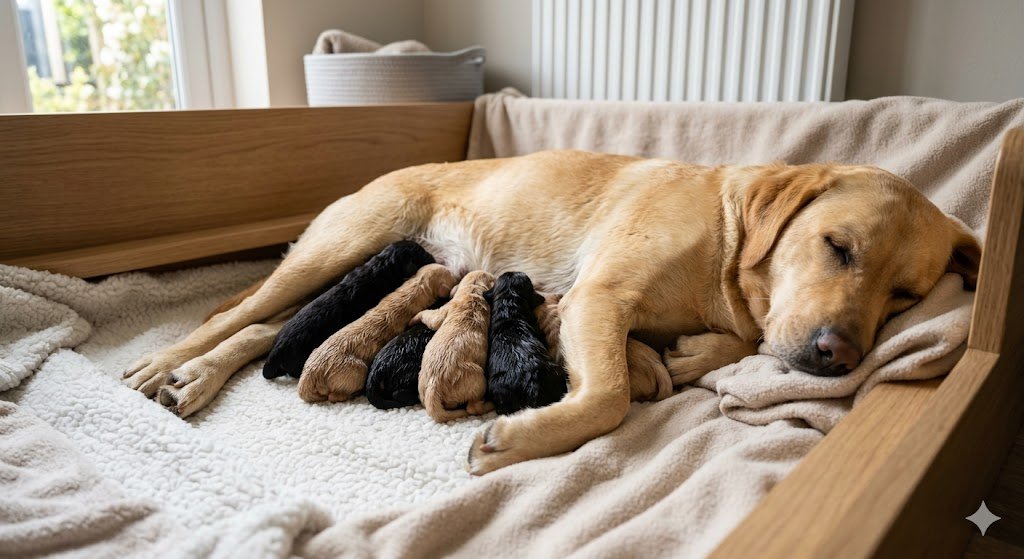
The first 48 hours after whelping are crucial for both the mother dog and her puppies. During this period, breeders should focus on cleanliness, monitoring health, and ensuring the puppies are feeding properly. Consistent observation can help identify potential problems before they become serious.
Caring for the Mother Dog
The mother should have access to fresh water, quality nutrition, and a quiet environment to recover from labor and care for her litter.
Monitor for:
- Normal appetite
- Adequate water intake
- Comfortable movement
- Healthy nursing behavior
- Signs of illness or excessive fatigue
Any sudden changes in health or behavior should be discussed with a veterinarian.
Keeping the Whelping Area Clean
A clean environment helps reduce the risk of infection and supports the health of both the mother and puppies.
Good hygiene practices include:
- Replacing soiled bedding regularly
- Keeping the area dry
- Cleaning food and water bowls daily
- Removing waste promptly
- Maintaining proper ventilation
Monitoring the First 48 Hours
The first two days are when many post-whelping issues become noticeable. Frequent checks help ensure the litter is progressing normally.
Observe:
- Puppy nursing activity
- Puppy warmth and comfort
- Daily weight trends
- Mother’s recovery
- Overall litter health
Summary
Post-whelping care involves monitoring the mother’s recovery, maintaining a clean environment, and ensuring puppies are nursing and growing properly. Careful observation during the first 48 hours can help prevent complications and support a healthy start for the litter.
Key Points
- Monitor both the mother and puppies closely after birth.
- Provide fresh water and proper nutrition for the mother.
- Keep the whelping area clean and dry.
- Track puppy nursing and weight gain.
- Watch for signs of illness or recovery problems.
- The first 48 hours require the closest observation.
Common Whelping Mistakes First-Time Breeders Should Avoid
Even with good preparation, first-time breeders can make mistakes that increase stress or create unnecessary risks during whelping. Avoiding these common errors can help ensure a safer experience for both the mother dog and her puppies.
Overhandling Newborn Puppies
Newborn puppies should be monitored regularly, but excessive handling can cause unnecessary stress for both the puppies and the mother.
Instead:
- Handle puppies only when necessary
- Perform health checks calmly and efficiently
- Allow the mother to bond naturally with her litter
Poor Temperature Management
One of the most common mistakes is failing to maintain a warm and comfortable environment. Newborn puppies cannot regulate their body temperature effectively and depend on their surroundings for warmth.
Breeders should:
- Monitor room temperature regularly
- Prevent drafts around the whelping area
- Keep bedding clean and dry
- Ensure puppies are warm but not overheated
Waiting Too Long to Call a Veterinarian
Some first-time breeders hesitate to seek professional help when complications arise. Delaying veterinary assistance can increase risks for both the mother and puppies.
Contact a veterinarian immediately if:
- Labor is not progressing normally
- A puppy appears stuck
- Excessive bleeding occurs
- The mother shows signs of severe distress
- Puppies appear weak or fail to nurse
Skipping Record Keeping
Keeping simple records helps monitor the health and development of the litter.
Important records include:
- Puppy birth times
- Daily weights
- Nursing observations
- Health concerns
- Veterinary visits
Summary
Most whelping problems can be avoided through preparation, observation, and timely action. Avoiding excessive handling, maintaining proper temperature, seeking veterinary help when needed, and keeping accurate records can help first-time breeders manage whelping more successfully.
Key Points
- Avoid unnecessary handling of newborn puppies.
- Maintain a warm and draft-free environment.
- Never delay veterinary care during emergencies.
- Monitor puppies and the mother closely.
- Keep basic records for each puppy.
- Preparation and observation reduce the risk of common whelping mistakes.
Conclusion
A well-prepared whelping checklist helps first-time breeders approach labor, delivery, and puppy care with confidence. By organizing essential supplies, setting up a safe whelping area, preparing for emergencies, and monitoring both the mother and puppies, breeders can create the best possible environment for a healthy litter. The key to successful whelping is preparation, observation, and knowing when professional veterinary assistance is needed.
FAQs
What should be included in a whelping checklist for first-time breeders?
A complete whelping checklist should include a whelping box, clean towels, bedding, thermometer, puppy scale, heating source, feeding supplies, and emergency veterinary contact information.
When should I set up the whelping box?
The whelping box should be set up at least one to two weeks before the expected due date so the mother dog can become comfortable with the area.
What supplies are essential during whelping?
Essential supplies include clean towels, disposable gloves, a digital thermometer, puppy pads, a puppy scale, sterile scissors, and emergency veterinary contacts.
How do I know when my dog is about to whelp?
Common signs include nesting behavior, restlessness, panting, reduced appetite, pacing, and a drop in body temperature within 24 hours of labor.
How often should newborn puppies be weighed?
Newborn puppies should be weighed daily during the first few weeks to ensure they are nursing properly and gaining weight consistently.
When should I call a veterinarian during whelping?
Contact a veterinarian if labor stalls, a puppy becomes stuck, excessive bleeding occurs, or the mother shows signs of severe distress or illness.
Why is a whelping checklist important for first-time breeders?
A whelping checklist helps breeders stay organized, prepare for emergencies, and ensure both the mother dog and puppies receive proper care before, during, and after delivery.