The dog gestation period is the time between successful breeding and the birth of puppies. In most dogs, pregnancy lasts approximately 63 days, though the normal range is typically 58 to 68 days depending on breeding timing, litter size, and the dog’s overall health.
The gestation period for dogs begins after fertilization and ends when the mother gives birth, a process known as whelping. During this period, puppies develop from tiny embryos into fully formed newborns.
Understanding the gestation period of dogs helps owners estimate due dates, track pregnancy progress, prepare for delivery, and provide proper prenatal care.
How Long Is a Dog’s Gestation Period?
The average dog gestation period is around 63 days, or approximately 9 weeks. While this is the standard timeframe, some dogs may deliver a few days earlier or later without complications.
For those wondering “what is the gestation period for a dog” or “how long is a dog’s gestation period,” the typical answer is 63 days from ovulation or roughly 9 weeks of pregnancy.
| Pregnancy Measurement | Typical Length |
|---|---|
| Average Gestation Period | 63 Days |
| Gestation in Weeks | 9 Weeks |
| Normal Range | 58–68 Days |
Dog Gestation Period in Weeks
The dog gestation period in weeks is generally divided into nine stages of development:
| Pregnancy Week | Key Development |
|---|---|
| Weeks 1–2 | Fertilization and early embryo development |
| Weeks 3–4 | Embryo implantation and pregnancy confirmation |
| Weeks 5–6 | Rapid fetal growth begins |
| Weeks 7–8 | Puppies continue maturing and gaining weight |
| Week 9 | Final preparation for labor and birth |
Tracking pregnancy by week helps owners understand what changes to expect throughout canine gestation.
Why the Gestation Length Can Vary
Although the average gestational period for dogs is 63 days, several factors can influence the exact length of pregnancy.
Common factors include:
- Breed size
- Litter size
- Ovulation timing
- Maternal age
- Overall health condition
- Reproductive history
Minor variations are normal, but pregnancies that extend significantly beyond the expected timeframe should be evaluated by a veterinarian.
Summary
The dog gestation period refers to the length of a dog’s pregnancy, which averages 63 days or about 9 weeks. Most pregnancies fall within a normal range of 58 to 68 days, with factors such as litter size, breeding timing, and maternal health affecting the exact duration.
Key Points
- The average dog gestation period is 63 days.
- Most dogs remain pregnant for approximately 9 weeks.
- A normal gestation period ranges from 58 to 68 days.
- Gestation begins after fertilization and ends with whelping.
- Understanding the pregnancy timeline helps owners prepare for delivery and puppy care.
Dog Gestation Period Chart
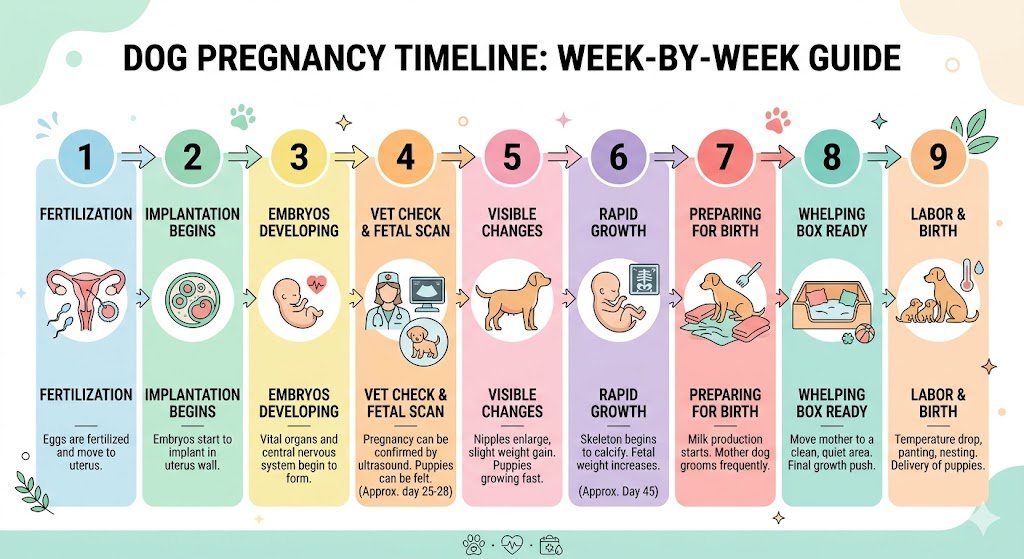
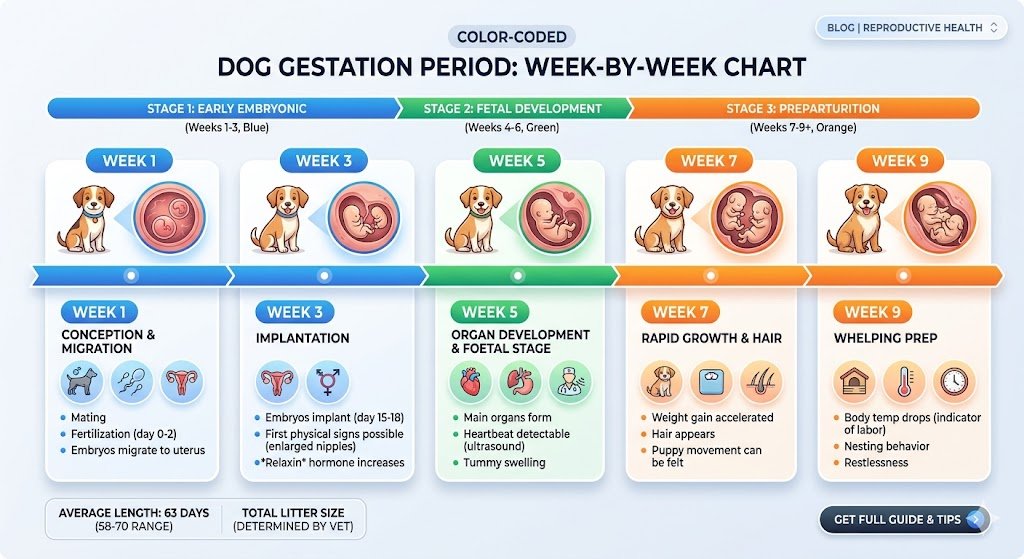
A dog gestation period chart provides a simple overview of what happens during each stage of pregnancy. While the average pregnancy lasts around 63 days, important developmental milestones occur throughout the nine-week gestation period.
| Week | Pregnancy Stage | What Happens |
|---|---|---|
| 1 | Fertilization | Eggs are fertilized after breeding. |
| 2 | Early Development | Embryos begin dividing and developing. |
| 3 | Implantation | Embryos attach to the uterine wall. |
| 4 | Organ Formation | Early organs and body structures start forming. |
| 5 | Rapid Growth | Fetuses grow quickly and become more recognizable. |
| 6 | Physical Development | Puppies develop claws, toes, and distinct features. |
| 7 | Continued Growth | Skeletal development progresses and weight increases. |
| 8 | Final Development | Puppies are nearly fully developed. |
| 9 | Whelping Preparation | Puppies move into birth position and labor approaches. |
This gestation period for dogs chart helps owners understand how pregnancy progresses from breeding to delivery.
Week-by-Week Pregnancy Overview
Each stage of the dog gestation period involves specific changes in both the mother and developing puppies.
| Pregnancy Stage | Key Changes |
|---|---|
| Early Pregnancy (Weeks 1–3) | Fertilization, embryo development, and implantation occur. |
| Mid Pregnancy (Weeks 4–6) | Rapid fetal growth and visible pregnancy signs begin. |
| Late Pregnancy (Weeks 7–9) | Puppies mature, weight increases, and labor preparation starts. |
By the fifth week, many pregnant dogs begin showing physical changes such as weight gain and abdominal enlargement. During the final weeks, nesting behavior, reduced activity, and appetite changes may become more noticeable.
Dog Gestation Period Chart by Weeks
The following chart serves as a quick reference for owners monitoring a dog’s pregnancy.
| Week | Puppy Development | Common Signs in the Mother |
|---|---|---|
| 1–2 | Fertilization and embryo formation | Usually no visible signs |
| 3–4 | Implantation and early organ development | Mild appetite or behavior changes |
| 5–6 | Rapid fetal growth | Weight gain and enlarged abdomen |
| 7–8 | Continued development and maturation | Nesting behavior may begin |
| 9 | Puppies fully developed | Signs of impending labor |
Why a Gestation Chart Is Useful
A dog gestation period chart helps owners:
- Track pregnancy progress accurately.
- Estimate the expected due date.
- Understand normal developmental milestones.
- Recognize potential pregnancy concerns.
- Prepare for whelping and newborn puppy care.
Summary
A dog gestation period chart breaks pregnancy into weekly stages, making it easier to monitor fetal development and maternal changes. Most dogs complete pregnancy in approximately 63 days, progressing through fertilization, fetal growth, and labor preparation over nine weeks.
Key Points
- The average dog gestation period lasts about 63 days.
- Pregnancy is commonly divided into 9 weeks.
- Major fetal growth occurs during weeks 5–8.
- Week 9 is typically when labor and whelping occur.
- A gestation chart helps track puppy development and expected delivery timing.
Dog Gestation Period Calculator
A dog gestation period calculator helps estimate a dog’s expected due date based on the breeding date. Since the average dog gestation period is approximately 63 days, most due date calculations are made by adding 63 days to the first successful breeding date.
While calculators provide a useful estimate, actual delivery may occur a few days earlier or later depending on factors such as ovulation timing, litter size, breed, and maternal health.
How to Calculate a Dog’s Due Date
The simplest way to estimate a due date is:
Breeding Date + 63 Days = Estimated Whelping Date
For example:
| Breeding Date | Estimated Due Date |
|---|---|
| January 1 | March 5 |
| February 10 | April 14 |
| March 15 | May 17 |
| April 20 | June 22 |
This method works well for most pregnancies, although veterinarians may use ultrasound findings and ovulation testing for more accurate predictions.
Dog Due Date Formula
Most dog gestation period calculators use the following formula:
| Calculation Method | Estimated Pregnancy Length |
|---|---|
| From Ovulation | Approximately 63 Days |
| From Breeding Date | Approximately 58–68 Days |
| Average Pregnancy Length | About 9 Weeks |
Because breeding and ovulation do not always occur on the same day, estimated due dates should be treated as a range rather than an exact delivery date.
Why Gestation Calculators Are Helpful
Using a dog due date calculator can help owners:
- Estimate the expected whelping date.
- Track pregnancy progress more accurately.
- Schedule veterinary checkups.
- Prepare a whelping area before labor begins.
- Monitor for overdue pregnancies.
A due date estimate becomes especially useful during the final weeks of pregnancy when labor signs begin to appear.
Limitations of Dog Gestation Calculators
Although helpful, calculators cannot predict the exact day puppies will be born.
Factors that can influence delivery timing include:
- Ovulation timing
- Breed characteristics
- Litter size
- Maternal age
- Overall health status
For the most accurate estimate, veterinarians may use progesterone testing, ultrasound examinations, or fetal development assessments.
Summary
A dog gestation period calculator estimates a dog’s due date by adding approximately 63 days to the breeding or ovulation date. While the estimate is usually accurate, actual delivery can occur within a normal range of 58 to 68 days.
Key Points
- Most dog pregnancies last about 63 days.
- Due dates are commonly calculated from the breeding date.
- Delivery may occur a few days before or after the estimated date.
- Breed, litter size, and ovulation timing can affect pregnancy length.
- Veterinary examinations provide the most accurate due date estimates.
Dog Pregnancy Stages Week by Week
The dog gestation period is typically divided into nine weeks, with each stage bringing important changes in puppy development and the mother’s body. Understanding the dog pregnancy stages week by week helps owners track pregnancy progress, recognize normal milestones, prepare for whelping, and provide appropriate care throughout canine pregnancy.
Weeks 1–2: Fertilization and Early Development
During the first two weeks of the dog gestation period, fertilization occurs and the embryos begin dividing and developing. At this stage, there are usually no visible signs of pregnancy, and most dogs behave normally.
Weeks 3–4: Implantation and Organ Formation
Around the third week, embryos implant into the uterine wall where they continue developing. Early organs, the nervous system, and body structures begin forming. Some dogs may experience mild appetite changes, increased affection, or temporary fatigue.
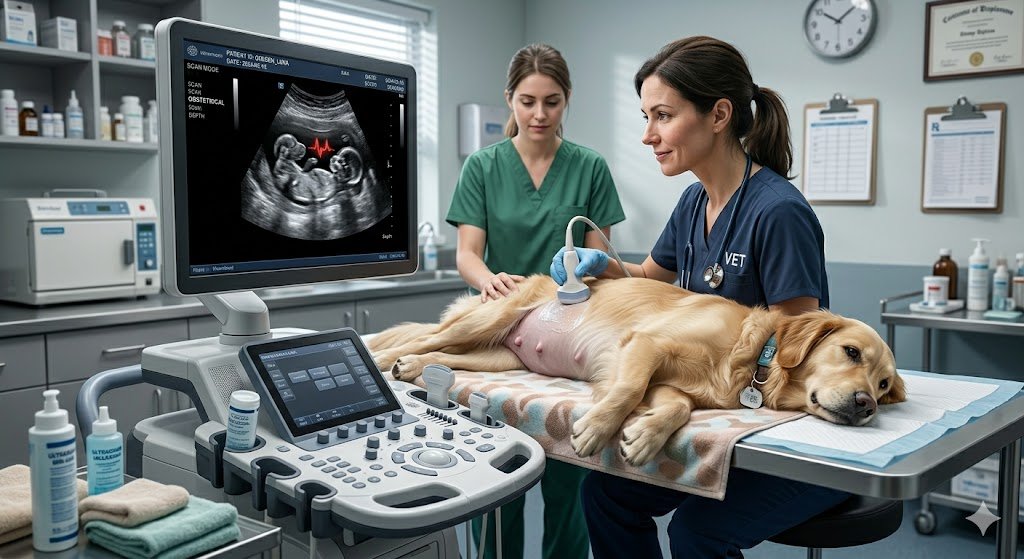
Veterinarians can often confirm pregnancy through ultrasound during this stage.
Weeks 5–6: Rapid Fetal Growth
The fifth and sixth weeks mark one of the most important phases of canine pregnancy. Puppies grow rapidly, and their limbs, facial features, and internal organs become more developed.
Common changes in the mother include:
- Noticeable weight gain
- Enlarged abdomen
- Increased appetite
- More frequent resting
Weeks 7–8: Puppy Development Near Completion
By weeks seven and eight, puppies are largely developed and continue gaining size and weight. Their skeletons become more defined, and movement may sometimes be felt or observed in the abdomen.
During this period, many pregnant dogs begin:
- Nesting behavior
- Seeking quiet areas
- Sleeping more often
- Reducing strenuous activity
Week 9: Final Preparation for Whelping
The final week of the dog gestation period in weeks focuses on preparing for delivery. Puppies move into position for birth, and the mother’s body begins showing signs that labor is approaching.
Owners should prepare a clean and comfortable whelping area and closely monitor the dog’s condition.
Changes Throughout the Pregnancy Timeline
The average dog pregnancy timeline lasts about nine weeks, with each stage contributing to healthy fetal development and preparation for birth.
| Pregnancy Stage | Major Development |
|---|---|
| Weeks 1–2 | Fertilization and embryo formation |
| Weeks 3–4 | Implantation and organ development |
| Weeks 5–6 | Rapid fetal growth |
| Weeks 7–8 | Puppy maturation and weight gain |
| Week 9 | Labor preparation and delivery |
Summary
The dog pregnancy stages week by week progress from fertilization and embryo development to fetal growth and eventual delivery. Most pregnancies last approximately 63 days, with significant developmental milestones occurring throughout the nine-week gestation period.
Key Points
- Dog pregnancy typically lasts around 9 weeks.
- Embryos implant during weeks 3–4.
- Rapid fetal growth occurs during weeks 5–6.
- Nesting behavior often begins in weeks 7–8.
- Week 9 is when labor and whelping usually occur.
Early Signs of Pregnancy in Dogs
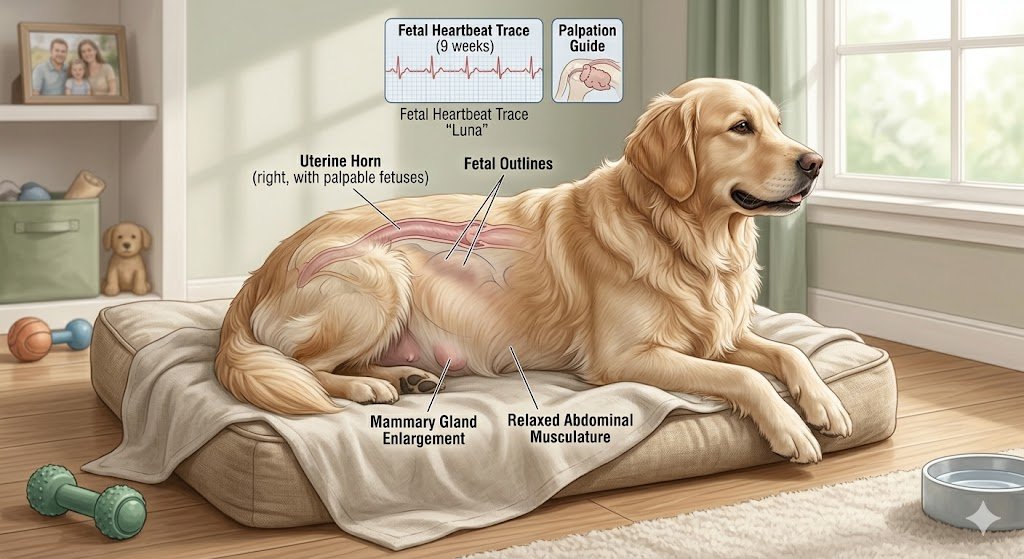
The early signs of pregnancy in dogs can be subtle and often appear within the first few weeks after breeding. Common symptoms include mild weight gain, enlarged or darker nipples, increased appetite, reduced energy levels, occasional morning sickness, and changes in behavior such as being more affectionate or seeking extra rest. As the dog gestation period progresses, these signs typically become more noticeable, although a veterinarian is the best source for confirming pregnancy.
Physical Signs of Pregnancy
During the first few weeks of the dog gestation period, physical changes are often subtle. As pregnancy progresses, many dogs begin showing noticeable signs that indicate developing puppies.
Common physical signs include:
- Mild weight gain
- Enlarged abdomen
- Enlarged or darker nipples
- Increased appetite
- Occasional morning sickness
- Reduced energy levels
These signs usually become more visible after the fourth week of pregnancy.
Behavioral Signs of Pregnancy
Pregnant dogs may also experience behavioral changes caused by hormonal shifts and physical development.
Common behavioral signs include:
- Increased affection
- Seeking more attention
- Sleeping more than usual
- Reduced activity levels
- Nesting behavior during later stages
- Temporary mood changes
Not every dog displays the same behaviors, and some may show very few noticeable changes.
When Pregnancy Signs Typically Appear
The timing of pregnancy symptoms can vary, but most owners begin noticing changes between the third and fifth week of gestation.
| Pregnancy Stage | Common Signs |
|---|---|
| Weeks 1–2 | Usually no visible signs |
| Weeks 3–4 | Appetite and behavior changes |
| Weeks 5–6 | Weight gain and abdominal enlargement |
| Weeks 7–9 | Nesting behavior and preparation for labor |
Tracking these changes can help owners better understand where their dog is within the pregnancy timeline.
How Veterinarians Confirm Pregnancy
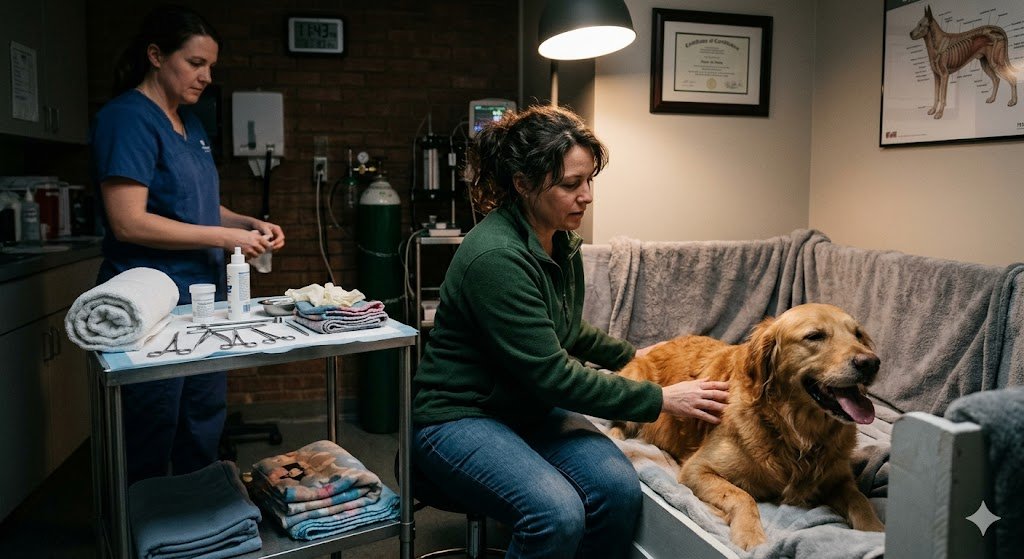
Physical symptoms alone cannot always confirm pregnancy. Veterinarians may use several methods to verify a dog’s pregnancy:
- Ultrasound examination
- Abdominal palpation
- Hormone testing
- X-rays during later pregnancy stages
Professional confirmation provides a more accurate estimate of the expected due date and puppy count.
Summary
The early signs of pregnancy in dogs include both physical and behavioral changes, such as weight gain, enlarged nipples, increased appetite, and changes in activity levels. Most symptoms become noticeable between weeks three and five of the dog gestation period.
Key Points
- Early pregnancy signs are often subtle.
- Weight gain and abdominal enlargement usually occur after week four.
- Behavioral changes may include increased affection and reduced activity.
- Nesting behavior commonly appears during late pregnancy.
- Veterinary examinations are the most reliable way to confirm pregnancy.
Puppy Development During Gestation
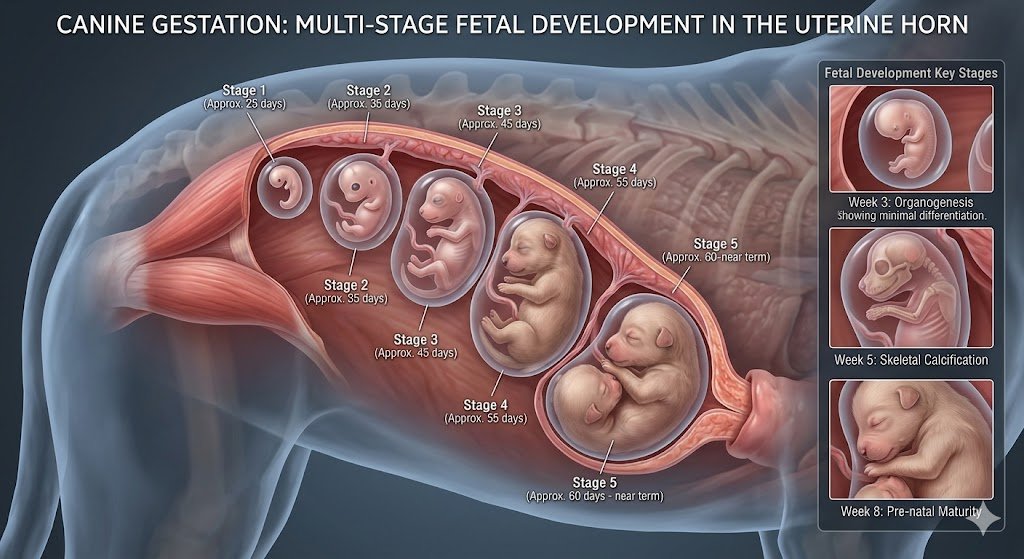
During the dog gestation period, puppies develop rapidly over approximately nine weeks. Early stages focus on embryo formation and organ development, while the middle weeks involve the growth of limbs, facial features, and internal systems. In the final weeks, puppies gain weight, their skeletons mature, and they prepare for birth. By the end of gestation, the puppies are fully developed and ready for whelping.
Puppy Development During Gestation
Puppy development progresses rapidly throughout the dog gestation period, transforming from microscopic embryos into fully formed puppies within approximately 63 days. During the first few weeks, embryos implant into the uterus and begin developing vital organs. By the middle stages of pregnancy, limbs, facial features, and internal systems become more defined. In the final weeks, puppies gain most of their body weight, their skeletons mature, and they prepare for birth. Understanding these developmental milestones helps owners track a healthy pregnancy and anticipate important changes leading up to whelping.
Puppy Development Timeline
| Pregnancy Week | Puppy Development |
|---|---|
| Weeks 1–2 | Fertilization and embryo formation |
| Weeks 3–4 | Implantation and early organ development |
| Weeks 5–6 | Limbs, facial features, and organs develop rapidly |
| Weeks 7–8 | Skeletal growth and weight gain increase |
| Week 9 | Puppies are fully developed and ready for birth |
Summary
Puppies undergo significant growth during the dog gestation period, progressing from embryos to fully developed newborns in about nine weeks. Most major organ and skeletal development occurs between weeks 4 and 8.
Key Points
- Puppy development occurs throughout the entire gestation period.
- Major organ formation begins during weeks 3–4.
- Rapid growth occurs during weeks 5–8.
- Puppies gain most of their weight in late pregnancy.
- By week 9, puppies are typically ready for delivery.
Factors That Affect the Dog Gestation Period
Although the average dog gestation period is about 63 days, the exact length of pregnancy can vary between dogs. Several factors influence when a dog gives birth, including breed size, litter size, breeding and ovulation timing, maternal age, overall health, and genetics. Dogs carrying smaller litters may remain pregnant slightly longer, while larger litters can sometimes result in earlier delivery. Understanding these factors helps owners better estimate due dates and monitor a healthy pregnancy.
Key Factors That Influence Gestation Length
| Factor | Potential Impact |
|---|---|
| Breed Size | Small and large breeds may vary slightly in pregnancy length |
| Litter Size | Smaller litters may extend gestation slightly |
| Ovulation Timing | Affects the accuracy of due date calculations |
| Maternal Health | Health conditions can influence pregnancy progression |
| Age | Very young or older dogs may experience variations |
| Genetics | Individual reproductive traits can affect gestation |
Summary
The gestation period for dogs can vary due to factors such as breed, litter size, ovulation timing, age, health, and genetics. While most pregnancies last around 63 days, minor variations are generally considered normal.
Key Points
- The average dog gestation period is approximately 63 days.
- Litter size can affect delivery timing.
- Ovulation timing plays a major role in due date accuracy.
- Maternal health influences pregnancy development.
- Small variations in gestation length are common and usually normal.
Dog Gestation Period by Breed
The dog gestation period is generally similar across most breeds, averaging around 63 days, but slight variations can occur based on breed size and individual reproductive factors. Small, medium, and large breed dogs typically follow the same pregnancy timeline, although litter size and genetics may influence the exact delivery date. For example, the gestation period for German Shepherd dogs is usually within the standard 58–68 day range, with most pregnancies lasting close to 63 days.
Average Gestation Period by Breed Category
| Breed Category | Average Gestation Period |
|---|---|
| Small Breeds | 58–68 Days |
| Medium Breeds | 58–68 Days |
| Large Breeds | 58–68 Days |
| German Shepherd | Around 63 Days |
| Labrador Retriever | Around 63 Days |
| Golden Retriever | Around 63 Days |
Why Breed Differences Matter
While breed alone does not dramatically change pregnancy length, factors commonly associated with certain breeds—such as average litter size, body size, and reproductive history—can influence the timing of delivery. This is why veterinarians often focus on ovulation dates and fetal development rather than breed alone when estimating due dates.
Summary
Most dog breeds share a similar gestation period of approximately 63 days. Although minor variations can occur, breed size generally has less impact on pregnancy length than factors such as litter size, ovulation timing, and maternal health.
Key Points
- Most dog breeds have a gestation period of about 63 days.
- The normal pregnancy range is 58–68 days.
- German Shepherds typically follow the standard canine gestation timeline.
- Breed size has only a minor effect on pregnancy duration.
- Ovulation timing is usually more important than breed when estimating due dates.
Conclusion
The dog gestation period is an essential aspect of canine reproduction, lasting on average around 63 days or 9 weeks. While most pregnancies follow this general timeline, slight variations are normal depending on factors such as breed, litter size, ovulation timing, and overall health. Understanding the pregnancy stages, using a due date calculator, and recognizing early signs of labor can help dog owners ensure proper care and prepare effectively for a safe delivery.
FAQs
How long is a dog pregnant for?
A dog is usually pregnant for about 63 days, although the normal range can be between 58 to 68 days.
What is the gestation period for dogs?
The gestation period for dogs is the time from successful breeding to birth, typically lasting around 9 weeks.
Can dogs give birth early or late?
Yes, dogs can give birth a few days earlier or later than expected, depending on ovulation timing and other biological factors.
How can I calculate my dog’s due date?
You can estimate the due date by adding 63 days to the breeding date, though veterinarians may provide more accurate results.
What are the signs a dog is about to give birth?
Common signs include nesting behavior, decreased appetite, restlessness, and a drop in body temperature.
Do all dog breeds have the same gestation period?
Yes, most dog breeds share a similar gestation period of about 63 days, with only minor variations.