The gestation period for dogs is the time between conception and the birth of puppies. Most dogs are pregnant for about 63 days, although a normal pregnancy can last anywhere from 58 to 68 days depending on ovulation timing, breed, litter size, and individual health.
Understanding the gestation period for dogs helps breeders and pet owners monitor pregnancy milestones, estimate the due date, prepare for whelping, and provide proper care throughout each stage of pregnancy. A dog gestation period chart also makes it easier to track fetal development and know what to expect week by week.
In this guide, you’ll learn how long dogs are pregnant, what affects pregnancy length, how to use a dog gestation period chart, how to calculate your dog’s due date, recognize pregnancy signs, and prepare for a healthy delivery.
Summary
The gestation period for dogs typically lasts 63 days, with most pregnancies ranging from 58–68 days. Understanding the pregnancy timeline and using a dog gestation period chart can help you track important milestones and prepare for your dog’s delivery.
Key Points
- The average gestation period for dogs is about 63 days.
- Normal canine pregnancy lasts 58–68 days.
- A dog gestation period chart helps monitor pregnancy week by week.
- Pregnancy length can vary due to ovulation timing, litter size, breed, and overall health.
- Tracking the pregnancy timeline helps you prepare for whelping and veterinary care.
What Is the Gestation Period for Dogs?
The gestation period for dogs is the length of time a dog is pregnant, beginning after conception and ending when the puppies are born. For most dogs, pregnancy lasts about 63 days, although a normal dog gestation period can range from 58 to 68 days depending on several biological factors.
Understanding the gestation period for dogs helps owners and breeders estimate the due date, monitor puppy development, and prepare for each stage of pregnancy.
Average Pregnancy Length
The average gestation period for dogs is approximately 63 days from ovulation. If you’re calculating from the breeding date instead of ovulation, the pregnancy may last between 58 and 68 days because fertilization does not always occur immediately after mating.
| Pregnancy Measurement | Typical Length |
|---|---|
| From ovulation | Around 63 days |
| From breeding date | Usually 58–68 days |
Why the Gestation Period Can Vary
Although 63 days is considered the average, every pregnancy is different. Several factors can influence the exact delivery date.
These include:
- Ovulation timing
- Litter size
- Breed and body size
- Age of the mother
- Overall health and reproductive history
Because of these factors, the expected due date should be treated as an estimate rather than an exact date.
Why Knowing the Gestation Period Matters
Knowing the gestation period for dogs allows you to:
- Estimate the expected due date.
- Track pregnancy milestones.
- Prepare a whelping area in advance.
- Schedule veterinary checkups.
- Recognize when labor is approaching.
Using a dog gestation period chart alongside a due-date calculator makes it easier to monitor your dog’s pregnancy from start to finish.
Summary
The gestation period for dogs averages 63 days, with most pregnancies lasting 58–68 days when calculated from the breeding date. Understanding this timeline helps you monitor pregnancy progress, estimate the due date, and prepare for a healthy delivery.
Key Points
- The average gestation period for dogs is about 63 days.
- Normal pregnancies typically last 58–68 days.
- Ovulation timing is the main reason pregnancy length varies.
- Breed, litter size, age, and health can also affect gestation.
- A dog gestation period chart helps track pregnancy milestones and expected delivery.
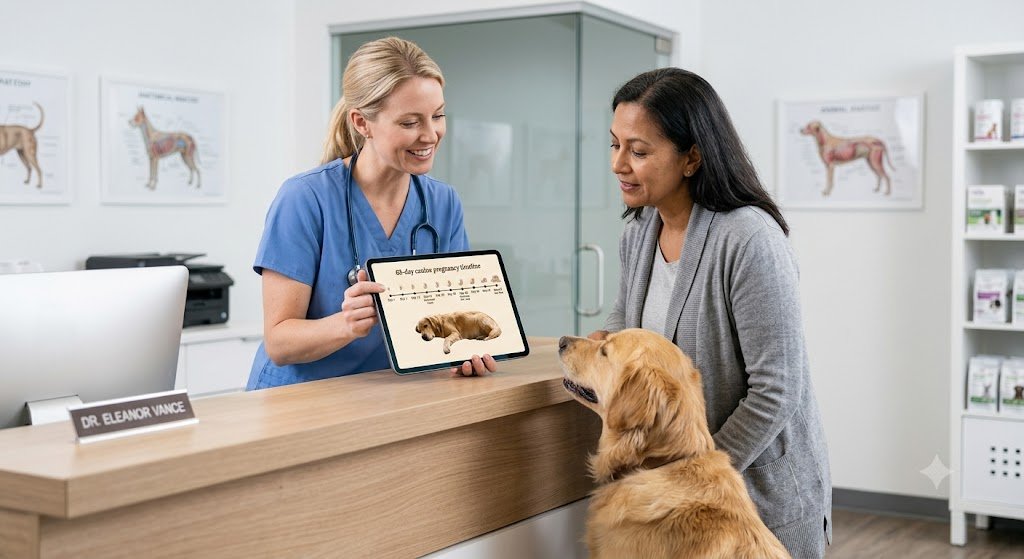
Dog Gestation Period Chart
A dog gestation period chart provides a week-by-week overview of your dog’s pregnancy, making it easier to monitor puppy development, recognize important milestones, and prepare for whelping. When used alongside the gestation period for dogs, the chart offers a clear timeline from breeding to delivery.
Week-by-Week Dog Gestation Period Chart
| Week | Puppy Development | Changes in the Mother |
|---|---|---|
| Week 1 | Fertilization begins. | Few or no visible changes. |
| Week 2 | Embryos travel toward the uterus. | Hormonal changes begin. |
| Week 3 | Embryos implant in the uterus. | Appetite or behavior may change slightly. |
| Week 4 | Puppies continue developing rapidly. | Pregnancy may be confirmed by ultrasound. |
| Week 5 | Organs and limbs develop further. | Weight gain and abdominal growth become noticeable. |
| Week 6 | Puppies grow quickly. | Increased appetite and reduced activity. |
| Week 7 | Puppies develop fur and continue gaining weight. | Nesting behavior may begin. |
| Week 8 | Puppies are almost fully developed. | Milk production may start, and movement slows. |
| Week 9 | Puppies are ready for birth. | Labor may begin near the end of the week. |
Key Pregnancy Milestones
Throughout the gestation period for dogs, several milestones help indicate that the pregnancy is progressing normally.
- Weeks 1–3: Fertilization and embryo implantation.
- Weeks 4–5: Pregnancy becomes easier to detect.
- Weeks 6–7: Rapid fetal growth and increased nutritional needs.
- Weeks 8–9: Nesting behavior and preparation for labor.
How to Use a Dog Gestation Period Chart
A dog gestation period chart helps you:
- Track pregnancy week by week.
- Monitor your dog’s physical changes.
- Estimate the expected due date.
- Plan veterinary visits.
- Prepare the whelping area before labor begins.
While the chart provides a helpful timeline, remember that most dogs deliver within a normal range of 58–68 days, so slight variations are expected.
Summary
A dog gestation period chart offers a simple way to follow each week of your dog’s pregnancy. Combined with an understanding of the gestation period for dogs, it helps you monitor development, prepare for delivery, and recognize important milestones.
Key Points
- A dog gestation period chart tracks pregnancy from Week 1 to Week 9.
- Most dogs complete pregnancy in about 63 days.
- The chart outlines puppy development and changes in the mother.
- Weekly milestones help you prepare for veterinary care and whelping.
- Pregnancy length may vary slightly depending on individual factors.
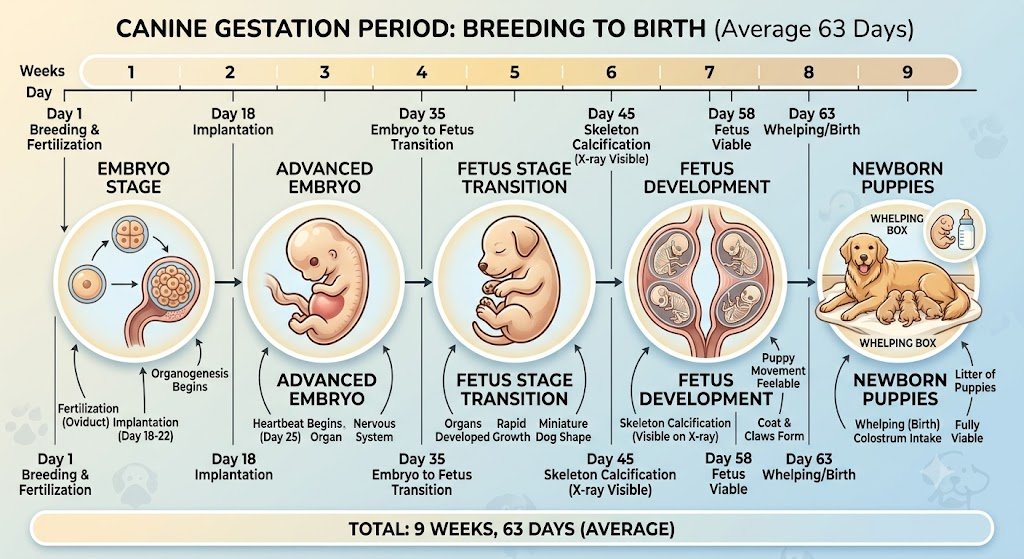
Dog Pregnancy Timeline Week by Week
The gestation period for dogs is divided into several stages, each marked by important changes in puppy development and the mother’s body. Following a dog gestation period chart alongside this timeline helps you understand what to expect throughout the pregnancy.
Weeks 1–2: Fertilization and Early Development
During the first two weeks, fertilization occurs and the embryos begin moving toward the uterus. Most dogs show no obvious signs of pregnancy during this stage.
Common changes include:
- Fertilization and cell division
- Hormonal changes begin
- Few or no visible physical signs
- Normal daily activity continues
Weeks 3–4: Pregnancy Becomes Detectable
By the third and fourth weeks, the embryos implant in the uterus and continue developing rapidly. Pregnancy may be confirmed by ultrasound around this time.
You may notice:
- Mild appetite changes
- Enlarged or pinker nipples
- Slight behavioral changes
- Early weight gain in some dogs
Weeks 5–6: Rapid Puppy Growth
This stage of the gestation period for dogs is marked by significant fetal development. The mother’s abdomen becomes more noticeable, and her nutritional needs increase.
Typical signs include:
- Visible abdominal enlargement
- Increased appetite
- Weight gain
- Reduced activity
- Faster puppy development
Weeks 7–9: Preparing for Whelping
During the final weeks, puppies continue gaining weight and preparing for birth. The mother also begins showing signs that labor is approaching.
Common changes include:
- Nesting behavior
- Milk production may begin
- Increased resting
- Reduced appetite before labor
- Body temperature drops within 12–24 hours before delivery
Signs That Labor Is Near
As the pregnancy nears its end, watch for these signs:
- Restlessness or pacing
- Panting
- Digging or nesting
- Refusal to eat
- Visible contractions
- Puppies arriving shortly after active labor begins
If labor does not progress normally or your dog appears distressed, contact your veterinarian immediately.
Summary
The gestation period for dogs progresses from early embryo development to full-term puppies over approximately nine weeks. Using a dog gestation period chart and understanding weekly milestones helps you provide appropriate care and prepare for a safe delivery.
Key Points
- Weeks 1–2 focus on fertilization and embryo development.
- Weeks 3–4 often bring the first noticeable pregnancy signs.
- Weeks 5–6 are marked by rapid puppy growth and increased appetite.
- Weeks 7–9 prepare the mother and puppies for whelping.
- Monitoring weekly changes helps you recognize normal pregnancy progression and signs of labor.
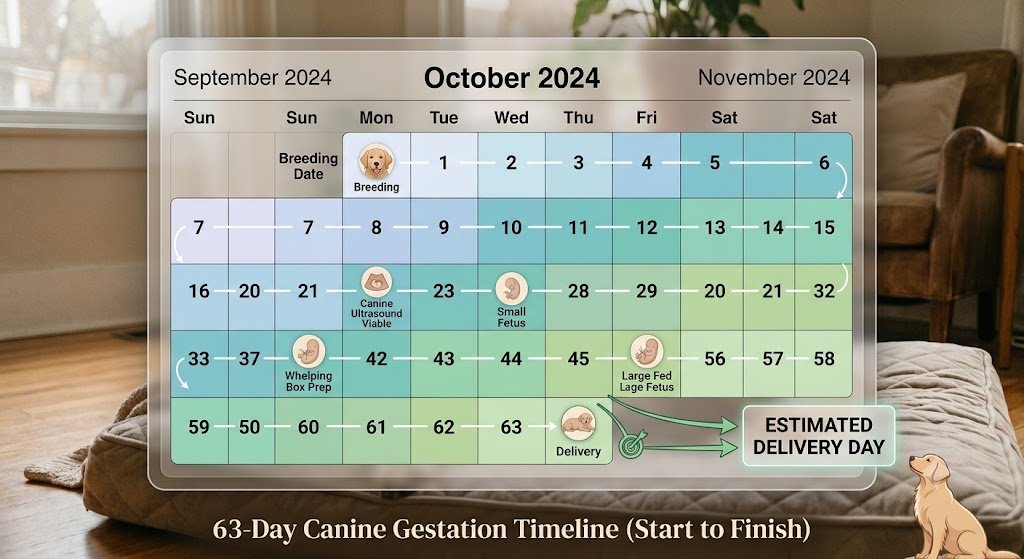
How to Calculate Your Dog’s Due Date
Calculating your dog’s due date is an important part of managing the gestation period for dogs. Knowing the expected whelping date helps you monitor pregnancy milestones, prepare a whelping area, and schedule veterinary visits at the right time. A dog gestation period chart can also help you follow each stage of pregnancy after estimating the due date.
Using the Breeding Date
If you know when your dog was bred, count approximately 63 days from that date to estimate the due date. Because fertilization may occur a few days after mating, the actual delivery can still vary within the normal 58–68 day gestation range.
Using the Ovulation Date
The ovulation date provides the most accurate estimate because canine pregnancy is more consistent when measured from ovulation rather than the breeding date. Most dogs deliver around 63 days after ovulation.
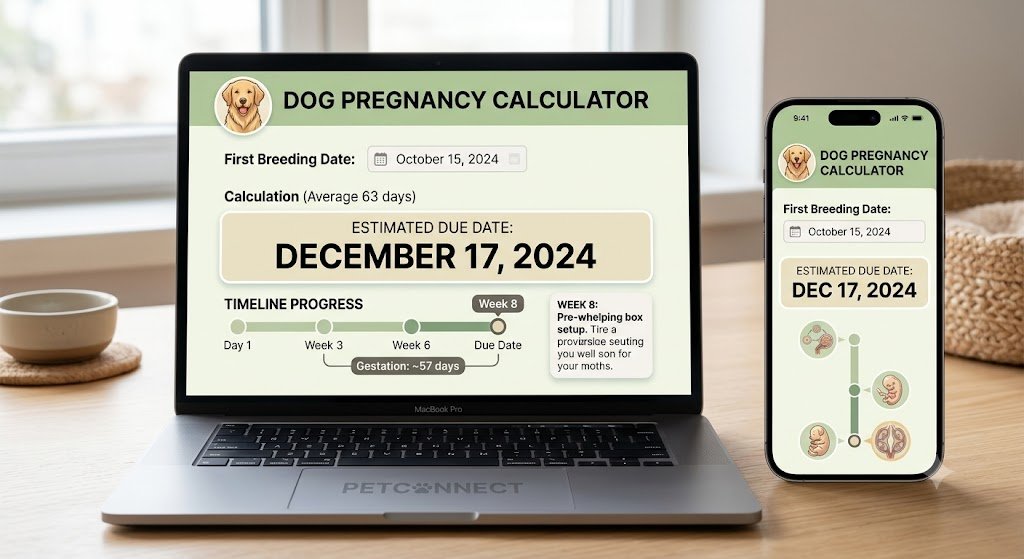
Using a Dog Pregnancy Calculator
A dog pregnancy calculator automatically estimates your dog’s expected due date using the breeding or ovulation date. It eliminates manual counting and often includes a pregnancy timeline to help you track important milestones.
Example Due Date Calculations
| Breeding Date | Estimated Due Date |
|---|---|
| January 8 | Around March 12 |
| March 20 | Around May 22 |
| June 15 | Around August 17 |
| September 5 | Around November 7 |
These dates are estimates and may vary slightly depending on ovulation timing and your dog’s individual pregnancy.
Why Accurate Due Date Estimates Matter
Estimating the due date helps you:
- Prepare a whelping box before labor begins.
- Monitor weekly pregnancy milestones.
- Schedule veterinary examinations.
- Recognize when labor is overdue.
- Plan for the arrival of the puppies.
Summary
Estimating your dog’s due date is an essential part of understanding the gestation period for dogs. Whether you calculate manually or use a dog pregnancy calculator, knowing the expected delivery date helps you prepare for each stage of pregnancy and whelping.
Key Points
- Most dogs give birth about 63 days after ovulation.
- Pregnancy measured from the breeding date usually lasts 58–68 days.
- A dog pregnancy calculator provides a fast and reliable due-date estimate.
- A dog gestation period chart helps track pregnancy after the due date is calculated.
- Due-date estimates improve pregnancy planning and whelping preparation.
Signs of Pregnancy in Dogs
Recognizing pregnancy signs early helps you monitor the gestation period for dogs and ensure your dog receives proper care throughout each stage. While some signs appear within the first few weeks, others become more noticeable as the pregnancy progresses. A dog gestation period chart can also help you match these changes to the appropriate week of pregnancy.
Early Signs of Pregnancy
During the first few weeks, symptoms are often mild and easy to miss. Some dogs may not show obvious physical changes until the second half of pregnancy.
Common early signs include:
- Mild changes in appetite
- Increased affection or clinginess
- Lower energy levels
- Occasional morning sickness
- Slight enlargement or darkening of the nipples
Mid-Pregnancy Signs
By the fourth or fifth week, pregnancy becomes easier to recognize as the puppies continue developing.
Typical signs include:
- Gradual weight gain
- Enlarging abdomen
- Increased appetite
- More frequent sleeping
- Enlarged mammary glands
A veterinarian can often confirm pregnancy with an ultrasound during this stage.
Late Pregnancy Signs
During the final weeks of the gestation period for dogs, your dog begins preparing for labor and delivery.
Common signs include:
- Noticeably larger abdomen
- Nesting behavior
- Milk production
- Reduced activity
- Loss of appetite shortly before labor
- Restlessness and panting
These changes usually indicate that whelping is approaching.

How Is Pregnancy Confirmed?
Although physical signs provide useful clues, veterinary confirmation is the most reliable method.
| Diagnostic Method | Typical Timing |
|---|---|
| Ultrasound | Around 25–30 days after breeding |
| Abdominal palpation | Around 28–35 days after breeding |
| X-ray | Around 45 days or later to estimate litter size |
Summary
Pregnancy signs develop gradually throughout the gestation period for dogs, from subtle behavioral changes in the early weeks to obvious physical changes before labor. Monitoring these signs and following a dog gestation period chart helps you provide appropriate care and prepare for your dog’s delivery.
Key Points
- Early pregnancy signs are often subtle.
- Weight gain and abdominal enlargement become noticeable during mid-pregnancy.
- Nesting behavior and milk production usually occur near the due date.
- Ultrasound can often confirm pregnancy after about 25–30 days.
- Tracking pregnancy signs alongside a dog gestation period chart improves monitoring and preparation.
Factors That Affect the Gestation Period for Dogs
Although the average gestation period for dogs is about 63 days, not every pregnancy follows the exact same timeline. Several biological and environmental factors can influence when labor begins, which is why a dog gestation period chart should be used as a guide rather than an exact schedule.
Breed and Body Size
Most dog breeds have a similar gestation length, but slight differences can occur based on breed characteristics and body size. Despite these variations, the majority of healthy pregnancies still fall within the normal 58–68 day range.
Litter Size
The number of puppies can influence the delivery date. Dogs carrying larger litters may give birth slightly earlier, while those carrying smaller litters may remain pregnant a little longer.
Ovulation Timing
Ovulation timing is one of the biggest factors affecting the gestation period for dogs. Since fertilization may occur several days after mating, calculating pregnancy from the breeding date can result in slight differences in the estimated due date.
Mother’s Age and Overall Health
A dog’s age, reproductive history, nutrition, and overall health all play a role in pregnancy. Healthy mothers receiving proper prenatal care are more likely to experience a normal gestation and successful delivery.
When Should You Be Concerned?
A pregnancy that extends slightly beyond the estimated due date is not always abnormal. However, if your dog remains pregnant well past the normal gestation range or shows signs of illness or prolonged labor without delivering puppies, contact your veterinarian promptly.
Factors Affecting Dog Gestation
| Factor | Possible Effect |
|---|---|
| Breed and body size | May cause minor variations in pregnancy length |
| Litter size | Larger litters may arrive slightly earlier |
| Ovulation timing | Can shift the estimated due date |
| Mother’s age | May influence pregnancy and delivery |
| Overall health | Supports a healthy gestation and whelping |
Summary
While the gestation period for dogs averages about 63 days, factors such as breed, litter size, ovulation timing, age, and overall health can affect the exact delivery date. Understanding these variables helps you interpret a dog gestation period chart more accurately and prepare for whelping.
Key Points
- The gestation period for dogs can vary within the normal 58–68 day range.
- Ovulation timing is the most common reason due dates differ.
- Litter size may influence when labor begins.
- Good nutrition and veterinary care support a healthy pregnancy.
- A dog gestation period chart provides an estimate, not a guaranteed delivery date.
How to Care for a Pregnant Dog
Providing proper care throughout the gestation period for dogs supports the health of both the mother and her puppies. As pregnancy progresses, your dog’s nutritional needs, activity level, and environment will change. Following a dog gestation period chart can help you prepare for each stage of pregnancy.
Provide a Balanced Diet
A pregnant dog needs a complete and balanced diet to support fetal development. During the first half of pregnancy, most dogs can continue eating their regular high-quality food. In the later weeks, calorie and nutrient requirements increase as the puppies grow rapidly.
Always provide:
- Fresh drinking water
- High-quality dog food
- Appropriate portion sizes
- Veterinary-approved dietary adjustments if needed
Maintain Safe Exercise
Regular, moderate exercise helps maintain muscle tone and overall health during pregnancy. Short walks and light activity are generally recommended, while strenuous exercise, rough play, and excessive jumping should be avoided during the later stages.
Schedule Regular Veterinary Checkups
Routine veterinary visits help monitor your dog’s health and confirm that the pregnancy is progressing normally. Your veterinarian may recommend ultrasound examinations, X-rays later in pregnancy, or other health assessments based on your dog’s condition.
Prepare a Whelping Area
As the due date approaches, set up a quiet, clean, and comfortable whelping box where your dog can safely give birth. Introducing the area before labor allows her to become familiar with the space and reduces stress.
Gather Essential Whelping Supplies
Having supplies ready before labor begins helps you respond quickly if needed.
| Supply | Purpose |
|---|---|
| Whelping box | Safe area for delivery |
| Clean towels | Dry and clean newborn puppies |
| Disposable gloves | Maintain hygiene if assistance is required |
| Heating pad or heat source | Help keep puppies warm |
| Digital thermometer | Monitor temperature before labor |
| Veterinarian’s contact information | Emergency support if complications occur |
Summary
Proper care during the gestation period for dogs includes balanced nutrition, moderate exercise, regular veterinary care, and preparing a safe whelping area. These steps help support a healthy pregnancy and improve readiness for delivery.
Key Points
- Feed a balanced, high-quality diet throughout pregnancy.
- Provide moderate exercise while avoiding strenuous activity.
- Schedule regular veterinary checkups.
- Prepare a clean and comfortable whelping box before the due date.
- Keep essential whelping supplies ready as labor approaches.
How to Care for a Pregnant Dog
Providing proper care throughout the gestation period for dogs supports the health of both the mother and her puppies. As pregnancy progresses, your dog’s nutritional needs, activity level, and environment will change. Following a dog gestation period chart can help you prepare for each stage of pregnancy.
Provide a Balanced Diet
A pregnant dog needs a complete and balanced diet to support fetal development. During the first half of pregnancy, most dogs can continue eating their regular high-quality food. In the later weeks, calorie and nutrient requirements increase as the puppies grow rapidly.
Always provide:
- Fresh drinking water
- High-quality dog food
- Appropriate portion sizes
- Veterinary-approved dietary adjustments if needed
Maintain Safe Exercise
Regular, moderate exercise helps maintain muscle tone and overall health during pregnancy. Short walks and light activity are generally recommended, while strenuous exercise, rough play, and excessive jumping should be avoided during the later stages.
Schedule Regular Veterinary Checkups
Routine veterinary visits help monitor your dog’s health and confirm that the pregnancy is progressing normally. Your veterinarian may recommend ultrasound examinations, X-rays later in pregnancy, or other health assessments based on your dog’s condition.
Prepare a Whelping Area
As the due date approaches, set up a quiet, clean, and comfortable whelping box where your dog can safely give birth. Introducing the area before labor allows her to become familiar with the space and reduces stress.
Gather Essential Whelping Supplies
Having supplies ready before labor begins helps you respond quickly if needed.
| Supply | Purpose |
|---|---|
| Whelping box | Safe area for delivery |
| Clean towels | Dry and clean newborn puppies |
| Disposable gloves | Maintain hygiene if assistance is required |
| Heating pad or heat source | Help keep puppies warm |
| Digital thermometer | Monitor temperature before labor |
| Veterinarian’s contact information | Emergency support if complications occur |
Summary
Proper care during the gestation period for dogs includes balanced nutrition, moderate exercise, regular veterinary care, and preparing a safe whelping area. These steps help support a healthy pregnancy and improve readiness for delivery.
Key Points
- Feed a balanced, high-quality diet throughout pregnancy.
- Provide moderate exercise while avoiding strenuous activity.
- Schedule regular veterinary checkups.
- Prepare a clean and comfortable whelping box before the due date.
- Keep essential whelping supplies ready as labor approaches.
When to Contact a Veterinarian
Most dogs complete the gestation period for dogs without complications, but it’s important to recognize when veterinary care is needed. Monitoring your dog’s health alongside a dog gestation period chart can help you identify unusual changes and seek treatment promptly.
Warning Signs During Pregnancy
Contact your veterinarian if your dog develops any of the following symptoms during pregnancy:
- Loss of appetite lasting more than a day.
- Persistent vomiting or diarrhea.
- Vaginal discharge with a foul odor or unusual color.
- Bleeding unrelated to normal labor.
- Fever, weakness, or signs of severe illness.
- Sudden abdominal pain or significant discomfort.
These symptoms may indicate an underlying health problem that requires immediate evaluation.
Signs of Labor Complications
Although labor is usually uncomplicated, veterinary assistance may be necessary if:
- Strong contractions continue for 30–60 minutes without a puppy being delivered.
- More than 2 hours pass between puppies during active labor.
- A puppy becomes lodged in the birth canal.
- The mother appears exhausted or distressed.
- Green or dark discharge appears before the first puppy is born.
Prompt treatment can help protect both the mother and her puppies.
When Pregnancy Goes Beyond the Expected Due Date
The gestation period for dogs normally lasts about 63 days, but pregnancies calculated from the breeding date can range from 58 to 68 days. If your dog remains pregnant beyond the expected timeframe or shows no signs of labor after the estimated due date, contact your veterinarian for an examination.
Emergency Situations
Seek emergency veterinary care immediately if your dog experiences:
- Difficulty breathing.
- Collapse or loss of consciousness.
- Heavy bleeding.
- Severe pain or continuous straining without progress.
- Signs of shock or extreme weakness.
Summary
Most pregnancies progress normally, but recognizing warning signs early is essential. During the gestation period for dogs, timely veterinary care can help manage complications and support a safe delivery for both the mother and her puppies.
Key Points
- Monitor your dog for abnormal symptoms throughout pregnancy.
- Contact a veterinarian if labor does not progress normally.
- Most dogs deliver within the normal 58–68 day gestation range.
- Delayed labor, severe illness, or excessive bleeding requires prompt medical attention.
- Following a dog gestation period chart helps you recognize when your dog’s pregnancy is progressing as expected.
Dog Pregnancy Calculator vs. Dog Gestation Period Chart
A dog pregnancy calculator and a dog gestation period chart are both useful for tracking the gestation period for dogs, but they serve different purposes. Using them together gives you a more complete understanding of your dog’s pregnancy, from estimating the due date to monitoring weekly development.
What Is the Difference?
A dog pregnancy calculator estimates your dog’s expected due date by using the breeding or ovulation date. It provides a quick and accurate prediction of when whelping is likely to occur.
A dog gestation period chart focuses on the pregnancy timeline, showing what happens during each week of gestation, including puppy development and changes in the mother.
Comparison Table
| Feature | Dog Pregnancy Calculator | Dog Gestation Period Chart |
|---|---|---|
| Estimates due date | ✔ | ✔ (as a timeline guide) |
| Tracks weekly pregnancy milestones | Limited | ✔ |
| Shows puppy development | Limited | ✔ |
| Instant calculations | ✔ | ✖ |
| Helps prepare for whelping | ✔ | ✔ |
| Easy to use online | ✔ | ✔ |
When Should You Use Each Tool?
Use a dog pregnancy calculator if you want to:
- Estimate your dog’s due date instantly.
- Avoid manual date calculations.
- Track pregnancy based on the breeding or ovulation date.
Use a dog gestation period chart if you want to:
- Follow the pregnancy week by week.
- Understand fetal development.
- Monitor physical changes in the mother.
- Prepare for important pregnancy milestones.
Which Tool Is Better?
Neither tool replaces the other. A pregnancy calculator tells you when your dog is likely to give birth, while a dog gestation period chart explains what to expect throughout the pregnancy. Using both together provides the most complete way to monitor the gestation period for dogs.
Summary
A dog pregnancy calculator estimates the due date, while a dog gestation period chart tracks weekly pregnancy progress. Together, they help you understand the gestation period for dogs, prepare for whelping, and monitor important milestones more effectively.
Key Points
- A dog pregnancy calculator predicts the expected due date.
- A dog gestation period chart explains weekly pregnancy milestones.
- Both tools help manage the gestation period for dogs.
- Using both provides better pregnancy tracking and planning.
- Neither tool replaces regular veterinary care.
Conclusion
Understanding the gestation period for dogs helps you provide better care throughout pregnancy and prepare for a safe whelping experience. While most dogs are pregnant for about 63 days, factors such as ovulation timing, litter size, breed, and overall health can influence the exact delivery date.
Using a dog gestation period chart alongside a dog pregnancy calculator makes it easier to estimate the due date, monitor weekly pregnancy milestones, and recognize when labor is approaching. Combined with proper nutrition, regular veterinary care, and early preparation, these tools can help support a healthy pregnancy from breeding to birth.
Summary
The gestation period for dogs typically lasts 58–68 days, with an average of 63 days. A dog gestation period chart and pregnancy calculator simplify due-date estimation, track pregnancy progress, and help you prepare for a successful whelping.
Key Points
- The average gestation period for dogs is about 63 days.
- Most healthy pregnancies last between 58 and 68 days.
- A dog gestation period chart helps monitor weekly pregnancy milestones.
- A pregnancy calculator provides a quick estimate of your dog’s due date.
- Regular veterinary care and proper preparation support a healthy pregnancy and delivery.
Frequently Asked Questions
How long is the gestation period for dogs?
The gestation period for dogs averages 63 days from ovulation. When measured from the breeding date, most pregnancies last between 58 and 68 days.
What does a dog gestation period chart show?
A dog gestation period chart outlines the weekly stages of pregnancy, including puppy development, changes in the mother, and important pregnancy milestones.
Can dogs give birth before 63 days?
Yes. Some dogs may deliver slightly before or after the average due date. A normal pregnancy measured from the breeding date generally ranges from 58 to 68 days.
How do I calculate my dog’s due date?
You can estimate the due date by counting about 63 days from ovulation or using the breeding date with a dog pregnancy calculator for a quick estimate.
Does breed affect the gestation period for dogs?
Breed may cause slight variations, but most healthy dogs have a similar pregnancy length. Factors such as ovulation timing and litter size usually have a greater impact.
When should I prepare the whelping box?
Prepare the whelping area about one week before the expected due date so your dog has time to become comfortable with the space.
Should I use a dog pregnancy calculator and a dog gestation period chart together?
Yes. A pregnancy calculator estimates the due date, while a dog gestation period chart helps you track weekly pregnancy progress and prepare for each stage of gestation.