Dog BMI Calculator
The Dog BMI Calculator provides a mathematical estimate based on your dog’s body measurements. It can be useful as a general screening tool, but dog BMI should not be interpreted in exactly the same way as human BMI.
Dogs vary substantially in body shape, muscle mass, breed type, and body composition. For that reason, a BMI number alone cannot determine whether a dog is at an ideal weight.
How the Calculator Helps
Enter your dog’s required measurements and current weight to receive an estimated BMI result. The calculator gives you a numerical reference that can be considered alongside other information about your dog’s body condition.
BMI Is Not a Veterinary Diagnosis
A calculator cannot diagnose obesity, malnutrition, or another health problem. For dogs, Body Condition Score (BCS) is an important complementary assessment because it considers visible body shape and palpable fat stores rather than relying only on mathematical measurements.
If your dog has experienced unexplained weight loss, rapid weight gain, or a significant change in appetite or body condition, consult a veterinarian rather than relying on the calculator alone.
Summary
A Dog BMI Calculator can provide a useful numerical estimate of body size, but it should be interpreted alongside your dog’s body condition and individual characteristics. BMI is a screening tool, not a diagnosis.
Keypoints
- Dog BMI provides a mathematical estimate, not a diagnosis.
- Dogs do not have one universal BMI range that applies to every breed.
- Body Condition Score provides important additional information.
- Consider your dog’s body shape and overall condition when interpreting the result.
- Consult a veterinarian for significant or unexplained weight changes.
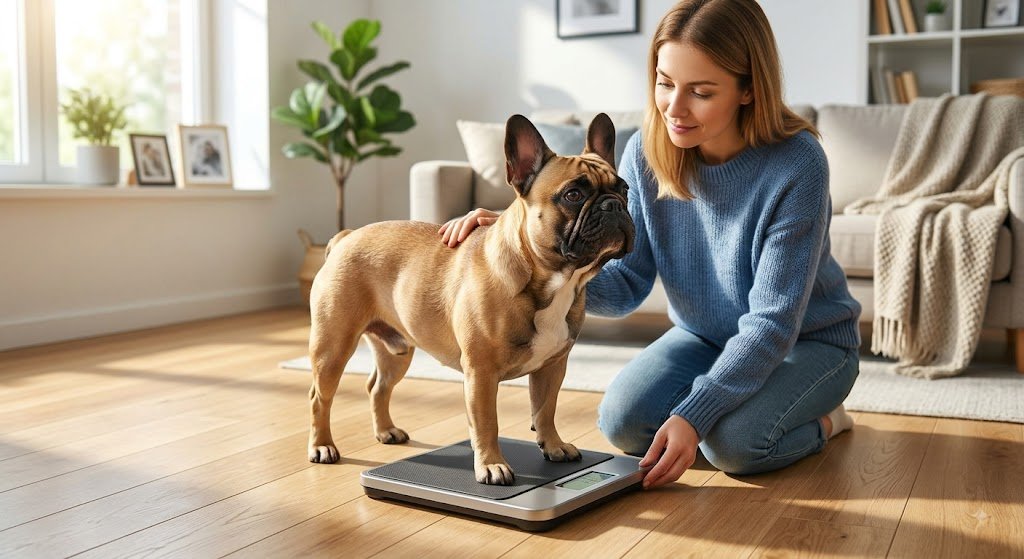
How to Calculate Dog BMI
A dog BMI calculation uses your dog’s weight and a body-size measurement to produce a numerical estimate. The exact formula used can vary between dog BMI calculators, so the result should always be interpreted according to the calculator’s stated method.
Dog Weight
Start with your dog’s current body weight and use the unit requested by the calculator. If the calculator requires kilograms, convert the weight before calculating rather than mixing pounds and kilograms.
For the most useful result, use a recent and reliable weight measurement rather than an old weight or an estimate.
Dog Height or Body Length
Different dog BMI calculators may use different body measurements. Some approaches use body length, while others use shoulder height.
This distinction matters because changing the measurement used in the formula can produce a different BMI result. Always follow the measurement instructions provided by the specific calculator instead of combining measurements from different formulas.
Dog BMI Formula
A commonly used BMI-style approach for dogs calculates BMI by dividing body weight in kilograms by the square of a measured body dimension in meters:
Dog BMI = weight (kg) ÷ body measurement (m)²
Because canine BMI is not standardized in the same way as human BMI, the resulting number should be treated as a mathematical estimate rather than a universal health classification.
Summary
Calculate dog BMI using the weight and body measurement required by the calculator. Keep the units consistent and follow the calculator’s specific formula because canine BMI methods can differ.
Keypoints
- Use your dog’s current weight.
- Keep weight and measurement units consistent.
- Check whether the calculator requires body length or shoulder height.
- Do not combine formulas from different calculators.
- Treat the result as an estimate rather than a veterinary diagnosis.
How to Use the Dog BMI Calculator
Using the calculator is straightforward: enter the measurements requested by the tool and use the result as a general reference for your dog’s body size.
Enter Your Dog’s Weight
Enter your dog’s current weight using the calculator’s selected unit. If your dog’s weight is recorded in pounds but the calculator requires kilograms, convert the value before entering it.
For greater accuracy, use a recent measured weight rather than estimating your dog’s weight.
Enter the Required Body Measurement
Enter the body measurement requested by the calculator, such as body length or shoulder height. Measure your dog according to the calculator’s instructions and use the same unit specified by the tool.
Do not substitute a different measurement simply because it is easier to obtain, as different BMI formulas can produce different results.
Check the BMI Result
Once the required information is entered, the calculator provides an estimated BMI. Treat this number as a screening reference, not as a standalone assessment of your dog’s health or ideal weight.
For a more complete assessment, consider your dog’s body shape, muscle condition, recent weight changes, and Body Condition Score.
Use Body Condition Score as a Cross-Check
Body Condition Score evaluates physical characteristics such as the ribs, waist, and abdominal tuck. Veterinary nutrition resources commonly use a 9-point BCS scale to assess canine body condition.
A BMI result that appears unusual should therefore be considered alongside your dog’s physical condition rather than interpreted in isolation.
Summary
Enter accurate, current measurements into the Dog BMI Calculator and use the result as a general screening reference. Combine the result with body-condition assessment for a more meaningful picture of your dog’s weight status.
Keypoints
- Use a recent, accurate weight measurement.
- Follow the calculator’s exact measurement instructions.
- Do not substitute body measurements between different formulas.
- BMI is a screening reference, not a diagnosis.
- Consider Body Condition Score alongside the BMI result.
What Is a Healthy BMI for a Dog?
There is no single universally accepted healthy BMI range for all dogs. Unlike human BMI, canine BMI is not a standardized clinical measure that can reliably classify every dog as underweight, ideal, overweight, or obese.
Why There Is No Universal Healthy Dog BMI
Dogs differ significantly in breed, skeletal structure, muscle mass, body length, and body composition. A numerical BMI that may appear similar between two dogs does not necessarily mean they have the same amount of body fat or the same ideal body condition.
This makes it inappropriate to apply human BMI categories directly to dogs.
Why Breed and Body Type Matter
A lean, athletic dog and a stockier dog can have very different natural proportions. Breed can therefore provide useful context, but it should not be used to assign one universal BMI target.
Individual body condition is more important than comparing your dog’s number with a generic BMI range.
Why BMI Should Not Be Used Alone
A BMI result does not show where your dog’s body fat is distributed or how much of its weight comes from muscle. Veterinary assessment commonly considers Body Condition Score (BCS) along with body weight and other factors when evaluating nutritional status.
The WSAVA Body Condition Score system uses a 9-point scale, with scores around 4–5 generally representing ideal body condition. (wsava.org)
If you are concerned that your dog is overweight or underweight, use the BMI result as a starting point and discuss the dog’s overall condition with a veterinarian.
Summary
There is no universal healthy BMI number for dogs. Dog BMI can provide a mathematical reference, but Body Condition Score and individual veterinary assessment are more appropriate for evaluating a dog’s overall body condition.
Keypoints
- Dogs do not have one universal healthy BMI range.
- Human BMI categories should not be directly applied to dogs.
- Breed, body structure, and muscle mass affect interpretation.
- Body Condition Score provides important additional information.
- A veterinarian can assess your dog’s weight and body condition more accurately.
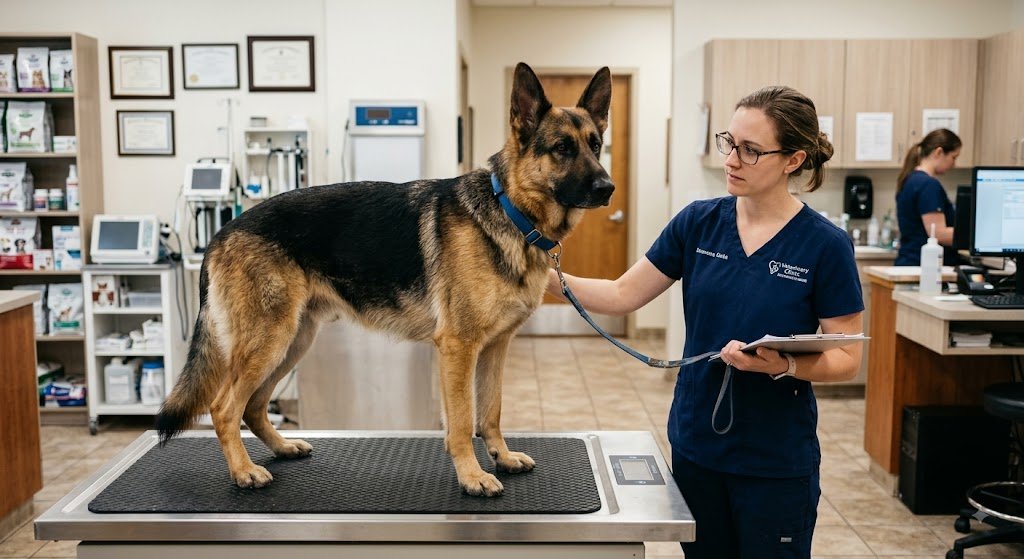
Dog Body Condition Score
Body Condition Score (BCS) is a practical way to assess whether a dog’s body condition appears too thin, ideal, or excessive. Unlike BMI, BCS considers physical features that can be observed and felt, making it an important part of canine weight assessment.
What Is a 1–9 BCS Scale?
A commonly used veterinary BCS system rates dogs from 1 to 9. Lower scores indicate progressively thinner body condition, while higher scores indicate progressively more body fat.
A score of 4–5 is generally considered ideal on the 9-point scale. The WSAVA provides a standardized canine body-condition scoring chart that evaluates features such as the ribs, waist, abdominal tuck, and overall body shape.
What Does an Ideal BCS Look Like?
A dog at an ideal body condition should have ribs that can be felt without excessive fat covering them. When viewed from above, the waist should be visible, and from the side, the abdomen should show an appropriate tuck.
These physical characteristics are more informative than relying on body weight alone because two dogs of the same weight can have very different amounts of body fat and muscle.
Signs of an Overweight Dog
A higher body-condition score may be associated with excessive fat covering the ribs, reduced visibility of the waist, and a less pronounced abdominal tuck.
However, visual assessment can be affected by coat type, body structure, and individual variation. If you are unsure about your dog’s condition, a veterinarian can perform a more reliable assessment.
Signs of an Underweight Dog
An underweight dog may have ribs, spine, or other bony structures that are excessively prominent, along with reduced fat and muscle coverage.
Unexpected weight loss should not be attributed to diet or body type without considering possible underlying health problems. Discuss unexplained or significant weight changes with your veterinarian.
Summary
BCS complements the Dog BMI Calculator by evaluating your dog’s physical body condition. A 9-point BCS score around 4–5 is generally considered ideal, but the complete assessment should consider the individual dog.
Keypoints
- BCS evaluates a dog’s physical body condition.
- The commonly used scale ranges from 1 to 9.
- Scores around 4–5 are generally ideal.
- Ribs, waist, and abdominal tuck are important assessment features.
- Significant or unexplained weight changes should be discussed with a veterinarian.
Dog BMI vs. Body Condition Score
Dog BMI and Body Condition Score (BCS) can both provide information about a dog’s body condition, but they assess it in different ways. BMI is a mathematical calculation, while BCS evaluates physical characteristics such as body shape and fat coverage.
BMI Uses Measurements
Dog BMI produces a numerical result from body weight and a specified body measurement. It can provide a standardized mathematical reference when the same calculation method is used consistently.
However, the number does not directly measure body fat or distinguish between muscle and fat.
BCS Uses Body Shape and Palpation
BCS considers physical features such as how easily the ribs can be felt, whether a waist is visible from above, and whether the abdomen has an appropriate tuck when viewed from the side.
This makes BCS particularly useful for assessing body condition in individual dogs.
Which Is More Useful for Dogs?
BMI can be useful as a screening or informational calculation, but it should not replace a body-condition assessment. BCS provides information that a mathematical BMI result cannot capture, especially when dogs have different body structures or levels of muscle mass.
For concerns about whether a dog is overweight, underweight, or experiencing an unexplained change in body condition, veterinary assessment is the appropriate next step.
Summary
Dog BMI provides a numerical estimate, while BCS evaluates physical body condition. BMI can be useful for reference, but BCS offers important information that should be considered when assessing a dog’s weight status.
Keypoints
- BMI is a mathematical measurement.
- BCS evaluates physical body condition.
- BMI does not directly measure body fat.
- BCS considers ribs, waist, and abdominal tuck.
- The two approaches can complement each other but should not be treated as interchangeable.
Dog BMI by Breed and Size
Dog breed and size can provide useful context when interpreting a BMI result, but they should not be used to assign a universal BMI target. Individual dogs within the same breed can differ substantially in height, length, muscle mass, and body composition.
Small Dogs
Small dogs can have very different body proportions despite similar weights. A compact dog and a long-bodied dog may produce different BMI results, so use the measurements required by the calculator rather than relying on weight alone.
Medium Dogs
Medium-sized dogs also vary considerably in build. Compare the calculator result with your dog’s physical condition and avoid assuming that a breed-based weight range automatically represents an ideal body condition.
Large Dogs
Large dogs may carry substantial muscle mass, particularly when they are athletic or working dogs. A numerical BMI should therefore be interpreted alongside body condition rather than treated as a direct measurement of body fat.
Giant Dogs
Giant breeds have unique skeletal and body proportions that make simple comparisons with smaller breeds less useful. For these dogs, individual measurements and physical body-condition assessment are especially important.
Summary
Breed and size can provide context for a Dog BMI Calculator result, but individual measurements and body condition are more useful than applying one BMI standard across all dogs.
Keypoints
- Dogs of the same breed can have different body proportions.
- Weight alone does not determine body condition.
- Muscle mass can affect how a BMI result should be interpreted.
- Large and giant breeds may require additional individual assessment.
- Use breed information as context, not as a universal BMI standard.
How to Tell If Your Dog Is Overweight
A calculator result alone cannot confirm whether a dog is overweight. Look at your dog’s overall body shape and feel the areas used in Body Condition Score assessment, while also considering recent changes in weight.
Feel the Ribs
Run your hands gently over your dog’s ribcage. At an ideal body condition, the ribs should generally be easy to feel without being covered by excessive fat.
If the ribs are difficult to feel because of a substantial layer of fat, your dog may have excess body condition.
Look for a Waist
View your dog from above while it is standing naturally. An appropriately conditioned dog generally has a visible narrowing behind the ribcage.
A reduced or absent waist can be a sign of excess body fat, although body shape varies between individual dogs and breeds.
Check the Abdominal Tuck
Look at your dog from the side. The abdomen should generally rise toward the hind legs rather than forming a straight or sagging line from the chest to the pelvis.
Coat length and body structure can make visual assessment more difficult, so use touch as well as appearance.
Monitor Weight Trends
A single weight measurement provides less information than a consistent record over time. Regularly monitoring your dog’s weight can help identify gradual changes that may not be obvious visually.
If your dog’s weight changes unexpectedly or you are unsure whether its body condition is appropriate, consult a veterinarian for an individual assessment.
Summary
Rib coverage, waist visibility, abdominal tuck, and weight trends can help you assess your dog’s body condition. Use these observations alongside the Dog BMI Calculator rather than relying on the BMI result alone.
Keypoints
- You should generally be able to feel your dog’s ribs without excessive fat covering.
- Look for a visible waist when viewing your dog from above.
- Check for an appropriate abdominal tuck from the side.
- Monitor weight changes over time.
- Veterinary assessment is recommended when body condition or weight changes are concerning.
Dog BMI for Puppies
Puppies grow rapidly, so their weight and body proportions can change considerably over a short period. Because of this, a single BMI calculation is not a reliable way to determine whether a puppy is growing appropriately.
Why Puppy Weight Is Different
A puppy’s body is developing continuously, and growth rates differ according to breed, expected adult size, genetics, nutrition, and individual development.
A puppy that weighs less than an adult dog of the same breed is not necessarily underweight. Likewise, increasing weight during normal growth does not automatically mean a puppy is overweight.
Growth and Body Condition
Rather than focusing only on a BMI number, monitor your puppy’s growth pattern and physical body condition. Regular weighing can help identify changes over time, while Body Condition Score can provide additional information about fat coverage and overall condition.
For growing puppies, growth should be evaluated in the context of their individual development rather than against adult BMI categories.
When to Ask a Veterinarian
Talk with a veterinarian if your puppy is losing weight unexpectedly, gaining weight excessively, has poor growth, or shows other changes such as reduced appetite, persistent digestive problems, or unusual lethargy.
A veterinarian can assess your puppy’s growth and body condition and determine whether further evaluation is appropriate.
Summary
Puppies should not be evaluated using adult dog BMI categories alone. Growth pattern, body condition, and individual development are more useful considerations when assessing a puppy’s weight.
Keypoints
- Puppies are continuously growing, so their BMI can change naturally.
- Adult BMI ranges should not be applied directly to puppies.
- Monitor growth trends and body condition rather than one number.
- Regular weight monitoring can help identify changes.
- Seek veterinary advice for unexpected growth or weight changes.
Common Dog BMI Calculation Mistakes
A Dog BMI Calculator is only as useful as the measurements and interpretation behind the result. Several common mistakes can make the calculation misleading or cause owners to draw conclusions that the number cannot support.
Using Human BMI Ranges
Human BMI categories should not be applied directly to dogs. Canine body proportions, breeds, muscle mass, and body composition differ substantially from humans.
A dog BMI result should therefore be interpreted using the calculator’s own methodology rather than human underweight, normal-weight, overweight, or obesity thresholds.
Relying Only on Weight
Weight alone does not show whether a dog’s body condition is appropriate. Two dogs weighing the same amount can have very different heights, lengths, muscle mass, and body-fat levels.
Use the measurements required by the calculator and consider your dog’s physical body condition as well.
Ignoring Body Condition
A numerical BMI cannot show whether your dog’s ribs are easy to feel, whether the waist is visible, or whether the abdomen has an appropriate tuck.
Body Condition Score provides this additional physical information and can make weight assessment more meaningful.
Comparing Different Breeds Directly
Comparing BMI numbers between dogs of different breeds can be misleading because breeds have different natural body structures and proportions.
Use breed information as context rather than assuming that the same BMI means the same body condition for every dog.
Summary
Avoid interpreting dog BMI using human categories, relying solely on weight, ignoring physical body condition, or comparing different breeds as though they have identical proportions. Use BMI as a reference alongside other relevant information.
Keypoints
- Do not use human BMI categories for dogs.
- Weight alone cannot determine body condition.
- Consider Body Condition Score alongside BMI.
- Breed and body structure affect interpretation.
- A BMI number should not be treated as a veterinary diagnosis.
Dog BMI Calculator: Quick Answer
A Dog BMI Calculator uses your dog’s weight and a specified body measurement to produce a mathematical BMI estimate. However, there is no universally accepted BMI range that can classify every dog as underweight, ideal, or overweight.
For dogs, BMI should be treated as a screening reference, not a diagnosis. Breed, body structure, muscle mass, and body composition can affect how a numerical result should be interpreted.
For a more complete assessment, consider your dog’s Body Condition Score (BCS). On the commonly used 9-point scale, a score around 4–5 is generally considered ideal. If your dog has unexplained weight changes or you are concerned about its body condition, consult a veterinarian.
Summary
Dog BMI can provide a useful numerical reference, but it does not replace Body Condition Score or veterinary assessment. Use the calculator alongside your dog’s physical condition and individual characteristics.
Keypoints
- Dog BMI is a screening estimate, not a diagnosis.
- There is no universal healthy BMI range for every dog.
- Breed, body structure, and muscle mass affect interpretation.
- A BCS around 4–5 is generally considered ideal on the 9-point scale.
- Consult a veterinarian for significant or unexplained weight changes.
Conclusion
The Dog BMI Calculator can provide a useful mathematical reference when assessing your dog’s body size, but it should not be treated like a human BMI calculator or used to diagnose a weight problem.
Because dogs differ in breed, body structure, muscle mass, and body composition, there is no single BMI range that applies to every dog. For a more meaningful assessment, consider your dog’s Body Condition Score, weight trend, physical appearance, and overall health.
If your dog has significant or unexplained weight changes, use the calculator as a starting point and seek veterinary guidance for a proper assessment.
Summary
Use dog BMI as an informational screening tool, not a standalone measure of health. Combine the result with body-condition assessment and professional veterinary advice when needed.
Keypoints
- Dog BMI is a mathematical estimate, not a diagnosis.
- Human BMI categories should not be applied directly to dogs.
- Body Condition Score provides important additional information.
- Individual body structure and breed can affect interpretation.
- Significant or unexplained weight changes should be evaluated by a veterinarian.
FAQs
Is there a BMI calculator for dogs?
Yes. A Dog BMI Calculator can estimate a dog’s BMI from its weight and a specified body measurement. However, the result should be treated as a general screening reference rather than a veterinary diagnosis.
What is a normal BMI for a dog?
There is no universally accepted normal BMI range for all dogs. Breed, body structure, muscle mass, and body composition vary considerably, so BMI should not be interpreted using human BMI categories.
How do I calculate my dog’s BMI?
Use your dog’s current weight and the body measurement required by the calculator, such as body length or shoulder height. Follow the calculator’s specific formula and keep the measurement units consistent.
Is dog BMI the same as human BMI?
No. Although both use mathematical relationships between body weight and body size, canine body proportions and composition differ substantially. Human BMI categories should not be directly applied to dogs.
What is the ideal BMI for a dog?
There is no single ideal BMI number for every dog. A dog’s physical body condition, including its Body Condition Score, provides important information that BMI alone cannot show.
How do I know if my dog is overweight?
Check whether the ribs can be felt without excessive fat covering, whether a waist is visible from above, and whether there is an appropriate abdominal tuck from the side. A veterinarian can provide a more reliable assessment if you are uncertain.
What is a good Body Condition Score for a dog?
On the commonly used 9-point Body Condition Score scale, 4–5 is generally considered ideal. BCS should be interpreted according to the dog’s individual characteristics and overall health.
Can I calculate my puppy’s BMI?
You can calculate a puppy’s BMI if the required measurements are available, but the result should not be interpreted using adult dog BMI categories. Puppies are continuously growing, so growth pattern and body condition are more useful considerations.
Does dog breed affect BMI?
Breed can affect how a BMI result should be interpreted because dogs differ in body structure, proportions, and muscle mass. Breed can provide context, but individual measurements and body condition are more useful.
Can a Dog BMI Calculator diagnose obesity?
No. A calculator cannot diagnose obesity or another health condition. If your dog’s weight or body condition is concerning, a veterinarian should perform an appropriate assessment.
References
- World Small Animal Veterinary Association (WSAVA) — Body Condition Score resources for assessing canine body condition using the 9-point scoring system.
- American Animal Hospital Association (AAHA) — Nutrition and weight-management guidance covering nutritional assessment and canine body condition.
- American Kennel Club (AKC) — Educational guidance on maintaining healthy weight and assessing body condition in dogs.