A dog chocolate toxicity calculator is a tool that estimates the potential risk of chocolate poisoning in dogs based on three key factors: your dog’s body weight, the type of chocolate consumed, and the amount eaten. Instead of relying on guesswork, the calculator provides a quick risk assessment that helps determine whether immediate veterinary attention may be necessary.
While it is a valuable decision-making tool, a dog chocolate toxicity calculator should never replace professional veterinary advice, especially if your dog is showing signs of chocolate poisoning.
How It Works
Chocolate contains theobromine and caffeine, two naturally occurring stimulants that dogs metabolize much more slowly than humans. The calculator estimates how much of these compounds your dog may have consumed and compares that amount with established veterinary toxicity ranges.
Most dog chocolate toxicity calculators require you to enter:
- Your dog’s weight.
- The type of chocolate consumed.
- The estimated amount eaten.
- The unit of measurement (grams, ounces, squares, bars, etc.).
Using this information, the calculator estimates the potential toxicity level and indicates whether the exposure is generally considered low, moderate, or high risk.
Why Use a Dog Chocolate Toxicity Calculator?
A dog chocolate toxicity calculator helps owners respond more quickly after accidental chocolate ingestion. Instead of trying to estimate the danger manually, it organizes the most important information into an easy-to-understand assessment that can support faster decision-making while you contact a veterinarian.
Some of the main benefits include:
- Quickly estimates the potential toxicity level.
- Considers your dog’s size and body weight.
- Accounts for different types of chocolate.
- Helps determine whether the situation may require emergency care.
- Supports informed discussions with your veterinarian.
| Calculator Input | Why It Matters |
|---|---|
| Dog’s weight | Smaller dogs are generally at greater risk from the same amount of chocolate. |
| Chocolate type | Dark and baking chocolate contain much more theobromine than milk or white chocolate. |
| Amount consumed | Larger quantities increase the risk of toxicity. |
| Measurement unit | Improves the accuracy of the toxicity estimate. |
Summary
A dog chocolate toxicity calculator is a practical emergency tool that estimates the potential risk of chocolate poisoning using your dog’s weight, the type of chocolate eaten, and the amount consumed. Although it provides valuable guidance, every suspected case of chocolate ingestion should be evaluated by a veterinarian, particularly if symptoms develop or a large amount of chocolate was consumed.
Keypoints
- A dog chocolate toxicity calculator estimates poisoning risk after chocolate ingestion.
- The calculation is based on body weight, chocolate type, and quantity consumed.
- It helps owners make faster, more informed decisions during a potential emergency.
- The calculator provides an estimate, not a medical diagnosis.
- Contact a veterinarian promptly whenever chocolate poisoning is suspected.
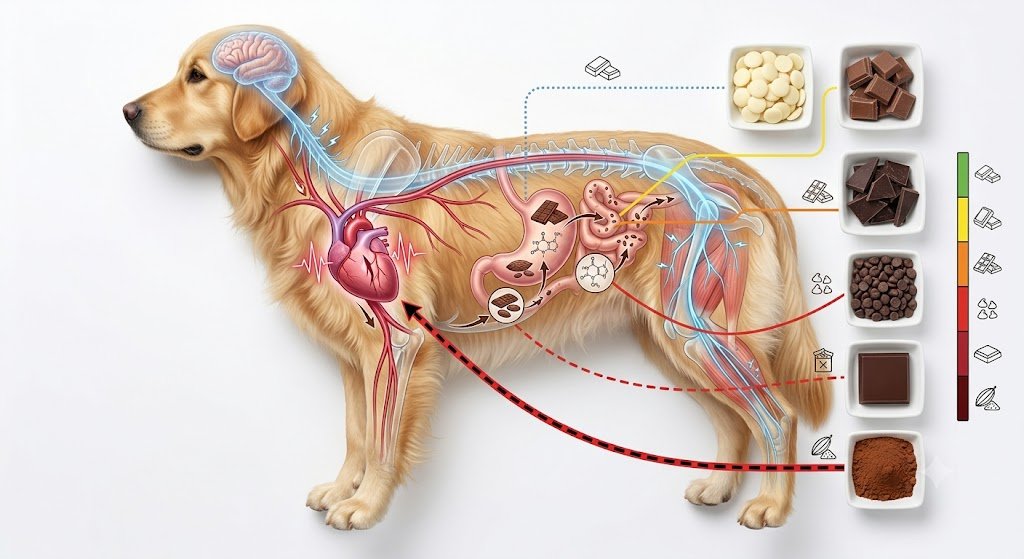
How Chocolate Becomes Toxic to Dogs
Chocolate is toxic to dogs because it contains theobromine and caffeine, two natural stimulants that affect the nervous system and heart. Humans break down these compounds relatively quickly, but dogs process them much more slowly, allowing toxic levels to build up in the body. A dog chocolate toxicity calculator uses this information, along with your dog’s weight and the type of chocolate consumed, to estimate the potential poisoning risk.
Theobromine: The Main Toxic Compound
Theobromine is the primary reason chocolate is dangerous for dogs. After ingestion, it is absorbed into the bloodstream and can overstimulate the heart, brain, and muscles.
High theobromine levels may cause:
- Hyperactivity.
- Increased heart rate.
- Restlessness.
- Muscle tremors.
- Seizures in severe cases.
The darker the chocolate, the higher its theobromine content, which is why dark chocolate and baking chocolate are significantly more hazardous than milk chocolate.
The Role of Caffeine
Chocolate also contains caffeine, another stimulant that can intensify the effects of theobromine. Together, these compounds increase the risk of nervous system stimulation and cardiovascular complications.
Possible effects of caffeine include:
- Elevated blood pressure.
- Rapid breathing.
- Heart rhythm abnormalities.
- Agitation.
- Increased body temperature.
Although caffeine contributes to toxicity, theobromine usually has the greater impact because it is present in larger amounts and remains in a dog’s body longer.
Why Dogs Are More Sensitive Than Humans
Dogs lack the ability to metabolize theobromine as efficiently as humans. As a result, the compound stays in their system much longer, increasing the likelihood of toxic effects even after relatively small amounts of certain chocolates.
Several factors influence how severely a dog may be affected, including:
- Body weight.
- Type of chocolate eaten.
- Amount consumed.
- Age and overall health.
- Pre-existing heart or neurological conditions.
This is why a dog chocolate toxicity calculator evaluates multiple factors rather than relying on the amount of chocolate alone.
Theobromine Content by Chocolate Type
| Chocolate Type | Relative Theobromine Level | Toxicity Risk |
|---|---|---|
| White chocolate | Very Low | Lowest |
| Milk chocolate | Low to Moderate | Moderate |
| Semi-sweet chocolate | Moderate to High | High |
| Dark chocolate | High | Very High |
| Baking chocolate | Very High | Extremely High |
| Cocoa powder | Highest | Most Dangerous |
Note: The exact theobromine content varies by brand and formulation, so these categories are intended as general guidance rather than precise measurements.
Summary
Chocolate becomes dangerous to dogs because of theobromine and caffeine, which are metabolized slowly and can affect the heart, nervous system, and muscles. A dog chocolate toxicity calculator estimates the risk by combining the type of chocolate, the amount consumed, and your dog’s body weight to provide a more informed assessment.
Keypoints
- Theobromine is the primary toxic compound in chocolate.
- Caffeine increases the overall toxic effects.
- Dogs metabolize these stimulants much more slowly than humans.
- Dark chocolate, baking chocolate, and cocoa powder pose the greatest risk.
- A dog chocolate toxicity calculator considers both chocolate type and your dog’s weight to estimate toxicity risk.

How to Use a Dog Chocolate Toxicity Calculator
A dog chocolate toxicity calculator helps estimate the potential risk of chocolate poisoning by analyzing information about your dog and the chocolate consumed. Entering accurate details produces a more reliable estimate, allowing you to make quicker decisions while seeking veterinary advice.
Step 1: Enter Your Dog’s Weight
Start by entering your dog’s current body weight. Most calculators accept kilograms (kg) or pounds (lbs).
Weight is one of the most important factors because the same amount of chocolate affects a 5-pound dog much differently than a 70-pound dog. Smaller dogs generally reach toxic theobromine levels with much smaller quantities.
Step 2: Select the Type of Chocolate
Choose the exact type of chocolate your dog ate. Different chocolates contain different concentrations of theobromine and caffeine, so selecting the correct option is essential.
Common options include:
- White chocolate
- Milk chocolate
- Dark chocolate
- Semi-sweet chocolate
- Baking chocolate
- Cocoa powder
If you’re unsure, check the product packaging or ingredient label whenever possible.
Step 3: Enter the Amount Consumed
Next, estimate how much chocolate your dog ate. Many calculators allow different measurement options to make the process easier.
You may be able to enter the amount as:
- Grams (g)
- Ounces (oz)
- Chocolate squares
- Chocolate bars
- Pieces or bites
If you don’t know the exact amount, provide the closest reasonable estimate. Even an approximate value is often more useful than leaving the field blank.
Step 4: Review the Risk Assessment
After entering the information, the dog chocolate toxicity calculator estimates the potential toxicity level based on established veterinary guidelines.
Depending on the calculated exposure, the result may indicate:
- Low risk – Toxicity is unlikely, but monitor your dog and consult your veterinarian if symptoms develop.
- Moderate risk – Veterinary advice should be sought promptly, even if your dog appears normal.
- High risk – Immediate emergency veterinary care is recommended due to the increased likelihood of serious toxicity.
Remember that the calculator provides an estimate and cannot account for every individual factor affecting your dog’s health.
Calculator Input Guide
| Information Required | Why It’s Important |
|---|---|
| Dog’s weight | Determines how the chocolate dose affects your dog. |
| Chocolate type | Identifies the amount of theobromine and caffeine consumed. |
| Amount eaten | Calculates the estimated toxic dose. |
| Unit of measurement | Improves calculation accuracy. |
Tips for More Accurate Results
To improve the accuracy of the calculation:
- Weigh your dog recently if possible.
- Identify the exact chocolate product.
- Estimate the amount eaten as closely as you can.
- Record when the chocolate was consumed.
- Contact a veterinarian immediately if your dog is already showing symptoms, regardless of the calculator result.
Summary
A dog chocolate toxicity calculator is easiest to use when you have accurate information about your dog’s weight, the type of chocolate, and the amount consumed. While it provides a valuable risk estimate, it should always be used alongside professional veterinary guidance—especially in moderate- or high-risk situations.
Keypoints
- Enter your dog’s current weight for the most accurate assessment.
- Select the correct chocolate type before calculating the risk.
- Estimate the amount eaten as accurately as possible.
- Use the calculator as an emergency guidance tool, not a diagnosis.
- Contact your veterinarian promptly if the calculator indicates moderate or high risk, or if your dog develops symptoms.
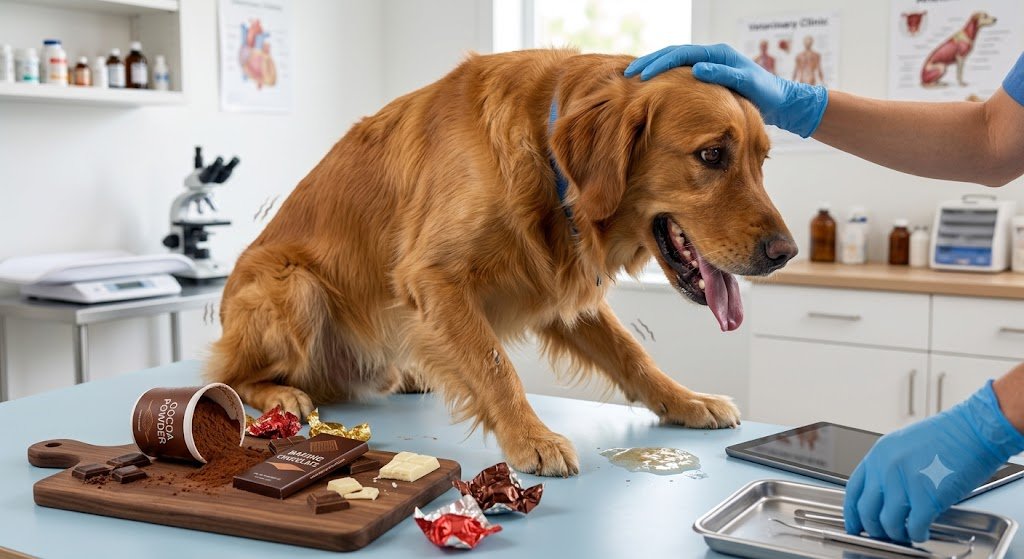
Chocolate Toxicity Levels by Chocolate Type
Not all chocolate is equally dangerous for dogs. The amount of theobromine and caffeine varies significantly between chocolate products, which is why a dog chocolate toxicity calculator always asks you to select the specific type of chocolate before estimating the risk.
As a general rule, the darker and less processed the chocolate, the greater the risk of toxicity.
White Chocolate
White chocolate contains only trace amounts of theobromine because it is primarily made from cocoa butter rather than cocoa solids. Although poisoning from theobromine is uncommon, large quantities can still cause digestive upset or pancreatitis due to the high fat and sugar content.
Risk level: Lowest
Milk Chocolate
Milk chocolate contains more theobromine than white chocolate but considerably less than dark chocolate. Small amounts may not cause serious problems in larger dogs, while even moderate quantities can be concerning for puppies and small breeds.
Risk level: Low to Moderate
Dark Chocolate
Dark chocolate contains a much higher concentration of cocoa solids, making it one of the most common causes of significant chocolate poisoning in dogs.
Even relatively small amounts can produce toxic effects, particularly in smaller dogs.
Risk level: High
Semi-Sweet Chocolate
Semi-sweet chocolate falls between milk and baking chocolate in cocoa content. Because the exact theobromine concentration varies by manufacturer, it should always be treated as a potentially high-risk chocolate.
Risk level: Moderate to High
Baking Chocolate
Baking chocolate contains concentrated cocoa solids and very high levels of theobromine. Even a small piece may expose a dog to a dangerous dose.
Risk level: Very High
Cocoa Powder
Cocoa powder has the highest concentration of theobromine among common chocolate products. Because it is highly concentrated, accidental ingestion requires immediate veterinary attention.
Risk level: Extremely High
Chocolate Toxicity Comparison
| Chocolate Type | Relative Theobromine Level | Overall Toxicity Risk |
|---|---|---|
| White chocolate | Very Low | ⭐ Lowest |
| Milk chocolate | Low to Moderate | ⭐⭐ Low–Moderate |
| Semi-sweet chocolate | Moderate to High | ⭐⭐⭐ High |
| Dark chocolate | High | ⭐⭐⭐⭐ Very High |
| Baking chocolate | Very High | ⭐⭐⭐⭐⭐ Severe |
| Cocoa powder | Extremely High | ⭐⭐⭐⭐⭐ Highest |
Important: The exact theobromine content varies between brands and recipes. A dog chocolate toxicity calculator provides an estimate and should always be followed by veterinary consultation if there is any concern about chocolate ingestion.
Why Chocolate Type Matters in the Calculator
The type of chocolate is one of the biggest factors affecting the calculator’s result. For example, 20 grams of baking chocolate may pose a much greater risk than 20 grams of milk chocolate because baking chocolate contains significantly more theobromine.
This is why a dog chocolate toxicity calculator evaluates:
- Your dog’s body weight.
- The specific chocolate type.
- The amount consumed.
- The estimated theobromine exposure.
Summary
Different chocolate products contain different amounts of theobromine, making some varieties far more dangerous than others. A dog chocolate toxicity calculator uses the chocolate type alongside your dog’s weight and the amount consumed to estimate the potential toxicity level and help determine the urgency of veterinary care.
Keypoints
- Dark chocolate, baking chocolate, and cocoa powder pose the greatest toxicity risk.
- White chocolate has the lowest theobromine content but may still cause digestive issues if consumed in large amounts.
- Milk chocolate is less toxic than dark chocolate but can still be dangerous, especially for small dogs.
- Always identify the exact chocolate type before using a dog chocolate toxicity calculator.
- If you’re unsure which chocolate your dog ate, assume the higher-risk option and contact your veterinarian promptly.

How Much Chocolate Is Dangerous for Dogs?
There is no single amount of chocolate that is safe or dangerous for every dog. The risk depends on several factors, including your dog’s body weight, the type of chocolate, the amount consumed, and your dog’s overall health. A dog chocolate toxicity calculator combines these details to estimate the potential toxicity level instead of relying on the amount eaten alone.
Body Weight Plays a Major Role
Smaller dogs are more vulnerable because they receive a higher dose of theobromine per pound or kilogram of body weight. In contrast, larger dogs may tolerate the same amount of chocolate with a lower relative exposure, although they can still become seriously ill after consuming highly concentrated chocolate products.
For example:
- A small breed may develop symptoms after eating a small piece of dark chocolate.
- A medium-sized dog may require a larger amount to reach a similar toxicity level.
- Large dogs are generally at lower risk from the same quantity but are not immune to chocolate poisoning.
This is why entering your dog’s current weight is essential when using a dog chocolate toxicity calculator.
The Type of Chocolate Changes the Risk
The concentration of theobromine varies dramatically between chocolate products. Two dogs that eat the same weight of different chocolates may have completely different toxicity risks.
For example:
- White chocolate contains very little theobromine.
- Milk chocolate has a moderate amount.
- Dark chocolate contains much higher concentrations.
- Baking chocolate and cocoa powder are the most concentrated and can become dangerous in relatively small amounts.
Other Factors That Affect Toxicity
Besides weight and chocolate type, several additional factors influence how seriously a dog may be affected.
These include:
- The exact amount consumed.
- Time since ingestion.
- Puppy versus adult dog.
- Existing heart, liver, or neurological conditions.
- Whether food was eaten at the same time.
- Individual sensitivity to theobromine and caffeine.
Because every dog responds differently, two dogs of similar size may not experience identical symptoms after eating the same chocolate product.
General Risk Guide
| Risk Factor | Lower Risk | Higher Risk |
|---|---|---|
| Dog size | Large breeds | Small breeds and puppies |
| Chocolate type | White or milk chocolate | Dark, baking chocolate, cocoa powder |
| Amount eaten | Small quantity | Large quantity |
| Time to treatment | Immediate veterinary advice | Delayed treatment |
| Overall health | Healthy adult dog | Puppies, senior dogs, or dogs with underlying conditions |
Important: This table is intended for general guidance only. It should not replace a dog chocolate toxicity calculator or professional veterinary advice.
Don’t Wait for Symptoms to Appear
One of the most common mistakes is waiting to see whether symptoms develop before taking action. Chocolate poisoning symptoms may not appear immediately, but treatment is often more effective when started early.
If your dog has eaten chocolate:
- Use a dog chocolate toxicity calculator as soon as possible.
- Keep the chocolate packaging if available.
- Contact your veterinarian or an emergency animal poison service.
- Closely monitor your dog while following professional advice.
Summary
The amount of chocolate that is dangerous varies from one dog to another. A dog chocolate toxicity calculator provides a more accurate risk estimate by evaluating body weight, chocolate type, and the amount consumed together. When in doubt, it’s always safest to consult a veterinarian promptly rather than waiting for symptoms to develop.
Keypoints
- There is no universal “safe” amount of chocolate for dogs.
- Body weight significantly influences toxicity risk.
- Dark chocolate, baking chocolate, and cocoa powder are the most dangerous.
- Puppies and small dogs are generally more susceptible to poisoning.
- Use a dog chocolate toxicity calculator immediately after chocolate ingestion and seek veterinary guidance if there is any concern.
Dog Chocolate Poisoning Symptoms
Chocolate poisoning symptoms can appear within 2 to 12 hours after ingestion, although the exact timing depends on the type of chocolate, the amount consumed, and your dog’s metabolism. While a dog chocolate toxicity calculator estimates the potential risk, monitoring your dog for symptoms is equally important because some dogs may develop clinical signs sooner than others.
Mild Symptoms
Dogs exposed to smaller amounts of chocolate may initially show mild digestive or behavioral changes. These symptoms can progress if more theobromine is absorbed.
Common mild symptoms include:
- Vomiting.
- Diarrhea.
- Excessive thirst.
- Increased urination.
- Restlessness.
- Mild panting.
Although these symptoms may appear minor, they should not be ignored, especially if your dog has consumed dark chocolate or baking chocolate.
Moderate Symptoms
As toxicity increases, the stimulants in chocolate begin affecting the nervous system and cardiovascular system more noticeably.
Common moderate symptoms include:
- Hyperactivity.
- Rapid heart rate.
- Elevated blood pressure.
- Muscle tremors.
- Continuous pacing.
- Increased body temperature.
Dogs showing these signs should be examined by a veterinarian as soon as possible.
Severe Symptoms
Severe chocolate poisoning is a medical emergency and requires immediate veterinary treatment.
Emergency symptoms include:
- Seizures.
- Collapse.
- Irregular heartbeat (arrhythmias).
- Difficulty breathing.
- Extreme muscle rigidity.
- Loss of consciousness.
- Coma in rare cases.
Without prompt treatment, severe chocolate toxicity can become life-threatening.
Symptoms by Severity
| Severity | Common Signs | Recommended Action |
|---|---|---|
| Mild | Vomiting, diarrhea, restlessness, excessive thirst | Contact your veterinarian and continue monitoring. |
| Moderate | Rapid heart rate, tremors, hyperactivity, panting | Seek veterinary care promptly. |
| Severe | Seizures, collapse, irregular heartbeat, unconsciousness | Visit an emergency veterinary hospital immediately. |
When Do Symptoms Usually Start?
Most dogs begin showing signs within 2–12 hours after eating chocolate, but symptoms may continue for 24–72 hours because theobromine remains in the body for an extended period.
Several factors influence how quickly symptoms appear:
- Type of chocolate.
- Amount consumed.
- Dog’s body weight.
- Individual metabolism.
- Whether food was eaten with the chocolate.
A dog chocolate toxicity calculator can estimate the level of exposure, but it cannot predict exactly when symptoms will develop.
Summary
Chocolate poisoning symptoms range from mild digestive upset to severe neurological and heart complications. Using a dog chocolate toxicity calculator immediately after chocolate ingestion, while closely monitoring your dog for symptoms, helps owners respond quickly and seek veterinary care before the condition worsens.
Keypoints
- Symptoms often appear 2–12 hours after chocolate ingestion.
- Mild signs include vomiting, diarrhea, and restlessness.
- Moderate poisoning may cause rapid heart rate and muscle tremors.
- Severe cases can result in seizures, collapse, and cardiac abnormalities.
- Even if your dog appears normal, use a dog chocolate toxicity calculator and contact your veterinarian whenever a potentially toxic amount of chocolate has been consumed.

What to Do If Your Dog Eats Chocolate
If your dog eats chocolate, acting quickly can significantly improve the outcome. While a dog chocolate toxicity calculator helps estimate the level of risk, it should be used as part of your response—not as a reason to delay veterinary care. The first few hours after ingestion are often the most important for effective treatment.
Step 1: Stay Calm and Secure Your Dog
Start by removing any remaining chocolate so your dog cannot eat more. Keep your dog calm and move them to a safe area where you can observe their behavior.
Avoid:
- Panicking.
- Waiting to see if symptoms develop.
- Giving home remedies without veterinary advice.
Step 2: Collect Important Information
Before contacting a veterinarian, gather as much information as possible. This will help them assess the situation more quickly.
Record:
- Your dog’s current weight.
- The type of chocolate eaten.
- The estimated amount consumed.
- The time the chocolate was eaten.
- Any symptoms already present.
- The product packaging or ingredient label, if available.
Step 3: Use a Dog Chocolate Toxicity Calculator
Enter the information into a dog chocolate toxicity calculator to estimate the potential toxicity level.
The calculator can help you understand:
- Whether the exposure is likely low, moderate, or high risk.
- Why certain chocolate types are more dangerous.
- Which details your veterinarian will need.
- How urgently your dog may require medical attention.
Remember, the result is an estimate and should always be interpreted alongside professional veterinary advice.
Step 4: Contact a Veterinarian Immediately
Even if your dog appears normal, contact your veterinarian if they have eaten a potentially toxic amount of chocolate. Early intervention is often more effective than waiting for symptoms to appear.
Your veterinarian may recommend:
- Monitoring your dog at home.
- Bringing your dog in for an examination.
- Inducing vomiting if appropriate.
- Additional treatment based on the estimated exposure and your dog’s condition.
Do not attempt to induce vomiting unless specifically instructed by a veterinarian, as it may not be safe in every situation.
Step 5: Continue Monitoring Your Dog
After speaking with your veterinarian, continue observing your dog closely for the next 24–72 hours, as symptoms may develop or progress during this period.
Watch for:
- Vomiting or diarrhea.
- Restlessness or hyperactivity.
- Rapid breathing.
- Muscle tremors.
- Increased heart rate.
- Seizures or collapse.
If new symptoms appear or existing symptoms worsen, seek emergency veterinary care immediately.
Emergency Response Checklist
| Action | Why It Matters |
|---|---|
| Remove remaining chocolate | Prevents additional ingestion. |
| Gather key information | Helps assess the risk accurately. |
| Use a dog chocolate toxicity calculator | Provides a quick toxicity estimate. |
| Contact your veterinarian | Ensures timely professional guidance. |
| Monitor your dog closely | Detects worsening symptoms early. |
Summary
If your dog eats chocolate, respond promptly by collecting key information, using a dog chocolate toxicity calculator, and contacting your veterinarian without delay. Quick action improves the chances of successful treatment and reduces the risk of serious complications.
Keypoints
- Remove any remaining chocolate immediately.
- Record your dog’s weight, chocolate type, amount eaten, and time of ingestion.
- Use a dog chocolate toxicity calculator to estimate the potential risk.
- Contact a veterinarian even if your dog has no symptoms.
- Monitor your dog closely and seek emergency care if severe signs develop.

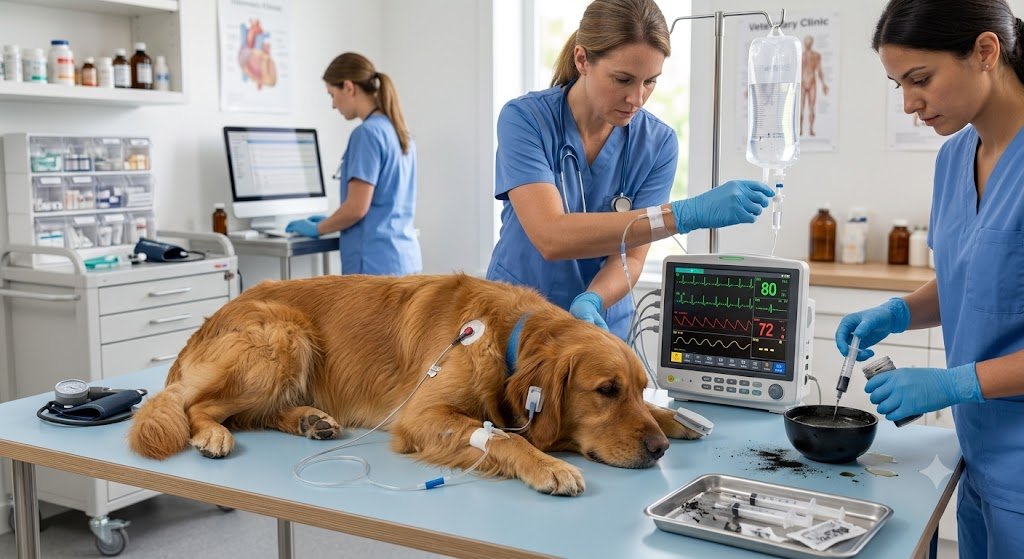
Veterinary Diagnosis and Treatment
If a dog chocolate toxicity calculator indicates a moderate or high risk—or your dog develops symptoms—a veterinarian will determine the most appropriate treatment based on your dog’s condition, the type of chocolate consumed, the estimated dose, and the time since ingestion. Early treatment often leads to a better outcome and may prevent serious complications.
Physical Examination and Medical History
The first step is a thorough examination to evaluate your dog’s overall condition and determine the severity of poisoning.
Your veterinarian may assess:
- Heart rate and rhythm.
- Body temperature.
- Breathing rate.
- Hydration status.
- Neurological function.
- Time since chocolate ingestion.
They will also ask about the chocolate product, your dog’s weight, and the estimated amount consumed. Having this information ready can speed up diagnosis and treatment.
Inducing Vomiting
If the chocolate was eaten recently and it is safe to do so, your veterinarian may recommend or perform vomiting to remove chocolate before more theobromine is absorbed.
This option is generally considered:
- Soon after ingestion.
- Before significant symptoms develop.
- Only under veterinary guidance.
Inducing vomiting is not appropriate in every case, especially if a dog is already showing neurological signs or has difficulty swallowing.
Activated Charcoal
Activated charcoal may be given to reduce the absorption of theobromine and caffeine from the digestive tract. In some cases, more than one dose may be recommended depending on the amount and type of chocolate consumed.
Its primary purpose is to:
- Limit further toxin absorption.
- Reduce ongoing exposure.
- Support overall treatment.
Supportive Care
There is no specific antidote for chocolate poisoning, so treatment focuses on supporting the dog’s body while it eliminates the toxins.
Supportive care may include:
- Intravenous (IV) fluids.
- Medications to control vomiting.
- Drugs to manage abnormal heart rhythms if needed.
- Medication to control tremors or seizures.
- Oxygen therapy in severe cases.
The exact treatment plan depends on the severity of the poisoning and the dog’s response to therapy.
Hospital Monitoring
Dogs with moderate or severe chocolate poisoning may need to stay in the hospital for observation until the risk of complications decreases.
Veterinary teams may monitor:
- Heart rhythm.
- Blood pressure.
- Body temperature.
- Neurological status.
- Hydration and urine output.
Close monitoring allows treatment to be adjusted quickly if new symptoms develop.
Veterinary Treatment Overview
| Treatment | Purpose |
|---|---|
| Physical examination | Assess overall condition and poisoning severity |
| Inducing vomiting | Remove chocolate before further absorption (when appropriate) |
| Activated charcoal | Reduce absorption of theobromine and caffeine |
| IV fluids | Support hydration and toxin elimination |
| Medications | Control vomiting, tremors, seizures, or heart abnormalities |
| Hospital monitoring | Detect and manage complications during recovery |
Summary
Veterinary treatment for chocolate poisoning focuses on limiting toxin absorption, managing symptoms, and supporting recovery. While a dog chocolate toxicity calculator helps estimate the initial risk, only a veterinarian can determine the most appropriate treatment based on your dog’s condition and clinical examination.
Keypoints
- Early veterinary treatment often improves the prognosis.
- Treatment depends on the amount eaten, chocolate type, and your dog’s condition.
- There is no specific antidote for chocolate poisoning.
- Supportive care and monitoring are the foundation of treatment.
- A dog chocolate toxicity calculator should be used as an assessment tool, not a substitute for professional veterinary care.

Can Dogs Recover from Chocolate Poisoning?
Yes, most dogs recover fully from chocolate poisoning when they receive timely veterinary care. The prognosis depends on several factors, including the type and amount of chocolate consumed, how quickly treatment begins, and the dog’s overall health. A dog chocolate toxicity calculator can help estimate the initial risk, but the recovery outcome is determined by prompt medical evaluation and appropriate treatment.
Recovery Timeline
Recovery time varies depending on the severity of the poisoning.
| Severity | Typical Recovery Time* |
|---|---|
| Mild poisoning | 24–48 hours |
| Moderate poisoning | 2–4 days |
| Severe poisoning | Several days or longer, depending on treatment and complications |
*Recovery times are general estimates and may vary between individual dogs.
Dogs treated early often recover faster because less theobromine is absorbed into the bloodstream.
Factors That Affect Recovery
Every dog responds differently to chocolate poisoning. Several factors influence how quickly and completely recovery occurs.
These include:
- The type of chocolate consumed.
- The amount eaten.
- Your dog’s body weight.
- How soon veterinary treatment begins.
- Age and overall health.
- Whether complications such as seizures or abnormal heart rhythms develop.
In general, dogs that receive treatment before severe symptoms appear have a much better prognosis.
Caring for Your Dog After Treatment
Once your dog returns home, follow your veterinarian’s instructions carefully to support a smooth recovery.
Post-treatment care may include:
- Providing plenty of fresh water.
- Feeding a bland diet if recommended.
- Limiting strenuous activity until your dog has fully recovered.
- Administering prescribed medications exactly as directed.
- Watching for any returning symptoms such as vomiting, tremors, or unusual behavior.
- Attending follow-up appointments if advised.
Most dogs gradually return to their normal routine within a few days after successful treatment.
When to Contact Your Veterinarian Again
Even after treatment, contact your veterinarian immediately if your dog develops:
- Repeated vomiting.
- Persistent diarrhea.
- Difficulty breathing.
- Weakness or collapse.
- Muscle tremors.
- Seizures.
- Loss of appetite lasting more than a day.
- Any new or worsening symptoms.
Prompt reassessment can help prevent complications and ensure your dog’s recovery stays on track.
Summary
Most dogs recover successfully from chocolate poisoning, particularly when treatment begins early. A dog chocolate toxicity calculator helps owners estimate the initial risk, but rapid veterinary care, careful monitoring, and proper follow-up remain the most important factors for a positive outcome.
Keypoints
- Most dogs recover completely with prompt veterinary treatment.
- Recovery time depends on the severity of the poisoning.
- Early intervention greatly improves the prognosis.
- Follow all home-care instructions after treatment.
- Continue monitoring your dog and contact your veterinarian if symptoms return or worsen.

How to Prevent Chocolate Poisoning in Dogs
Preventing chocolate poisoning is much easier than treating it. Since even small amounts of certain chocolates can be harmful, keeping chocolate out of your dog’s reach is the best way to reduce the risk. While a dog chocolate toxicity calculator is useful during an emergency, taking preventive measures can help ensure you never need to use one.
Store Chocolate Securely
Many chocolate poisoning incidents occur because dogs find chocolate left on countertops, coffee tables, backpacks, or holiday gift baskets.
To reduce the risk:
- Store chocolate in high cabinets or sealed containers.
- Keep handbags, lunch boxes, and shopping bags out of reach.
- Never leave chocolate unattended on tables or kitchen counters.
- Dispose of chocolate wrappers in secure trash bins with tight-fitting lids.
Teach Family Members and Guests
Not everyone knows that chocolate is toxic to dogs. Children and visitors may accidentally share treats without realizing the danger.
Help prevent accidents by:
- Explaining that dogs should never eat chocolate.
- Asking guests not to feed your dog human treats.
- Teaching children to keep candy and desserts away from pets.
- Posting a reminder near treat jars or snack storage if needed.
Be Extra Careful During Holidays
Chocolate-related emergencies often increase during holidays when sweets are more accessible.
Pay extra attention during:
- Halloween
- Christmas
- Easter
- Valentine’s Day
- Birthdays and family celebrations
Keep chocolate gift boxes, baking ingredients, and dessert trays in places your dog cannot access.
Choose Dog-Safe Treats Instead
If you want to reward your dog, choose treats made specifically for dogs rather than sharing human desserts.
Safe alternatives include:
- Commercial dog treats.
- Veterinary-approved dental chews.
- Dog-friendly biscuits.
- Homemade treats using pet-safe ingredients.
- Fresh fruits recommended by your veterinarian, such as apple slices (without seeds) or blueberries.
Create an Emergency Plan
Even with precautions, accidents can happen. Preparing in advance allows you to respond quickly.
Keep the following information easily accessible:
- Your regular veterinarian’s phone number.
- The nearest emergency veterinary hospital.
- An animal poison helpline, if available in your country.
- Your dog’s current weight.
- A trusted dog chocolate toxicity calculator bookmarked on your phone or computer.
Being prepared can save valuable time if your dog accidentally eats chocolate.
Summary
The best way to protect your dog from chocolate poisoning is through prevention. Safe storage, educating family members, offering dog-friendly treats, and having an emergency plan significantly reduce the risk of accidental ingestion. If an incident does occur, a dog chocolate toxicity calculator can help estimate the risk while you seek immediate veterinary advice.
Keypoints
- Store all chocolate in secure locations that dogs cannot access.
- Teach family members and visitors never to feed chocolate to dogs.
- Be especially cautious during holidays when chocolate is more common.
- Offer dog-safe treats instead of human chocolate products.
- Keep emergency veterinary contact information and a dog chocolate toxicity calculator readily available.
How to Prevent Chocolate Poisoning in Dogs
Preventing chocolate poisoning is much easier than treating it. Since even small amounts of certain chocolates can be harmful, keeping chocolate out of your dog’s reach is the best way to reduce the risk. While a dog chocolate toxicity calculator is useful during an emergency, taking preventive measures can help ensure you never need to use one.
Store Chocolate Securely
Many chocolate poisoning incidents occur because dogs find chocolate left on countertops, coffee tables, backpacks, or holiday gift baskets.
To reduce the risk:
- Store chocolate in high cabinets or sealed containers.
- Keep handbags, lunch boxes, and shopping bags out of reach.
- Never leave chocolate unattended on tables or kitchen counters.
- Dispose of chocolate wrappers in secure trash bins with tight-fitting lids.
Teach Family Members and Guests
Not everyone knows that chocolate is toxic to dogs. Children and visitors may accidentally share treats without realizing the danger.
Help prevent accidents by:
- Explaining that dogs should never eat chocolate.
- Asking guests not to feed your dog human treats.
- Teaching children to keep candy and desserts away from pets.
- Posting a reminder near treat jars or snack storage if needed.
Be Extra Careful During Holidays
Chocolate-related emergencies often increase during holidays when sweets are more accessible.
Pay extra attention during:
- Halloween
- Christmas
- Easter
- Valentine’s Day
- Birthdays and family celebrations
Keep chocolate gift boxes, baking ingredients, and dessert trays in places your dog cannot access.
Choose Dog-Safe Treats Instead
If you want to reward your dog, choose treats made specifically for dogs rather than sharing human desserts.
Safe alternatives include:
- Commercial dog treats.
- Veterinary-approved dental chews.
- Dog-friendly biscuits.
- Homemade treats using pet-safe ingredients.
- Fresh fruits recommended by your veterinarian, such as apple slices (without seeds) or blueberries.
Create an Emergency Plan
Even with precautions, accidents can happen. Preparing in advance allows you to respond quickly.
Keep the following information easily accessible:
- Your regular veterinarian’s phone number.
- The nearest emergency veterinary hospital.
- An animal poison helpline, if available in your country.
- Your dog’s current weight.
- A trusted dog chocolate toxicity calculator bookmarked on your phone or computer.
Being prepared can save valuable time if your dog accidentally eats chocolate.
Summary
The best way to protect your dog from chocolate poisoning is through prevention. Safe storage, educating family members, offering dog-friendly treats, and having an emergency plan significantly reduce the risk of accidental ingestion. If an incident does occur, a dog chocolate toxicity calculator can help estimate the risk while you seek immediate veterinary advice.
Keypoints
- Store all chocolate in secure locations that dogs cannot access.
- Teach family members and visitors never to feed chocolate to dogs.
- Be especially cautious during holidays when chocolate is more common.
- Offer dog-safe treats instead of human chocolate products.
- Keep emergency veterinary contact information and a dog chocolate toxicity calculator readily available.
Conclusion
A dog chocolate toxicity calculator is a valuable emergency tool that helps estimate the potential risk of chocolate poisoning by considering your dog’s weight, the type of chocolate consumed, and the amount eaten. While it provides a quick risk assessment, it should never replace professional veterinary care. Because chocolate toxicity can progress rapidly, early action is essential. If your dog eats chocolate, use a dog chocolate toxicity calculator immediately, gather the necessary information, and contact your veterinarian for guidance. Prompt treatment offers the best chance of a full recovery and helps prevent serious complications.
Frequently Asked Questions (FAQs)
How accurate is a dog chocolate toxicity calculator?
A dog chocolate toxicity calculator provides an evidence-based estimate using your dog’s weight, the type of chocolate, and the amount consumed. Although it is a helpful assessment tool, only a veterinarian can fully evaluate your dog’s condition and determine the appropriate treatment.
What type of chocolate is most dangerous for dogs?
Cocoa powder, baking chocolate, and dark chocolate contain the highest concentrations of theobromine, making them the most dangerous. White chocolate contains very little theobromine but can still cause digestive problems due to its fat and sugar content.
How soon do chocolate poisoning symptoms appear?
Most dogs begin showing symptoms within 2–12 hours after eating chocolate, although signs can sometimes develop sooner or continue for 24–72 hours, depending on the amount consumed and the type of chocolate.
Can a small amount of chocolate hurt my dog?
Yes. Even a small amount can be harmful, especially for puppies, toy breeds, or dogs that consume dark chocolate, baking chocolate, or cocoa powder. The risk depends on your dog’s weight and the type of chocolate eaten.
Should I make my dog vomit after eating chocolate?
Do not induce vomiting unless your veterinarian specifically instructs you to do so. In some situations, inducing vomiting may be unsafe or ineffective.
Can dogs fully recover from chocolate poisoning?
Most dogs recover completely when they receive prompt veterinary treatment. The prognosis is generally excellent for mild cases treated early, while severe cases may require hospitalization and intensive care.
What information should I have before calling the veterinarian?
Try to collect:
- Your dog’s current weight.
- The type of chocolate consumed.
- The estimated amount eaten.
- The time of ingestion.
- Any symptoms already present.
- The chocolate packaging or ingredient label, if available.