A Dog Onion Toxicity Calculator is a simple tool that estimates whether the amount of onion your dog consumed may pose a risk based on its body weight and the estimated quantity eaten. While the calculator provides a helpful assessment, it should only be used as a guide and does not replace professional veterinary advice.
Onions contain compounds called thiosulfates, which are toxic to dogs and can damage red blood cells, potentially leading to hemolytic anemia. Even small amounts may be harmful, especially for puppies, small breeds, or dogs that consume concentrated forms such as onion powder.
If your dog has eaten onions, entering the required information into the Dog Onion Toxicity Calculator can help you better understand the potential level of risk. However, if your dog is showing symptoms or has eaten a significant amount of onion, you should contact your veterinarian or an emergency animal clinic immediately rather than relying on the calculator alone.
What the Calculator Estimates
The calculator is designed to estimate risk using information such as:
- Your dog’s body weight.
- The type of onion consumed (raw, cooked, dried, or powdered).
- The approximate amount eaten.
- The time since ingestion.
The result can help you determine whether immediate veterinary attention is recommended, but only a veterinarian can diagnose and treat onion toxicity.
Summary
A Dog Onion Toxicity Calculator helps estimate the potential risk after a dog eats onions by considering body weight, onion type, and the amount consumed. Because onion poisoning can become serious, the calculator should be used as an informational tool, while veterinary care remains the safest choice whenever toxicity is suspected.
Keypoints
- The Dog Onion Toxicity Calculator provides an estimated toxicity risk.
- Onion toxicity depends on the dog’s weight and the amount consumed.
- Raw, cooked, dried, and powdered onions can all be toxic.
- Small dogs and puppies are generally at greater risk.
- The calculator is not a substitute for professional veterinary diagnosis or treatment.
How Much Onion Is Toxic to Dogs?
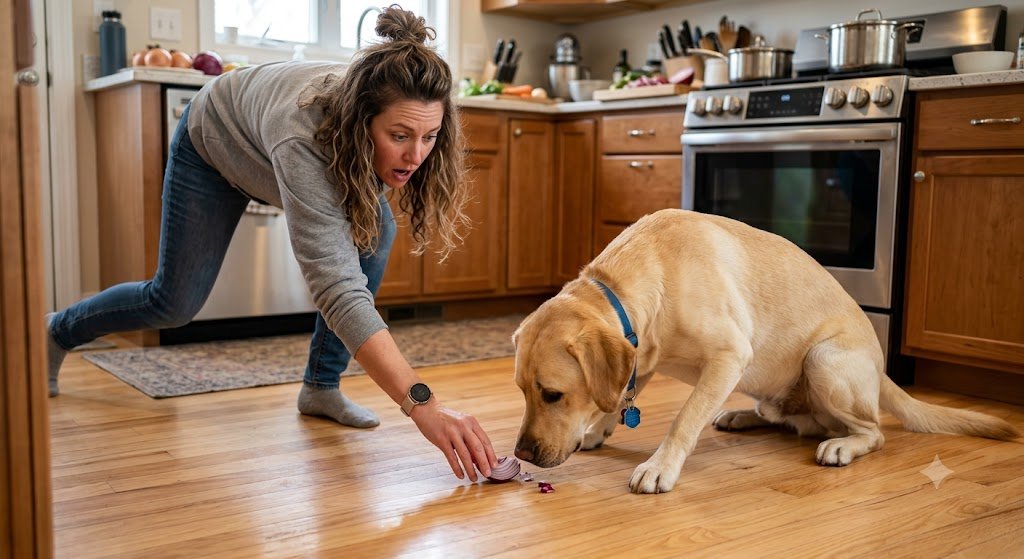
The amount of onion that can cause poisoning depends mainly on your dog’s body weight and the amount and type of onion consumed. In general, dogs may begin experiencing toxic effects after eating approximately 0.5% of their body weight in onions. However, smaller amounts may still be harmful for some dogs, especially if consumed repeatedly or in concentrated forms like onion powder.
The Dog Onion Toxicity Calculator uses your dog’s weight together with the estimated amount of onion eaten to provide a general risk assessment. Because every dog responds differently, the calculator’s result should always be considered an estimate rather than a diagnosis.
Estimated Toxic Amount
The table below provides general examples of when onion consumption may become a concern.
| Dog Weight | Approximate Onion Amount That May Be Toxic* |
|---|---|
| 5 lb (2.3 kg) | Around 0.4 oz (11 g) |
| 10 lb (4.5 kg) | Around 0.8 oz (23 g) |
| 20 lb (9 kg) | Around 1.6 oz (45 g) |
| 40 lb (18 kg) | Around 3.2 oz (91 g) |
| 60 lb (27 kg) | Around 4.8 oz (136 g) |
| 80 lb (36 kg) | Around 6.4 oz (181 g) |
*These values are estimates for fresh onion and should not replace veterinary advice.
Does the Type of Onion Matter?
Yes. Different onion products can contain varying concentrations of the toxic compounds responsible for poisoning.
Higher-risk onion products include:
- Onion powder.
- Dehydrated onions.
- Onion flakes.
- Onion soup mix.
- Raw onions.
- Cooked onions.
Because onion powder is highly concentrated, even a small quantity may pose a significant risk, particularly for small dogs.
Can a Small Piece of Onion Harm a Dog?
A tiny piece of onion may not cause poisoning in every dog, especially a large breed. However, it is impossible to know exactly how an individual dog will respond. Repeated small exposures can also increase the risk over time.
If you are unsure whether the amount eaten is dangerous, use the Dog Onion Toxicity Calculator and contact your veterinarian for guidance.
Summary
There is no completely safe amount of onion for dogs. The risk depends on the dog’s weight, the type of onion, and the quantity consumed. The Dog Onion Toxicity Calculator helps estimate whether the amount eaten may be concerning, but any suspected onion ingestion should be monitored carefully, especially in small dogs and puppies.
Keypoints
- Onion toxicity depends primarily on body weight and the amount consumed.
- Dogs may develop toxic effects after eating approximately 0.5% of their body weight in onions.
- Onion powder and dehydrated onions are among the most concentrated and potentially dangerous forms.
- Small dogs generally face a higher risk than larger dogs.
- Use the Dog Onion Toxicity Calculator as a guide and contact a veterinarian if you suspect onion poisoning.

What Types of Onion Are Toxic to Dogs?
Many people assume only raw onions are dangerous, but all forms of onion can be toxic to dogs. Whether the onion is raw, cooked, dried, or powdered, it contains compounds that can damage a dog’s red blood cells and lead to onion poisoning.
When using the Dog Onion Toxicity Calculator, it’s important to select the correct onion type because concentrated products, such as onion powder, may pose a greater risk even when consumed in small amounts.
Raw Onions
Raw onions contain high levels of toxic compounds and are one of the most common causes of onion poisoning in dogs.
Examples include:
- White onions
- Yellow onions
- Red onions
- Sweet onions
Even a small amount can be harmful, particularly for small dogs.
Cooked Onions
Cooking does not remove the toxic compounds found in onions. Dogs can become ill after eating onions in foods such as:
- Soups
- Stews
- Stir-fries
- Pizza toppings
- Burgers
- Casseroles
If your dog eats food containing cooked onions, consider the amount consumed and use the Dog Onion Toxicity Calculator to estimate the potential risk.
Onion Powder and Dried Onion
Onion powder is one of the most dangerous forms because it is highly concentrated. Even small amounts hidden in seasoning blends or processed foods may contain enough onion to cause poisoning.
Common sources include:
- Seasoning mixes
- Chips
- Instant noodles
- Gravy mixes
- Baby food
- Processed meats
Always check ingredient labels if your dog has eaten seasoned human food.
Other Onion Products
Several onion-based ingredients can also be toxic, including:
- Onion flakes
- Dehydrated onions
- Fried onions
- Onion soup mix
- Onion paste
These products should be kept out of your dog’s reach just like fresh onions.
Are Garlic, Shallots, and Leeks Also Dangerous?
Yes. Garlic, shallots, leeks, and chives belong to the Allium family, the same plant group as onions. Although their toxicity levels differ, they can all damage a dog’s red blood cells if consumed in sufficient amounts.
If your dog has eaten any of these foods, consult your veterinarian, as the Dog Onion Toxicity Calculator is designed specifically for onion exposure and does not replace professional medical advice for other Allium plants.
Summary
Every form of onion—including raw, cooked, dried, powdered, and processed products—can be harmful to dogs. Because concentrated onion products may pose a greater risk, identifying the type consumed is an important step when using the Dog Onion Toxicity Calculator and deciding whether immediate veterinary care is needed.
Keypoints
- All forms of onion are potentially toxic to dogs.
- Raw and cooked onions are both harmful.
- Onion powder and dried onions are highly concentrated and may be more dangerous.
- Fried onions, onion flakes, and soup mixes can also cause poisoning.
- Garlic, shallots, leeks, and chives belong to the same Allium family and can also be toxic to dogs.

Symptoms of Onion Toxicity in Dogs
The signs of onion poisoning do not always appear immediately. In some cases, symptoms develop within a few hours, while others may not become noticeable for several days as damaged red blood cells begin to break down. The severity of symptoms depends on your dog’s size, the amount of onion consumed, and the type of onion eaten.
If the Dog Onion Toxicity Calculator indicates a moderate or high risk, or your dog begins showing any of the following symptoms, contact your veterinarian or an emergency animal hospital immediately.
Early Symptoms
The first signs of onion toxicity often affect the digestive system.
Common early symptoms include:
- Vomiting.
- Diarrhea.
- Loss of appetite.
- Excessive drooling.
- Stomach discomfort.
- Tiredness or reduced activity.
These symptoms may appear shortly after ingestion but do not always indicate how severe the poisoning will become.
Signs of Red Blood Cell Damage
As onion toxins damage red blood cells, dogs may begin developing anemia. This can occur hours or even days after eating onions.
Watch for signs such as:
- Weakness.
- Pale or white gums.
- Rapid breathing.
- Increased heart rate.
- Exercise intolerance.
- Dark or reddish urine.
These symptoms require prompt veterinary attention.
Severe Symptoms
Without treatment, onion poisoning can become life-threatening.
Serious warning signs include:
- Collapse.
- Difficulty breathing.
- Severe weakness.
- Confusion or disorientation.
- Loss of consciousness.
A dog showing any of these symptoms should receive emergency veterinary care immediately.
When Do Symptoms Appear?
The timing varies from one dog to another.
| Time After Eating Onion | Possible Signs |
|---|---|
| 0–6 Hours | Vomiting, drooling, stomach upset, diarrhea |
| 1–3 Days | Weakness, reduced appetite, lethargy |
| 2–5 Days | Pale gums, rapid breathing, anemia, dark urine |
| Severe Cases | Collapse, breathing difficulty, emergency symptoms |
Some dogs may not show obvious symptoms until several days after eating onions, making it important to continue monitoring them even if they initially appear normal.
Summary
Symptoms of onion poisoning can range from mild digestive upset to severe anemia and life-threatening complications. The Dog Onion Toxicity Calculator can help estimate the potential risk, but it cannot predict how an individual dog will respond. If your dog develops vomiting, weakness, pale gums, difficulty breathing, or any other concerning symptoms after eating onions, seek veterinary care without delay.
Keypoints
- Symptoms may appear within hours or take several days to develop.
- Early signs often include vomiting, diarrhea, and loss of appetite.
- Pale gums, weakness, and rapid breathing may indicate anemia.
- Severe cases can lead to collapse and require emergency treatment.
- Use the Dog Onion Toxicity Calculator as an estimate only, and always consult a veterinarian if symptoms occur.
What to Do If Your Dog Eats Onion
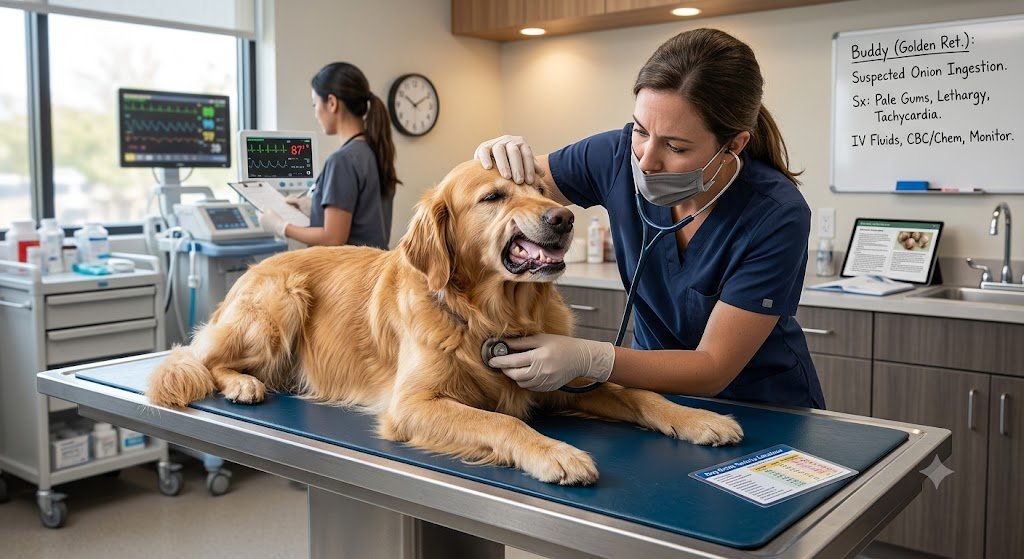
Discovering that your dog has eaten onion can be alarming, but taking the right steps quickly can reduce the risk of serious complications. The Dog Onion Toxicity Calculator can help you estimate the potential level of risk, but it should never delay contacting a veterinarian if your dog has eaten a significant amount of onion or is showing symptoms.
1. Stay Calm and Remove Any Remaining Onion
Prevent your dog from eating more onion by removing any remaining food or scraps from the area. If possible, identify exactly what your dog ate.
Try to determine:
- The type of onion (raw, cooked, onion powder, etc.).
- The approximate amount consumed.
- The time of ingestion.
- Your dog’s current weight.
This information will be helpful when using the Dog Onion Toxicity Calculator and speaking with your veterinarian.
2. Use the Dog Onion Toxicity Calculator
Enter your dog’s details into the calculator to get an estimated risk based on:
- Body weight.
- Onion type.
- Estimated amount eaten.
- Time since ingestion.
The result can help you understand whether the exposure may be low, moderate, or high risk, but it should not be used as a diagnosis.
3. Contact Your Veterinarian
Even if your dog appears normal, it’s a good idea to call your veterinarian if they have eaten onions. Your veterinarian can assess the situation based on your dog’s breed, size, medical history, and the amount consumed.
If your regular clinic is closed, contact an emergency veterinary hospital or a pet poison helpline.
4. Do Not Induce Vomiting Unless Instructed
Never attempt to make your dog vomit unless a veterinarian specifically tells you to do so. Home remedies can sometimes make the situation worse or create additional health risks.
Always follow professional veterinary guidance before giving medications or attempting any treatment at home.
5. Monitor Your Dog Closely
Because symptoms may not appear immediately, continue observing your dog for several days after onion ingestion.
Watch for:
- Vomiting or diarrhea.
- Loss of appetite.
- Weakness.
- Pale gums.
- Rapid breathing.
- Dark-colored urine.
- Unusual tiredness.
If any symptoms develop, seek veterinary care immediately.
Summary
If your dog eats onion, act quickly but calmly. Remove any remaining onion, use the Dog Onion Toxicity Calculator to estimate the potential risk, and contact your veterinarian for professional advice. Prompt action and close monitoring can make a significant difference in preventing serious complications.
Keypoints
- Remove any remaining onion to prevent further ingestion.
- Gather details about the type and amount of onion eaten.
- Use the Dog Onion Toxicity Calculator for an initial risk estimate.
- Contact a veterinarian as soon as possible for guidance.
- Do not induce vomiting unless specifically instructed by a veterinary professional.
When Should You Visit an Emergency Veterinarian?
Some cases of onion ingestion require immediate medical attention. While the Dog Onion Toxicity Calculator can help estimate the level of risk, it cannot determine whether your dog needs treatment. If your dog has eaten a large amount of onion or begins showing symptoms, do not wait for the calculator result—contact an emergency veterinarian right away.
Seek Emergency Care Immediately If:
Take your dog to the nearest emergency veterinary clinic if:
- Your dog ate a large amount of onion.
- Your dog consumed onion powder or another concentrated onion product.
- Your dog is a puppy or a very small breed.
- Your dog has vomited repeatedly after eating onion.
- Your dog has pale gums or difficulty breathing.
- Your dog becomes weak, collapses, or seems unusually tired.
- You are unsure how much onion your dog consumed.
Early treatment can greatly improve the chances of a full recovery.
What Will the Veterinarian Do?
The treatment your dog receives depends on how much onion was eaten, how long ago it happened, and whether symptoms have developed.
A veterinarian may:
- Perform a physical examination.
- Review your dog’s medical history.
- Recommend blood tests to check red blood cell health.
- Administer activated charcoal in appropriate cases.
- Provide intravenous (IV) fluids.
- Monitor oxygen levels and hydration.
- Recommend hospitalization for moderate or severe poisoning.
- Perform a blood transfusion in rare, life-threatening cases of severe anemia.
The earlier treatment begins, the better the outcome is likely to be.
Can Dogs Recover from Onion Poisoning?
Yes. Many dogs recover completely when onion poisoning is recognized early and treated promptly. Mild cases may only require monitoring, while more serious cases may need intensive veterinary care.
Using the Dog Onion Toxicity Calculator soon after ingestion can help you assess the potential risk, but timely veterinary advice remains the most important step in protecting your dog’s health.
Summary
Emergency veterinary care is recommended whenever a dog eats a large amount of onion, consumes concentrated onion products, or develops symptoms of onion poisoning. The Dog Onion Toxicity Calculator is a useful screening tool, but it should never replace prompt medical evaluation when poisoning is suspected.
Keypoints
- Seek emergency care if your dog eats a large amount of onion or develops symptoms.
- Onion powder and other concentrated products pose a higher risk.
- Blood tests help veterinarians assess red blood cell damage.
- Early treatment greatly improves the chance of a full recovery.
- The Dog Onion Toxicity Calculator provides an estimate only and does not replace professional veterinary care.
Conclusion
The Dog Onion Toxicity Calculator is a helpful tool for estimating the potential risk if your dog has eaten onion. By considering your dog’s body weight, the type of onion, and the approximate amount consumed, it provides a quick assessment to help you make informed decisions. However, it should always be used as a guide—not as a replacement for professional veterinary care.
Because onion poisoning can damage a dog’s red blood cells and lead to serious health complications, it’s important to act quickly. If your dog has eaten a large amount of onion, consumed onion powder, or begins showing symptoms such as vomiting, weakness, pale gums, or difficulty breathing, contact your veterinarian or an emergency animal hospital immediately. Early treatment offers the best chance of a full recovery.
Frequently Asked Questions (FAQs)
How much onion is toxic to a dog?
Dogs may begin experiencing toxic effects after eating approximately 0.5% of their body weight in onions. The exact risk depends on the dog’s size, the type of onion, and the amount consumed.
Can dogs eat cooked onions?
No. Cooked onions are still toxic to dogs. Cooking does not remove the harmful compounds that can damage red blood cells.
Is onion powder more dangerous than fresh onion?
Yes. Onion powder is highly concentrated, so even small amounts may pose a greater risk than fresh onion, especially for small dogs and puppies.
How soon do symptoms of onion poisoning appear?
Some dogs develop symptoms within a few hours, while others may not show signs for 1–5 days as red blood cell damage progresses.
Can a dog recover from onion poisoning?
Yes. Many dogs recover fully when onion poisoning is recognized early and treated promptly by a veterinarian.
Should I use the Dog Onion Toxicity Calculator instead of calling a vet?
No. The Dog Onion Toxicity Calculator is designed to provide an estimated risk only. If your dog has eaten a significant amount of onion or is showing symptoms, contact your veterinarian immediately.
Are garlic and shallots toxic to dogs too?
Yes. Garlic, shallots, leeks, and chives belong to the Allium family and can also be toxic to dogs.