Great Pyrenees gestation is the pregnancy period that begins after successful fertilization and ends with the birth of puppies. Like most dog breeds, Great Pyrenees are typically pregnant for about 63 days from ovulation, although a normal gestation period can range from 58 to 68 days, depending on breeding timing and individual factors.
Average Gestation Period
A healthy Great Pyrenees gestation usually lasts about 9 weeks (63 days). During this time, the puppies develop from tiny embryos into fully formed newborns while the mother’s nutritional, physical, and veterinary care needs gradually increase.
| Pregnancy Detail | Information |
|---|---|
| Average gestation period | 63 days from ovulation |
| Typical pregnancy range | 58–68 days |
| Average pregnancy length | About 9 weeks |
| Full-term pregnancy | Around Day 63 |
Why Understanding Gestation Matters
Understanding the Great Pyrenees gestation timeline helps owners provide appropriate care throughout pregnancy and prepare for a safe whelping. Knowing what to expect at each stage also makes it easier to monitor puppy development, estimate the due date, and recognize signs that require veterinary attention.
Benefits of understanding gestation include:
- Estimating the expected due date more accurately.
- Monitoring puppy development week by week.
- Providing proper nutrition throughout pregnancy.
- Preparing a safe whelping area before labor begins.
- Recognizing early labor signs and potential complications.
Summary
Great Pyrenees gestation is the approximately 63-day pregnancy period during which puppies develop before birth. Understanding the Great Pyrenees gestation timeline helps owners provide proper prenatal care, prepare for whelping, monitor pregnancy milestones, and support the health of both the mother and her puppies.
Keypoints
- Great Pyrenees gestation averages 63 days from ovulation.
- A normal pregnancy usually lasts 58–68 days.
- Pregnancy lasts about 9 weeks.
- Understanding the Great Pyrenees gestation timeline helps estimate the due date and monitor fetal development.
- Proper nutrition, routine veterinary care, and labor preparation contribute to a healthy pregnancy and successful whelping.
How Long Is a Great Pyrenees Pregnant?
Average Pregnancy Length
A Great Pyrenees is typically pregnant for 63 days from ovulation, which is approximately 9 weeks. However, a normal pregnancy can last between 58 and 68 days, depending on ovulation timing, breeding date, litter size, and the individual dog’s health.
Because fertilization may occur several days after mating, calculating pregnancy from the breeding date is less accurate than using the ovulation date.
| Pregnancy Timeline | Duration |
|---|---|
| Average gestation period | 63 days |
| Normal pregnancy range | 58–68 days |
| Average pregnancy length | About 9 weeks |
| Estimated due date | Around Day 63 from ovulation |
Factors That Affect Gestation Length
Although most Great Pyrenees deliver close to Day 63, several factors can slightly influence the length of Great Pyrenees gestation.
These include:
- Ovulation timing, which provides the most accurate due date estimate.
- Litter size, as smaller or larger litters may slightly affect delivery timing.
- Age of the mother.
- Overall health and nutritional status.
- Previous pregnancy history.
- Veterinary or medical conditions that may impact gestation.
Minor variations in pregnancy length are normal if both the mother and puppies remain healthy.
How to Estimate the Due Date
Estimating your Great Pyrenees’ due date helps you prepare for whelping and monitor pregnancy milestones more effectively.
The most accurate method is to count 63 days from ovulation. If the exact ovulation date is unknown, your veterinarian can estimate the due date using:
- Breeding records.
- Ultrasound examination.
- Hormone testing.
- X-rays after Day 45 to assess fetal development and estimate litter size.
As the expected delivery date approaches, prepare a whelping area and monitor your dog’s body temperature and behavior for signs of labor.
The Great Pyrenees is a giant breed, and this significantly influences her pregnancy. Unlike smaller dogs, Pyrenees mothers carry large litters — typically 6 to 12 puppies — which demands extra nutritional care during gestation. Due to their size and deep chest, they are also at higher risk for complications like bloat if overfed in one large meal. Splitting her daily food into 3–4 smaller portions from week 5 onward helps maintain energy without stressing her stomach. Also, because the breed was historically a livestock guardian, they often prefer a quiet, dark, and enclosed whelping area that mimics a den — so setting up a secluded whelping box early will help her feel safe and reduce anxiety.
Many first-time Great Pyrenees breeders are surprised by how stoic this breed is during pregnancy. These dogs have a high pain tolerance and may not show discomfort until labor is imminent, making it crucial to track subtle signs like restlessness or a drop in body temperature. Additionally, since the breed matures slowly (both physically and mentally), extra care must be taken if the pregnancy occurs before the dam is fully mature at around 2 years of age. Using a dog pregnancy calculator to pinpoint the due date helps owners plan for the critical final week when round-the-clock monitoring is essential — especially because Pyrenees tend to deliver reliably around day 62–64, rarely deviating.
Summary
A Great Pyrenees pregnancy generally lasts 63 days, although a healthy Great Pyrenees gestation can range from 58 to 68 days. Factors such as ovulation timing, litter size, and the mother’s health can influence the exact delivery date, making routine veterinary monitoring an important part of prenatal care.
Keypoints
- The average Great Pyrenees gestation period is 63 days.
- A normal pregnancy typically lasts 58–68 days.
- Ovulation timing provides the most accurate due date estimate.
- Litter size, age, and overall health can slightly affect pregnancy length.
- Prepare for whelping as your Great Pyrenees approaches the expected due date and monitor for signs of labor.
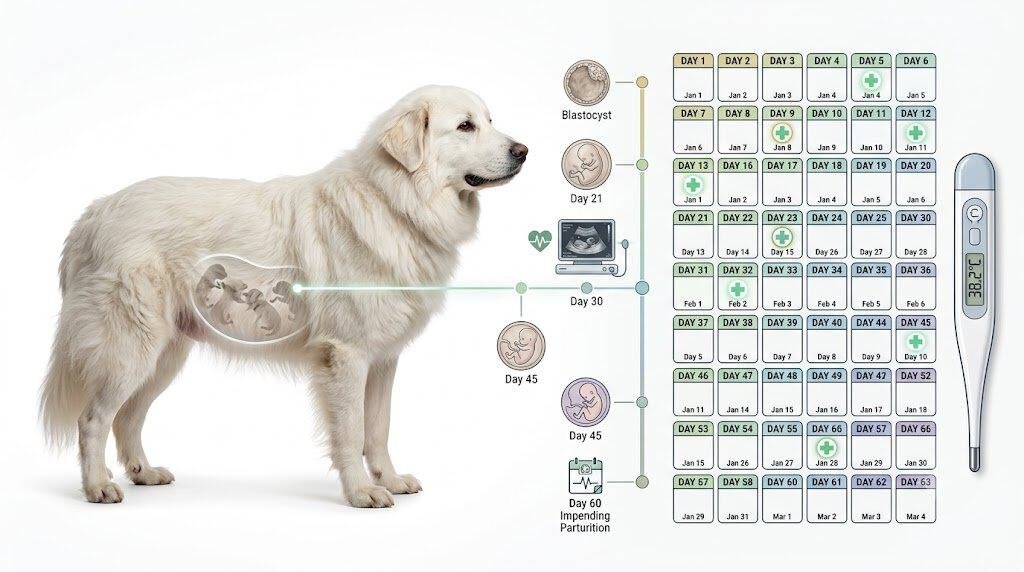
Great Pyrenees Pregnancy Week-by-Week Timeline
Weeks 1–2
During the first two weeks, fertilized eggs travel through the reproductive tract and implant in the uterine lining. There are usually no visible signs of pregnancy, and your Great Pyrenees will likely continue her normal daily routine.
Weeks 3–4
The embryos develop rapidly, and the first pregnancy symptoms may begin to appear. Some Great Pyrenees experience mild appetite changes, increased affection, or occasional morning sickness. Around this stage, a veterinarian can often confirm pregnancy using an ultrasound.
Weeks 5–6
During Weeks 5 and 6, the puppies grow quickly, and the mother’s abdomen becomes noticeably larger. Her nutritional needs increase as fetal development accelerates.
Common changes include:
- Enlarging abdomen.
- Gradual weight gain.
- Increased appetite.
- Enlarged nipples and mammary glands.
- Reduced activity and more frequent resting.
Weeks 7–8
By Weeks 7 and 8, the puppies are nearly fully developed and continue gaining weight. Your Great Pyrenees may begin nesting and preparing a comfortable area for whelping.
You may notice:
- Nesting behavior.
- Increased sleeping.
- Milk production or leaking colostrum.
- Reduced activity.
- More frequent urination.
- Visible or detectable puppy movement.
Week 9 Until Birth
The final week focuses on preparing for labor. Many Great Pyrenees become restless, lose their appetite, and spend more time in their nesting area. A drop in body temperature often occurs 12–24 hours before labor, indicating that whelping is near.
Watch for:
- Restlessness.
- Panting.
- Nesting.
- Clear vaginal discharge.
- Body temperature dropping below 99°F (37.2°C).
- Visible contractions before puppy delivery.
Great Pyrenees Pregnancy Timeline Chart
| Pregnancy Week | Puppy Development | Mother’s Changes |
|---|---|---|
| Weeks 1–2 | Fertilized eggs implant in the uterus. | Usually no visible signs. |
| Weeks 3–4 | Embryos develop rapidly and major organs begin forming. | Mild appetite changes, increased affection, pregnancy confirmation by ultrasound. |
| Weeks 5–6 | Puppies grow quickly and continue developing major organs. | Enlarging abdomen, weight gain, increased appetite. |
| Weeks 7–8 | Puppies mature and gain most of their weight. | Nesting, enlarged mammary glands, reduced activity. |
| Week 9 | Puppies are fully developed and ready for birth. | Temperature drop, labor signs, and preparation for whelping. |
Summary
A Great Pyrenees gestation progresses through predictable stages over approximately 9 weeks. Following a Great Pyrenees gestation week-by-week timeline helps owners monitor puppy development, recognize pregnancy milestones, and prepare for a safe and healthy delivery.
Keypoints
- Great Pyrenees pregnancy typically lasts about 9 weeks.
- Pregnancy signs become more noticeable during Weeks 3–4.
- Nutritional needs increase significantly in Weeks 5–6.
- Nesting behavior commonly begins during Weeks 7–8.
- Monitor body temperature and labor signs closely during Week 9 as whelping approaches.
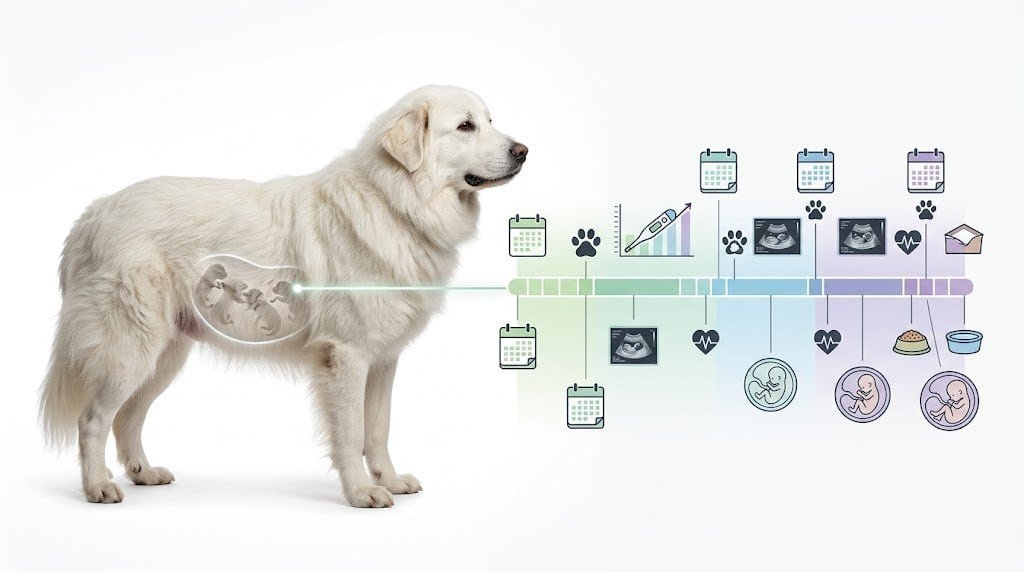
Great Pyrenees Puppy Development by Week
Weeks 1–2: Fertilization and Implantation
During the first two weeks, fertilization occurs, and the embryos travel to the uterus, where they implant in the uterine lining. At this stage, the embryos are microscopic, and there are typically no visible physical changes in the mother.
Weeks 3–4: Major Organs Begin Developing
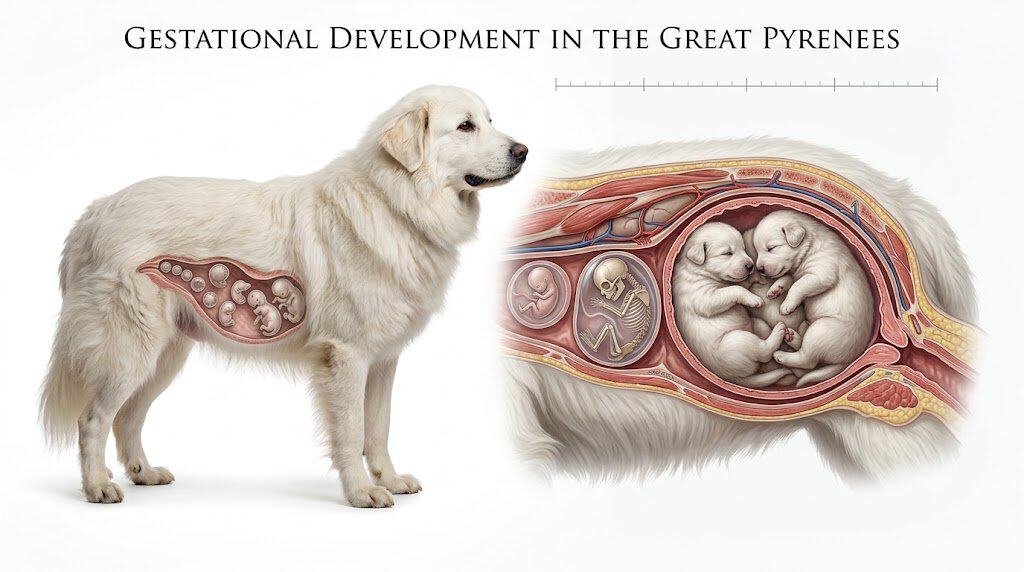
By Weeks 3 and 4, the embryos grow rapidly, and the formation of essential organs begins. The heart, brain, spinal cord, and other major body systems start developing.
Key developmental milestones include:
- Heartbeat begins.
- Limb buds develop.
- Facial features start forming.
- Pregnancy can often be confirmed with an ultrasound.
Weeks 5–6: Rapid Growth Phase
During Weeks 5 and 6, the puppies experience significant growth. Their skeletons begin to mineralize, and their bodies become more recognizable.
Major developments include:
- Bones begin hardening.
- Toes and claws develop.
- Internal organs continue maturing.
- Puppies grow rapidly in size and weight.
At this stage, the mother’s nutritional requirements increase to support healthy fetal growth.
Weeks 7–9: Final Growth Before Birth
During the final weeks of Great Pyrenees gestation, the puppies are nearly fully developed and gain most of their body weight. Their lungs, nervous system, and immune system continue maturing in preparation for life outside the womb.
By the end of pregnancy:
- Fur coat is fully developed.
- Eyes and ears are completely formed.
- Puppies become more active inside the uterus.
- Most fetal weight gain occurs during this stage.
- Puppies are typically ready for birth around Day 63.
Great Pyrenees Puppy Development Chart
| Pregnancy Week | Puppy Development |
|---|---|
| Weeks 1–2 | Fertilization occurs, and embryos implant in the uterus. |
| Weeks 3–4 | Major organs, heartbeat, limbs, and facial features begin developing. |
| Weeks 5–6 | Bones harden, claws form, and rapid body growth begins. |
| Weeks 7–8 | Fur develops, organs mature, and puppies gain weight quickly. |
| Week 9 | Puppies are fully developed and ready for birth. |
Summary
Puppies develop rapidly throughout the approximately 63-day Great Pyrenees gestation period. Early pregnancy focuses on embryo implantation and organ formation, while the final weeks are dedicated to rapid growth, weight gain, and preparing the puppies for birth during Great Pyrenees gestation.
Keypoints
- Embryos implant in the uterus during Weeks 1–2.
- Major organs begin developing in Weeks 3–4.
- Rapid skeletal and body growth occurs during Weeks 5–6.
- Most fetal weight gain happens during the final weeks of pregnancy.
- Puppies are generally fully developed and ready for birth around Day 63.
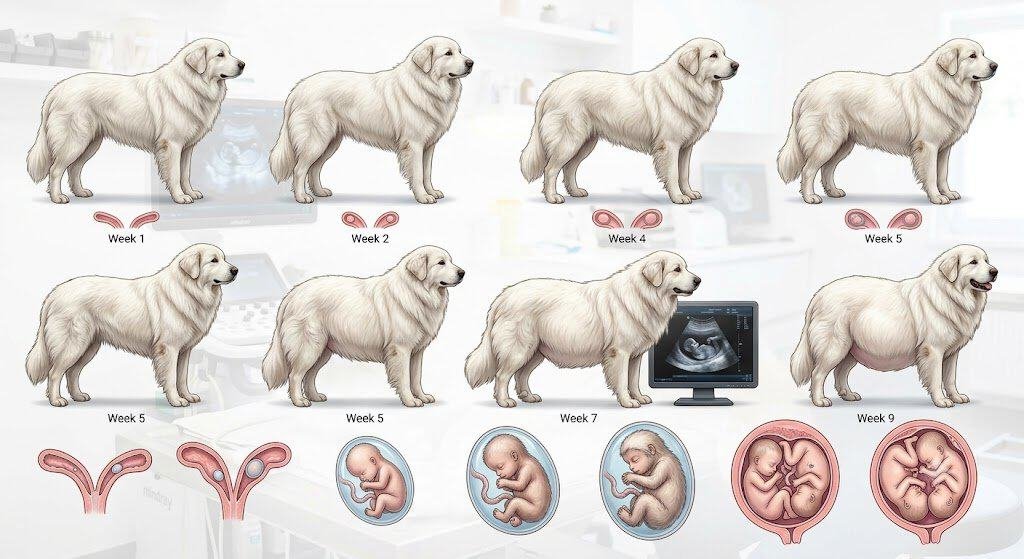
How to Care for a Pregnant Great Pyrenees
Nutrition Requirements
Proper nutrition is essential throughout Great Pyrenees gestation to support the mother’s health and the healthy development of her puppies. During the first half of pregnancy, continue feeding a high-quality, complete, and balanced dog food. As pregnancy progresses, gradually increase calorie intake to meet the growing nutritional demands.
For optimal nutrition:
- Feed a premium, nutritionally complete dog food.
- Gradually increase food portions during the last 3–4 weeks of pregnancy.
- Offer smaller, more frequent meals as the puppies grow.
- Ensure fresh, clean water is available at all times.
- Avoid sudden diet changes unless advised by your veterinarian.
Exercise Guidelines
Moderate exercise helps maintain muscle tone, supports healthy weight management, and improves overall well-being during pregnancy. As your Great Pyrenees approaches her due date, reduce the intensity of physical activity.
Recommended activities include:
- Daily short walks.
- Gentle play sessions.
- Light exercise without overexertion.
- Avoiding jumping, strenuous running, and rough play.
- Providing plenty of rest between activities.
Veterinary Checkups
Routine veterinary visits are an important part of prenatal care and help ensure a healthy pregnancy.
Your veterinarian may recommend:
- Ultrasound to confirm pregnancy.
- Regular physical examinations.
- X-rays after Day 45 to estimate litter size.
- Monitoring body weight and overall condition.
- Guidance on labor preparation and whelping.
Supplements and Hydration
Most pregnant Great Pyrenees eating a complete and balanced commercial diet do not require additional supplements unless prescribed by a veterinarian.
For healthy prenatal care:
- Keep fresh water available at all times.
- Avoid calcium supplements unless specifically recommended.
- Use prenatal vitamins or omega-3 supplements only under veterinary guidance.
- Never give human supplements without professional advice.
Creating a Comfortable Environment
A quiet and stress-free environment helps support a healthy pregnancy and prepares your Great Pyrenees for whelping.
Helpful practices include:
- Providing a comfortable resting area.
- Keeping bedding clean and dry.
- Reducing stress and unnecessary excitement.
- Avoiding unnecessary travel during late pregnancy.
- Introducing the whelping area before the expected due date.
Summary
Proper care during Great Pyrenees gestation includes balanced nutrition, moderate exercise, routine veterinary checkups, adequate hydration, and a calm environment. Consistent care throughout Great Pyrenees gestation supports healthy puppy development and helps prepare the mother for a safe and successful delivery.
Keypoints
- Feed a high-quality, balanced diet throughout pregnancy.
- Gradually increase food intake during the final weeks.
- Maintain gentle daily exercise while avoiding strenuous activity.
- Schedule routine veterinary checkups throughout gestation.
- Provide constant access to fresh water and only use supplements under veterinary supervision.
- Prepare a quiet, comfortable environment before whelping begins.
Signs Your Great Pyrenees Is About to Give Birth
Behavioral Changes
As your Great Pyrenees gestation period comes to an end, you’ll likely notice behavioral changes that indicate labor is approaching. These signs typically appear 24–48 hours before whelping, although the exact timing varies between dogs.
Common behavioral changes include:
- Nesting by arranging blankets or bedding.
- Restlessness or pacing.
- Seeking a quiet, secluded area.
- Increased clinginess or preferring to be alone.
- Frequent licking of the vulva.
- Reduced appetite or refusing food.
- Panting or mild trembling.
These behaviors are normal as the body prepares for delivery.
Physical Signs
Along with behavioral changes, several physical signs indicate that your Great Pyrenees is getting ready to give birth.
Watch for:
- Enlarged mammary glands.
- Milk production or leaking colostrum.
- A swollen, softened vulva.
- Clear or mucus-like vaginal discharge.
- Visible abdominal contractions.
- Relaxation of the pelvic muscles.
These changes usually mean labor is approaching.
Temperature Drop
A drop in body temperature is one of the most reliable indicators that whelping is near. A healthy Great Pyrenees’ normal body temperature is typically 101–102.5°F (38.3–39.2°C). Approximately 12–24 hours before labor, it often falls to below 99°F (37.2°C).
For accurate monitoring:
- Begin checking the temperature 7–10 days before the due date.
- Use a digital rectal thermometer.
- Record readings at the same time every day.
- Monitor twice daily during the final few days of pregnancy.
Active Labor Signs
Once active labor begins, puppy delivery is usually imminent. Strong contractions and visible straining indicate that the first puppy is on its way.
Common active labor signs include:
- Strong, regular abdominal contractions.
- Visible straining.
- Appearance of the amniotic sac.
- Delivery of the first puppy.
- Continued contractions until all puppies are born.
If your Great Pyrenees strains continuously for 20–30 minutes without delivering a puppy or appears distressed, contact your veterinarian immediately.
Summary
As Great Pyrenees gestation nears its final stage, a Great Pyrenees will typically show a combination of behavioral, physical, and temperature changes. Nesting, restlessness, milk production, a body temperature drop, and strong contractions are among the most reliable signs that Great Pyrenees gestation is ending and whelping is about to begin.
Keypoints
- Behavioral changes often appear 24–48 hours before labor.
- Physical signs include milk production, vaginal discharge, and abdominal contractions.
- A temperature drop below 99°F (37.2°C) commonly occurs 12–24 hours before labor.
- Active labor is marked by strong contractions and puppy delivery.
- Seek immediate veterinary care if labor does not progress normally or emergency symptoms develop.
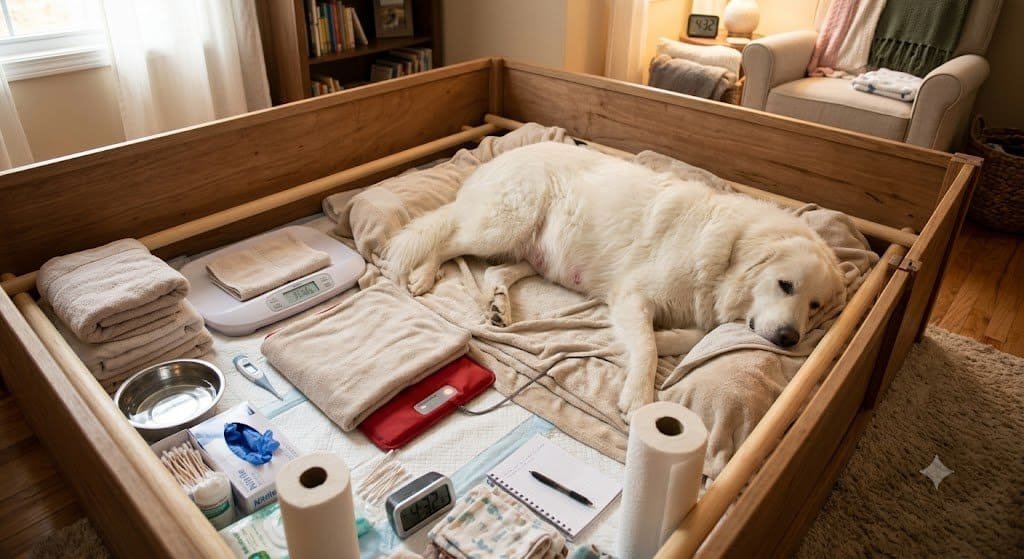
Stages of Great Pyrenees Labor
Stage One: Early Labor
Stage One begins when the cervix starts to dilate and the uterus prepares for puppy delivery. During this phase, uterine contractions begin but are usually not visible externally.
This stage typically lasts 6–12 hours, although first-time mothers may remain in early labor for up to 24 hours.
Common signs include:
- Nesting behavior.
- Restlessness or pacing.
- Panting.
- Shivering or trembling.
- Loss of appetite.
- Frequent licking of the vulva.
- Body temperature dropping below 99°F (37.2°C).
No puppies are delivered during this stage.
Stage Two: Puppy Delivery
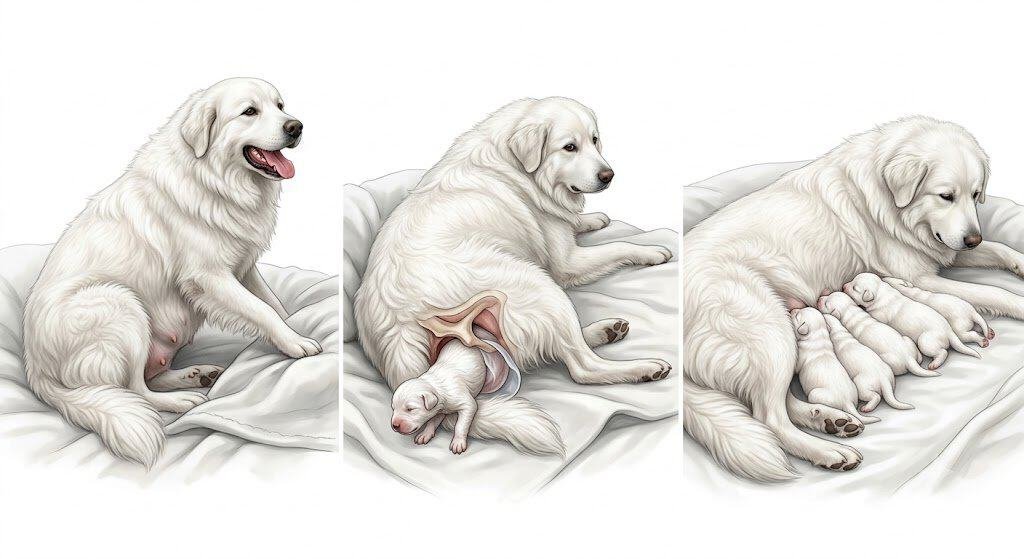
Stage Two is the active labor phase when puppies are born. Strong abdominal contractions move each puppy through the birth canal.
During this stage:
- The first puppy is usually delivered after active contractions begin.
- Puppies are commonly born every 30–60 minutes.
- A pause of up to 2 hours between puppies may be normal if the mother is calm and contractions have temporarily stopped.
Typical signs include:
- Strong, regular contractions.
- Visible straining.
- Appearance of the amniotic sac.
- Delivery of puppies.
- Cleaning and nursing newborns between births.
Stage Three: Placenta Delivery
Stage Three involves passing the placenta after each puppy is born. Mild contractions continue as the uterus expels the placentas.
During this stage:
- A placenta is usually passed after each puppy.
- The mother cleans and stimulates her puppies.
- Nursing often begins shortly after birth.
- Maternal bonding strengthens with the litter.
Count the placentas after delivery, as a retained placenta can increase the risk of infection and requires veterinary attention.
Great Pyrenees Labor Stages Comparison
| Labor Stage | Typical Duration | Main Signs | What Happens |
|---|---|---|---|
| Stage One | 6–24 hours | Nesting, panting, restlessness, temperature drop | Cervix dilates and the body prepares for labor. |
| Stage Two | Several hours | Strong contractions, straining, puppy delivery | Puppies are delivered one by one. |
| Stage Three | After each puppy | Mild contractions, placenta passes | Placentas are expelled, and nursing begins. |
When Labor May Not Be Normal
Although every Great Pyrenees’ labor is different, certain situations require immediate veterinary care.
Contact your veterinarian if:
- Stage One lasts longer than 24 hours without progressing.
- Strong contractions continue for 20–30 minutes without delivering a puppy.
- More than 2 hours pass between puppies while active straining continues.
- Green or black discharge appears before the first puppy is born.
- Heavy bleeding, collapse, or signs of severe distress occur.
Summary
Great Pyrenees labor progresses through three stages: early labor, puppy delivery, and placenta delivery. Understanding each stage during Great Pyrenees gestation helps you recognize normal labor, provide appropriate support, and identify complications that may occur before Great Pyrenees gestation ends.
Keypoints
- Great Pyrenees labor consists of three stages.
- Stage One prepares the body for puppy delivery.
- Stage Two is when puppies are born.
- Stage Three involves passing the placentas and beginning newborn care.
- Contact a veterinarian immediately if labor is prolonged or abnormal signs develop.
Possible Pregnancy and Labor Complications
Common Pregnancy Complications
Most Great Pyrenees gestation periods progress without major issues, but complications can occur before or during labor. Monitoring your dog’s appetite, body temperature, energy level, and vaginal discharge can help identify problems early.
Potential pregnancy complications include:
- Pregnancy loss or fetal resorption.
- Poor weight gain or inadequate nutrition.
- Uterine infection.
- Severe vomiting or dehydration.
- Premature labor.
- High-risk pregnancies due to age or underlying health conditions.
Any sudden change in behavior, appetite, or discharge should be evaluated by a veterinarian.
Difficult Labor (Dystocia)
Dystocia is a difficult or obstructed labor that prevents puppies from being delivered normally. It can occur if a puppy is too large, positioned incorrectly, or if the mother’s contractions are not strong enough.
Signs of dystocia include:
- Strong straining without delivering a puppy.
- A puppy visible in the birth canal but not delivered.
- Weak or ineffective contractions.
- Extreme exhaustion during labor.
- Long pauses between puppies while active contractions continue.
Dystocia is a veterinary emergency and may require medical treatment or a cesarean section.
Emergency Warning Signs
Seek immediate veterinary care if your Great Pyrenees shows any of the following signs:
- Green or black discharge before the first puppy is born.
- Heavy or continuous bleeding.
- Foul-smelling vaginal discharge.
- Collapse, weakness, or difficulty breathing.
- Seizures or loss of consciousness.
- A retained puppy or placenta.
- Fever after delivery.
- Puppies that are cold, weak, or unable to nurse.
Prompt treatment can improve outcomes for both the mother and her puppies.
When to Call a Veterinarian
Contact your veterinarian immediately if:
- Pregnancy lasts longer than 68 days.
- Strong contractions continue for 20–30 minutes without delivering a puppy.
- More than 2 hours pass between puppies during active labor.
- The mother appears severely distressed or exhausted.
- You suspect a retained puppy or placenta.
- You are unsure whether labor is progressing normally.
Summary
Although most Great Pyrenees gestation periods and deliveries are uncomplicated, it’s important to recognize potential complications such as dystocia, infection, prolonged labor, and abnormal discharge. Early veterinary intervention during Great Pyrenees gestation can help protect the health of both the mother and her puppies.
Keypoints
- Most Great Pyrenees pregnancies progress normally, but complications can occur.
- Dystocia is a serious labor complication that requires immediate veterinary attention.
- Green or black discharge before the first puppy is an emergency.
- Heavy bleeding, prolonged labor, or signs of severe distress should never be ignored.
- Contact your veterinarian promptly whenever pregnancy or labor does not progress as expected.
Caring for the Mother and Puppies After Birth
Mother’s Recovery
The first few weeks after delivery are an important part of Great Pyrenees gestation recovery. The mother needs proper nutrition, hydration, rest, and regular monitoring to regain strength while producing enough milk for her puppies.
To support recovery:
- Provide a high-quality, nutrient-rich diet.
- Ensure constant access to fresh, clean water.
- Allow plenty of rest in a quiet environment.
- Monitor appetite, body temperature, and overall behavior.
- Keep the whelping area clean and dry.
Caring for Newborn Puppies
Newborn Great Pyrenees puppies depend entirely on their mother during the first weeks of life. They should nurse frequently to receive colostrum, which provides essential antibodies that support their immune system.
Important newborn care includes:
- Ensure each puppy nurses within the first few hours after birth.
- Keep puppies warm and dry.
- Monitor daily weight gain using a puppy scale.
- Check that every puppy is feeding regularly.
- Observe for signs of weakness or dehydration.
Postpartum Monitoring
Even after a successful delivery, continue monitoring the mother and puppies for any signs of health problems.
Watch the mother for:
- Fever.
- Loss of appetite.
- Foul-smelling vaginal discharge.
- Swollen or painful mammary glands.
- Difficulty caring for the puppies.
Monitor the puppies for:
- Poor nursing.
- Failure to gain weight.
- Constant crying.
- Difficulty breathing.
- Low body temperature.
Prompt veterinary care is recommended if any abnormal signs develop.
Veterinary Follow-Up
A post-whelping veterinary examination helps confirm that both the mother and her puppies are recovering normally after Great Pyrenees gestation.
Your veterinarian may:
- Examine the mother’s overall health.
- Check for retained placentas or uterine infection.
- Assess milk production.
- Evaluate the puppies’ health and development.
- Recommend a vaccination and deworming schedule.
Summary
Proper care after Great Pyrenees gestation is essential for the health of both the mother and her puppies. Providing balanced nutrition, maintaining a clean environment, monitoring recovery, and scheduling veterinary follow-up after Great Pyrenees gestation help support healthy growth and reduce the risk of postpartum complications.
Keypoints
- Feed the mother a nutrient-rich diet and provide plenty of fresh water.
- Ensure all puppies nurse regularly and gain weight each day.
- Keep the whelping area clean, warm, and comfortable.
- Monitor both the mother and puppies for signs of illness.
- Schedule a veterinary checkup after delivery to ensure a healthy recovery.
Conclusion
Understanding Great Pyrenees gestation helps owners provide the right care from breeding through delivery and postpartum recovery. A healthy Great Pyrenees gestation typically lasts about 63 days, during which balanced nutrition, routine veterinary care, moderate exercise, and regular monitoring support the health of both the mother and her developing puppies. By recognizing pregnancy milestones, preparing for whelping, understanding labor stages, and identifying potential complications early, you can help ensure a safe pregnancy, successful delivery, and healthy start for every puppy.
Frequently Asked Questions
How long is Great Pyrenees gestation?
Great Pyrenees gestation typically lasts about 63 days from ovulation, although a normal pregnancy can range from 58 to 68 days, depending on breeding timing and individual factors.
How many puppies can a Great Pyrenees have?
A Great Pyrenees usually gives birth to 6–10 puppies, although litter sizes can range from 4 to 12 puppies depending on genetics, age, health, and breeding history.
When does a Great Pyrenees start showing pregnancy?
Most Great Pyrenees begin showing visible pregnancy signs between Weeks 3 and 5, including weight gain, an enlarged abdomen, enlarged nipples, and increased appetite.
What should I feed a pregnant Great Pyrenees?
Feed a high-quality, complete, and balanced dog food throughout pregnancy. During the last few weeks, gradually increase food portions and offer smaller, more frequent meals to meet higher energy requirements.
How can I tell if my Great Pyrenees is about to give birth?
Common signs include nesting behavior, panting, restlessness, milk production, clear vaginal discharge, and a body temperature drop below 99°F (37.2°C) approximately 12–24 hours before labor.
When should I call a veterinarian during labor?
Contact your veterinarian if your Great Pyrenees strains for 20–30 minutes without delivering a puppy, more than 2 hours pass between puppies during active labor, or if you notice heavy bleeding, foul-smelling discharge, or severe distress.
Can a Great Pyrenees give birth before 63 days?
Yes. A healthy Great Pyrenees gestation can last 58–68 days. Delivery before or after this range may require veterinary evaluation, especially if the puppies appear premature or labor is delayed.