A dog pregnancy estimator helps breeders and pet owners calculate an estimated due date for a pregnant dog using the breeding date or mating date. Since canine pregnancy typically lasts about 63 days, a dog due date calculator provides a quick estimate of when puppies are expected to be born.
These tools are commonly used to track the dog pregnancy timeline, monitor important gestation milestones, and prepare for whelping. While a dog pregnancy calculator can provide a reliable estimate, the actual delivery date may vary depending on ovulation timing, breed, litter size, and individual reproductive factors.
A canine pregnancy estimator is best used as a planning tool rather than a diagnostic tool. Veterinary examinations, ultrasounds, and professional reproductive assessments remain the most accurate methods for confirming pregnancy and determining puppy development.
What Is a Dog Pregnancy Estimator?
A dog pregnancy estimator is an online calculator or pregnancy tracking tool that predicts a dog’s expected whelping date based on the breeding date. It uses the average canine gestation period to estimate when labor is likely to occur and helps owners monitor each stage of pregnancy.
Summary
A dog pregnancy estimator predicts a dog’s due date and pregnancy timeline using the breeding date. It helps owners prepare for puppy delivery, schedule veterinary care, and track important pregnancy milestones.
Key Points
- Estimates a dog’s expected due date.
- Uses the breeding date and average gestation period.
- Helps track canine pregnancy stages.
- Supports whelping preparation and planning.
- Works best when combined with veterinary care.
More About : dog pregnancy estimator
How a Dog Pregnancy Estimator Works
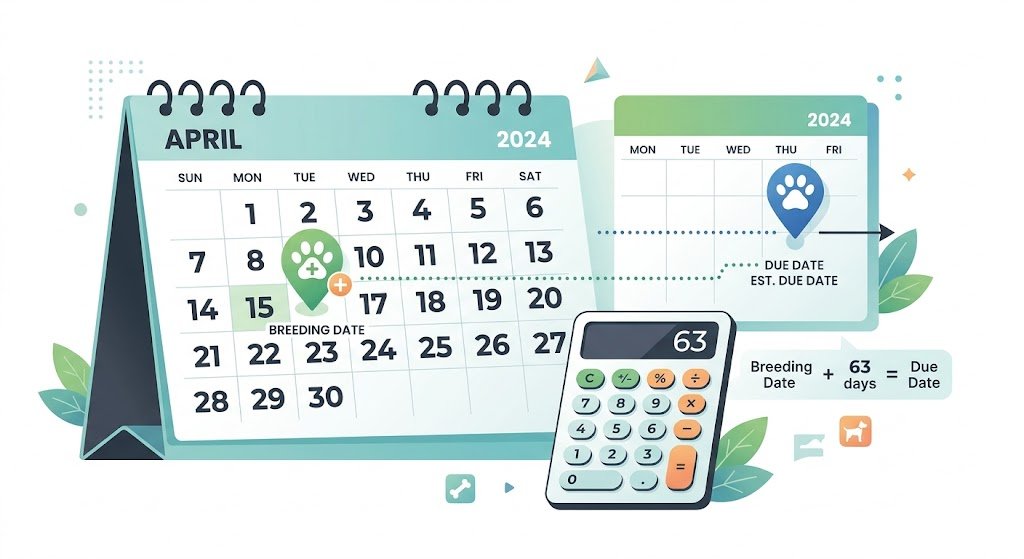
A dog pregnancy estimator calculates an expected puppy due date by using the dog’s breeding or mating date and the average canine gestation period. Most dog pregnancy calculators add approximately 63 days to the breeding date to estimate when whelping is likely to occur.
Because conception does not always happen immediately after mating, the estimated due date should be considered a prediction rather than an exact delivery date. Most dogs give birth within a range of 58 to 68 days after successful breeding.
Information Needed for Calculation
To generate an estimated due date, a dog pregnancy calculator typically requires:
- Breeding or mating date
- Last mating date (if multiple breedings occurred)
- Breed information (optional)
- Ovulation date (if known)
The more accurate the breeding and ovulation information, the more reliable the pregnancy estimate will be.
Typical Dog Gestation Period
The average dog gestation period is around 63 days from ovulation. However, healthy pregnancies can range from 58 to 68 days depending on several factors.
| Pregnancy Metric | Typical Range |
|---|---|
| Average Gestation Length | 63 Days |
| Earliest Normal Delivery | 58 Days |
| Latest Normal Delivery | 68 Days |
| Ultrasound Confirmation | Around Day 25 |
| X-Ray Puppy Count | Around Day 45 |
Why Estimated Due Dates Can Vary
Several factors can influence the actual puppy birth date:
- Ovulation may occur before or after mating.
- Sperm can survive for several days within the reproductive tract.
- Breed-specific reproductive differences may affect timing.
- Small and large litters can slightly influence delivery timing.
- Individual hormonal variations can alter gestation length.
For this reason, dog due date calculators provide an estimated whelping date rather than a guaranteed delivery day.
Summary
A dog pregnancy estimator uses the breeding date and average canine gestation period to predict a puppy due date. While the estimate is usually close, factors such as ovulation timing and reproductive variations can affect the actual delivery date.
Key Points
- Most calculators use a 63-day gestation average.
- Breeding date is the primary calculation factor.
- Ovulation timing affects due date accuracy.
- Most dogs deliver between 58 and 68 days.
- Pregnancy estimators provide estimates, not exact delivery dates.
Dog Pregnancy Due Date Calculator
A dog pregnancy due date calculator estimates when a pregnant dog is likely to give birth based on the breeding date. Since the average canine gestation period is approximately 63 days, most calculators use this timeframe to predict the expected whelping date.
While the calculation provides a useful estimate, actual delivery dates can vary due to ovulation timing, breed characteristics, litter size, and individual reproductive factors. For the most accurate results, the breeding date should be recorded as precisely as possible.
Due Date Formula
Most dog pregnancy estimators follow a simple calculation:
| Calculation Method | Formula |
|---|---|
| Standard Due Date Estimate | Breeding Date + 63 Days |
| Normal Pregnancy Range | Breeding Date + 58–68 Days |
This formula helps breeders and pet owners create a general pregnancy timeline and prepare for upcoming milestones.
Example Calculation
| Breeding Date | Estimated Due Date |
|---|---|
| January 1 | March 5 |
| February 10 | April 14 |
| March 20 | May 22 |
| April 15 | June 17 |
These dates are estimates and should be used as planning guidelines rather than exact delivery predictions.
Benefits of Using a Dog Due Date Calculator
Using a canine pregnancy calculator can help:
- Track the dog pregnancy timeline.
- Plan veterinary appointments.
- Monitor important gestation milestones.
- Prepare a whelping area before labor begins.
- Anticipate puppy arrival and post-birth care needs.
When to Expect Labor
As the estimated due date approaches, owners should watch for signs that labor may begin soon, including:
- Nesting behavior
- Reduced appetite
- Restlessness
- Increased panting
- Drop in body temperature
- Frequent pacing or digging
Monitoring these signs alongside the estimated due date can help ensure a smoother whelping process.
Summary
A dog pregnancy due date calculator predicts a dog’s expected delivery date by adding the average gestation period to the breeding date. It serves as a practical planning tool for tracking pregnancy progress and preparing for puppy birth.
Key Points
- Most dog pregnancy calculators use a 63-day gestation average.
- Due dates are estimates, not guarantees.
- Breeding date accuracy improves prediction accuracy.
- Most dogs give birth between 58 and 68 days after breeding.
- Labor signs become more noticeable as the due date approaches.
Dog Pregnancy Timeline Week by Week
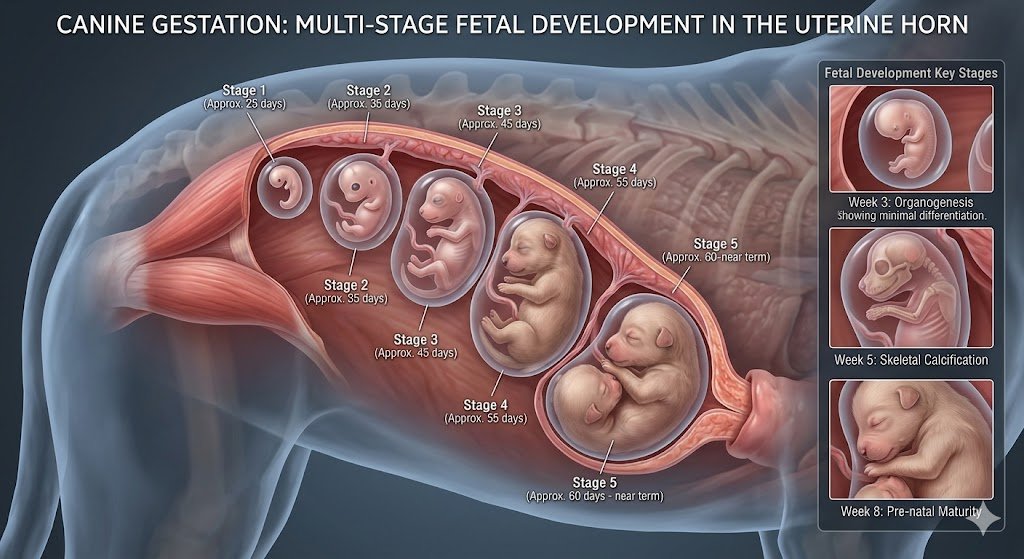
Understanding the dog pregnancy timeline helps owners track puppy development, monitor maternal health, and prepare for whelping. A typical canine pregnancy lasts about 63 days, although healthy pregnancies may range from 58 to 68 days.
Weeks 1–2
During the first two weeks, fertilization occurs and embryos begin developing. Physical changes are usually not visible, and most dogs continue their normal routine without noticeable symptoms.
Common observations:
- Normal appetite and activity levels
- No visible abdominal growth
- Hormonal changes begin internally
- Embryos travel toward the uterus
Weeks 3–4
The embryos implant into the uterine wall and begin developing rapidly. Some dogs may start showing early pregnancy signs during this stage.
Possible signs include:
- Mild appetite changes
- Increased affection
- Slight fatigue
- Occasional morning sickness
- Enlarged nipples
Veterinary ultrasound may confirm pregnancy around day 25.
Weeks 5–6
Puppy growth accelerates significantly during this stage. Weight gain and abdominal enlargement become more noticeable.
Common developments:
- Visible belly growth
- Increased food intake
- Weight gain
- Behavioral changes
- Greater nutritional requirements
This is often when owners clearly recognize that their dog is pregnant.
Weeks 7–8
The puppies continue growing quickly, and the mother’s body begins preparing for delivery.
Typical signs include:
- Reduced activity levels
- More frequent resting
- Nesting behavior
- Enlarged mammary glands
- Possible milk production
Owners should begin preparing a safe and comfortable whelping area.
Week 9 and Whelping
The final week is when labor can occur at any time. Many dogs show obvious signs that delivery is approaching.
Signs labor may be near:
- Drop in body temperature
- Loss of appetite
- Restlessness
- Digging or nesting
- Increased panting
- Frequent pacing
Most healthy dogs deliver puppies naturally without complications, but veterinary assistance should be available if needed.
| Pregnancy Stage | Key Development |
|---|---|
| Weeks 1–2 | Fertilization and embryo movement |
| Weeks 3–4 | Implantation and early development |
| Weeks 5–6 | Rapid puppy growth |
| Weeks 7–8 | Nesting and delivery preparation |
| Week 9 | Labor and puppy birth |
Summary
A dog’s pregnancy progresses through distinct stages, from fertilization and implantation to rapid puppy growth and eventual whelping. Monitoring these milestones helps owners provide proper care throughout the gestation period.
Key Points
- Most canine pregnancies last around 63 days.
- Early pregnancy signs often appear during weeks 3–4.
- Noticeable belly growth usually occurs during weeks 5–6.
- Nesting behavior commonly begins during weeks 7–8.
- Labor typically occurs during week 9.
Signs of Pregnancy in Dogs
Recognizing dog pregnancy symptoms early can help owners provide appropriate care and monitor the pregnancy more effectively. While some signs appear within the first few weeks after mating, others become more noticeable as the pregnancy progresses.
Not every dog experiences the same symptoms, and the intensity of signs can vary depending on breed, age, health, and litter size.
Early Signs of Pregnancy
Early pregnancy symptoms usually appear between the second and fourth week after breeding.
Common early signs include:
- Slight decrease in appetite
- Mild morning sickness
- Increased affection toward owners
- Reduced energy levels
- Enlarged or darker nipples
- Behavioral changes
These signs can be subtle and are often mistaken for temporary hormonal changes.
Mid-Pregnancy Signs
As the pregnancy advances, physical changes become easier to identify.
Typical mid-pregnancy symptoms include:
- Noticeable weight gain
- Enlarged abdomen
- Increased appetite
- More frequent sleeping
- Growing mammary glands
- Calmer behavior
Many owners begin to recognize pregnancy clearly during this stage.
Late Pregnancy Signs
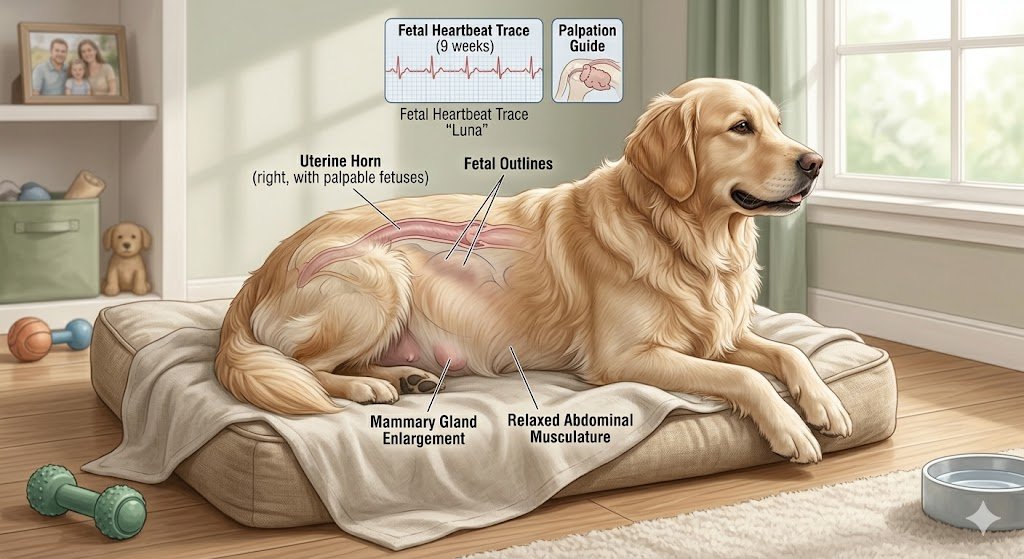
The final weeks before whelping bring significant physical and behavioral changes as the dog’s body prepares for labor.
Common late-stage signs include:
- Pronounced abdominal enlargement
- Nesting behavior
- Milk production
- Restlessness
- Panting
- Frequent licking of the vulva
- Reduced appetite before labor
These symptoms often indicate that delivery is approaching.
Signs That Require Veterinary Attention
Although most pregnancies progress normally, some symptoms may indicate complications and require immediate veterinary care.
Warning signs include:
- Vaginal bleeding
- Foul-smelling discharge
- Severe lethargy
- Persistent vomiting
- High fever
- Signs of pain or distress
- Labor lasting unusually long without puppy delivery
Prompt veterinary evaluation can help protect both the mother and puppies.
| Pregnancy Stage | Common Signs |
|---|---|
| Early Pregnancy | Appetite changes, enlarged nipples, mild nausea |
| Mid-Pregnancy | Weight gain, abdominal growth, increased appetite |
| Late Pregnancy | Nesting, milk production, restlessness |
| Labor Approaching | Panting, pacing, temperature drop |
Summary
Dog pregnancy symptoms develop gradually throughout gestation. Early signs are often subtle, while mid- and late-pregnancy changes become more visible. Monitoring these signs helps owners track pregnancy progress and identify potential concerns.
Key Points
- Early symptoms may appear within 2–4 weeks after breeding.
- Enlarged nipples are often one of the first visible signs.
- Weight gain and abdominal growth become noticeable during mid-pregnancy.
- Nesting behavior commonly appears in the final weeks.
- Unusual discharge, bleeding, or severe illness requires immediate veterinary attention.
Factors That Can Affect the Estimated Due Date
A dog pregnancy estimator provides a reliable prediction, but several biological and reproductive factors can influence the actual puppy birth date. Understanding these factors helps owners set realistic expectations and avoid relying solely on a calculated due date.
Breed Differences
Different dog breeds can experience slight variations in gestation length. While most pregnancies last around 63 days, some breeds may deliver a few days earlier or later than the estimated due date.
Breed size may also influence pregnancy management, nutritional needs, and whelping preparation.
Ovulation Timing
Ovulation is one of the most important factors affecting due date accuracy. Mating and conception do not always occur on the same day.
Since sperm can survive in the reproductive tract for several days, fertilization may happen after the breeding date. This is why due date calculators provide an estimate rather than an exact delivery date.
Litter Size
The number of puppies can sometimes influence pregnancy length.
- Large litters may occasionally result in slightly earlier deliveries.
- Small litters may occasionally extend pregnancy slightly longer.
- Individual variations remain common regardless of litter size.
Veterinary imaging can help estimate litter size during pregnancy.
Breeding Schedule
Some dogs are bred multiple times during a heat cycle. When multiple mating dates exist, determining the exact conception date becomes more difficult.
Using the first mating date alone may produce a different estimate than using the last breeding date.
Health and Reproductive History
A dog’s overall health can affect pregnancy progression.
Important factors include:
- Age
- Previous pregnancies
- Hormonal balance
- Nutritional status
- Underlying medical conditions
Healthy dogs generally experience more predictable gestation periods than dogs with reproductive or health concerns.
Accuracy of Pregnancy Records
The accuracy of any dog due date calculator depends heavily on the quality of the information entered.
For the most reliable estimate, owners should record:
- Exact breeding dates
- Ovulation testing results (if available)
- Veterinary reproductive assessments
- Pregnancy confirmation dates
The more accurate the records, the more useful the estimated due date becomes.
| Factor | Impact on Due Date Accuracy |
|---|---|
| Ovulation Timing | High |
| Breeding Date Accuracy | High |
| Litter Size | Moderate |
| Breed Characteristics | Moderate |
| Health Status | Moderate |
| Reproductive History | Moderate |
Summary
Several factors can influence a dog’s actual delivery date, including ovulation timing, breed, litter size, breeding schedule, and overall health. Because of these variables, pregnancy estimators should be used as planning tools rather than exact predictors.
Key Points
- Ovulation timing is the biggest factor affecting due date accuracy.
- Mating date and conception date are not always the same.
- Litter size can influence gestation length.
- Breed and health factors may affect delivery timing.
- Accurate breeding records improve pregnancy estimates.

How Accurate Is a Dog Pregnancy Estimator?
A dog pregnancy estimator can provide a useful prediction of a dog’s expected due date, but it cannot guarantee the exact day puppies will be born. Most canine pregnancy calculators are based on the average dog gestation period of approximately 63 days and are designed to offer an estimated whelping date rather than a precise delivery date.
For most pregnancies, the estimate falls within the normal canine gestation range of 58 to 68 days. However, biological variations mean that actual delivery dates may differ from the calculated result.
What Determines Estimator Accuracy?
Several factors influence how accurate a dog due date calculator will be.
These include:
- Accuracy of the breeding date
- Ovulation timing
- Number of mating sessions
- Breed-specific differences
- Individual reproductive variations
- Health and pregnancy history
The more accurate the breeding information, the more reliable the due date estimate becomes.
Breeding Date vs. Ovulation Date
One of the biggest limitations of any dog pregnancy calculator is that breeding date and conception date are not always the same.
A dog may mate on one day but conceive several days later because:
- Sperm can survive for multiple days.
- Ovulation may occur after mating.
- Fertilization happens only when viable eggs are available.
Because of this, estimators based solely on breeding dates may be off by several days.
Veterinary Methods Provide Greater Accuracy
While online calculators are useful planning tools, veterinary diagnostics offer more accurate pregnancy assessment.
Common methods include:
| Method | Typical Timing |
|---|---|
| Ultrasound | Around Day 25–30 |
| Hormone Testing | Early Pregnancy |
| Abdominal Palpation | Around Day 28–35 |
| X-Ray | Around Day 45+ |
These methods help confirm pregnancy, monitor puppy development, and provide a clearer picture of the expected delivery timeframe.
When to Rely on an Estimator
A dog pregnancy estimator is most useful for:
- Tracking pregnancy milestones
- Planning veterinary appointments
- Preparing a whelping area
- Monitoring gestation progress
- Estimating puppy arrival dates
It should be viewed as a planning resource rather than a substitute for veterinary care.
Common Limitations
Even the best dog due date calculator has limitations.
Potential reasons for variation include:
- Unknown ovulation date
- Multiple breeding dates
- Breed differences
- Individual hormonal variations
- Unusual gestation lengths
For this reason, owners should monitor pregnancy signs closely as the estimated due date approaches.
Summary
A dog pregnancy estimator is generally accurate for predicting an expected delivery window, but it cannot determine the exact birth date. Ovulation timing, breeding records, and individual reproductive factors all influence the final whelping date.
Key Points
- Most estimators use an average gestation period of 63 days.
- Actual delivery may occur between 58 and 68 days.
- Ovulation timing affects prediction accuracy.
- Veterinary diagnostics provide more precise pregnancy assessment.
- Pregnancy estimators are best used for planning and tracking milestones.
When to Visit a Veterinarian
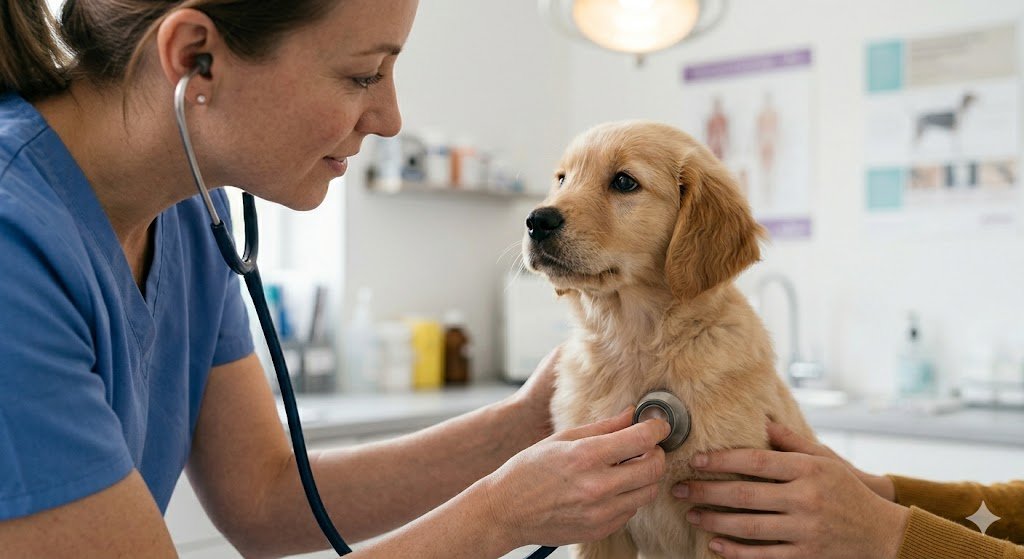
Regular veterinary care is an important part of managing a healthy canine pregnancy. While a dog pregnancy estimator can help predict the expected due date, professional examinations are essential for confirming pregnancy, monitoring puppy development, and identifying potential complications.
Scheduling veterinary visits throughout the pregnancy helps ensure both the mother and puppies remain healthy.
Pregnancy Confirmation
If pregnancy is suspected after breeding, a veterinarian can perform tests to confirm whether conception has occurred.
Common confirmation methods include:
- Ultrasound examination
- Hormone testing
- Abdominal palpation
- X-ray imaging later in pregnancy
Most veterinarians can confirm pregnancy through ultrasound around 25 to 30 days after breeding.
Monitoring Puppy Development
Routine veterinary checkups help track fetal growth and assess the mother’s overall health.
These visits may include:
- Weight monitoring
- Nutritional recommendations
- Fetal viability assessment
- Pregnancy progression evaluation
- Reproductive health checks
Monitoring becomes increasingly important during the second and third trimesters.
Pre-Whelping Examination
A veterinary examination during the final weeks of pregnancy can help prepare for delivery.
Benefits include:
- Estimating litter size
- Evaluating puppy positioning
- Identifying potential birthing complications
- Planning emergency care if needed
Many veterinarians recommend X-rays after day 45 because puppy skeletons become visible and easier to count.
Emergency Warning Signs
Immediate veterinary attention is recommended if a pregnant dog experiences:
- Vaginal bleeding
- Green or foul-smelling discharge before labor
- Severe vomiting
- High fever
- Extreme lethargy
- Difficulty breathing
- Signs of intense pain
- Collapse or weakness
Early intervention can significantly improve outcomes for both the mother and puppies.
When Labor Begins
Owners should contact a veterinarian if:
- Strong contractions continue without a puppy being delivered.
- More than two hours pass between puppies during active labor.
- Labor appears stalled.
- The dog shows signs of distress.
- A puppy appears stuck in the birth canal.
Prompt veterinary support can help prevent serious complications during whelping.
| Pregnancy Stage | Recommended Veterinary Care |
|---|---|
| Days 25–30 | Pregnancy confirmation ultrasound |
| Days 28–35 | Physical examination and monitoring |
| Days 45+ | X-ray for litter size estimation |
| Final Weeks | Pre-whelping assessment |
| Labor & Delivery | Emergency support if complications occur |
Summary
Veterinary care plays a critical role throughout canine pregnancy. Professional examinations help confirm pregnancy, monitor puppy development, estimate litter size, and address complications before or during labor.
Key Points
- Ultrasound can often confirm pregnancy around day 25–30.
- Regular checkups help monitor maternal and fetal health.
- X-rays after day 45 can estimate litter size.
- Emergency symptoms require immediate veterinary attention.
- Veterinary guidance improves pregnancy and whelping outcomes.
Preparing for Your Dog’s Delivery
Proper preparation before the due date can help create a safer and less stressful whelping experience for both the mother and her puppies. As the estimated delivery date approaches, owners should have a clean environment, essential supplies, and a plan for veterinary assistance if complications arise.
Using a dog pregnancy estimator to track the expected whelping date gives owners enough time to prepare for labor and newborn puppy care.
Set Up a Whelping Area
A dedicated whelping area provides a safe and comfortable space for delivery.
The area should be:
- Quiet and low traffic
- Warm and draft-free
- Easy to clean
- Large enough for the mother and puppies
- Accessible for monitoring
Introducing the dog to the whelping box several weeks before delivery can help her become comfortable with the environment.
Essential Whelping Supplies
Having supplies ready before labor begins can make the delivery process smoother.
| Supply | Purpose |
|---|---|
| Whelping Box | Safe delivery area |
| Clean Towels | Drying and cleaning puppies |
| Heating Pad | Maintaining puppy warmth |
| Thermometer | Monitoring body temperature |
| Disposable Gloves | Hygiene during delivery |
| Puppy Scale | Tracking puppy weight |
| Clean Bedding | Comfort and cleanliness |
| Emergency Vet Contact | Immediate assistance if needed |
Monitor for Signs of Labor
As the due date approaches, several signs may indicate that labor is near.
Common pre-labor signs include:
- Nesting behavior
- Restlessness
- Panting
- Loss of appetite
- Increased clinginess
- Frequent pacing
- Body temperature drop
These signs often appear within 12 to 24 hours before active labor begins.
Prepare for Newborn Puppy Care
After birth, puppies require warmth, nutrition, and close observation.
Important post-birth priorities include:
- Ensuring puppies begin nursing
- Keeping puppies warm and dry
- Monitoring breathing and activity
- Checking daily weight gain
- Maintaining a clean whelping environment
Healthy puppies should nurse regularly and show steady growth during the first few weeks.
Have an Emergency Plan
Although many dogs deliver without complications, emergencies can occur unexpectedly.
Owners should prepare by:
- Keeping veterinary contact information readily available
- Knowing the nearest emergency animal hospital
- Monitoring labor progress carefully
- Recognizing signs of difficult labor
Quick access to professional care can be critical during complicated deliveries.
Summary
Preparing for your dog’s delivery involves setting up a safe whelping area, gathering essential supplies, monitoring labor signs, and planning for newborn puppy care. Early preparation helps reduce stress and supports a successful whelping experience.
Key Points
- Prepare the whelping area before the due date.
- Gather all essential delivery and puppy care supplies.
- Watch for nesting, panting, and appetite changes.
- Ensure newborn puppies stay warm and begin nursing.
- Keep emergency veterinary support available throughout labor.
Common Mistakes When Estimating Dog Pregnancy
A dog pregnancy estimator is a valuable tool for predicting a puppy due date, but incorrect assumptions and inaccurate information can lead to misleading results. Understanding common mistakes helps owners use pregnancy calculators more effectively and avoid unnecessary concerns during gestation.
Assuming the Breeding Date Is the Conception Date
One of the most common mistakes is believing that mating and conception happen on the same day.
In reality:
- Ovulation may occur before or after breeding.
- Sperm can survive for several days within the reproductive tract.
- Fertilization may take place days after mating.
This is why the estimated due date can vary even when the breeding date is known.
Expecting Delivery Exactly on Day 63
Many owners assume every pregnant dog will give birth exactly 63 days after breeding.
However:
- Normal pregnancies can range from 58 to 68 days.
- Breed and reproductive factors influence timing.
- Individual variation is completely normal.
A due date should be viewed as an estimated delivery window rather than a fixed date.
Ignoring Early Pregnancy Signs
Some owners rely entirely on a dog pregnancy calculator and overlook physical and behavioral changes.
Monitoring pregnancy symptoms remains important because signs such as:
- Enlarged nipples
- Weight gain
- Nesting behavior
- Appetite changes
- Restlessness
can provide valuable insight into pregnancy progression.
Skipping Veterinary Confirmation
A pregnancy estimator cannot confirm whether a dog is actually pregnant.
Without veterinary evaluation:
- False pregnancies may go unnoticed.
- Pregnancy complications may be missed.
- Litter size remains unknown.
- Delivery planning becomes less accurate.
Professional examinations remain essential throughout canine pregnancy.
Using Incorrect Breeding Information
Entering the wrong breeding date can significantly affect due date calculations.
Common record-keeping errors include:
- Using the wrong mating date
- Forgetting multiple breeding dates
- Estimating dates from memory
- Ignoring ovulation test results
Accurate records improve the reliability of any dog due date calculator.
Waiting Until the Last Minute to Prepare
Some owners delay preparing for whelping because they focus only on the estimated due date.
Preparation should begin well before labor starts by:
- Setting up a whelping box
- Gathering supplies
- Planning veterinary support
- Learning labor warning signs
Early preparation reduces stress and improves readiness.
| Common Mistake | Potential Result |
|---|---|
| Assuming conception occurs on mating day | Incorrect due date estimate |
| Expecting delivery on exactly day 63 | Unnecessary concern |
| Ignoring pregnancy symptoms | Missed pregnancy milestones |
| Skipping veterinary care | Undetected complications |
| Using incorrect breeding dates | Inaccurate calculations |
| Delaying whelping preparation | Last-minute stress |
Summary
Most dog pregnancy estimation errors occur because of inaccurate breeding information, unrealistic due date expectations, or lack of veterinary confirmation. Combining a pregnancy calculator with proper monitoring and professional care produces the most reliable results.
Key Points
- Breeding date and conception date are not always the same.
- Normal canine gestation can range from 58 to 68 days.
- Pregnancy calculators estimate due dates but do not confirm pregnancy.
- Veterinary examinations improve accuracy and safety.
- Early preparation helps ensure a smoother whelping experience.
Conclusion
A dog pregnancy estimator is a practical tool for predicting a dog’s expected due date, tracking pregnancy milestones, and preparing for puppy delivery. By using the breeding date and average canine gestation period, owners can better understand the dog pregnancy timeline and anticipate important developmental stages.
While a dog due date calculator provides a useful estimate, factors such as ovulation timing, litter size, breed characteristics, and individual reproductive differences can affect the actual delivery date. For the most accurate assessment, pregnancy estimators should be used alongside veterinary examinations, ultrasounds, and routine prenatal care.
Monitoring pregnancy symptoms, preparing a proper whelping area, and recognizing labor signs can help ensure a healthier and more successful whelping experience for both the mother and her puppies.
Key Points
- A dog pregnancy estimator predicts an expected puppy due date.
- The average dog gestation period is approximately 63 days.
- Most healthy pregnancies last between 58 and 68 days.
- Ovulation timing significantly affects due date accuracy.
- Veterinary care remains essential throughout pregnancy.
- Early preparation improves whelping readiness and puppy care.
FAQs
How long is a dog pregnant?
Most dogs are pregnant for approximately 63 days, although normal canine gestation can range from 58 to 68 days depending on the individual dog and pregnancy.
How does a dog pregnancy estimator work?
A dog pregnancy estimator calculates an expected due date by adding the average gestation period to the breeding date. The result provides an estimated whelping date rather than an exact delivery date.
How accurate is a dog due date calculator?
A dog due date calculator is generally accurate for estimating a delivery window. However, ovulation timing, multiple breeding dates, and individual reproductive differences can affect the final birth date.
When can a veterinarian confirm dog pregnancy?
Pregnancy can often be confirmed through ultrasound around 25 to 30 days after breeding. Additional methods include hormone testing, abdominal palpation, and X-rays later in pregnancy.
Can dogs give birth before 63 days?
Yes. Healthy deliveries can occur before day 63. Most normal pregnancies result in labor between 58 and 68 days after breeding.
What are the first signs of pregnancy in dogs?
Early signs may include enlarged nipples, mild appetite changes, increased affection, reduced energy levels, and subtle behavioral changes during the first few weeks after breeding.
When should I prepare a whelping box?
Most veterinarians recommend setting up the whelping area several weeks before the estimated due date so the dog can become familiar and comfortable with the environment.