Newborn puppy care refers to the daily care, monitoring, and support puppies require from birth until they become more independent, typically during the first 3–4 weeks of life. During this neonatal period, puppies are unable to regulate their body temperature, see, hear, or eliminate waste on their own, making proper care essential for healthy growth and survival.
Whether puppies are being raised by their mother or hand-reared, newborn puppy care focuses on maintaining warmth, ensuring adequate nutrition, monitoring weight gain, preventing illness, and creating a clean, stress-free environment.
Why Proper Newborn Puppy Care Matters
The first few weeks of a puppy’s life are the most vulnerable. Newborn puppies depend almost entirely on their mother—or a caregiver if they are orphaned—for every basic need. Even minor issues such as becoming too cold, missing feedings, or failing to gain weight can quickly develop into serious health problems.
Proper newborn puppy care helps:
- Support healthy growth and development.
- Improve survival during the neonatal period.
- Ensure puppies receive adequate nutrition.
- Reduce the risk of infection and dehydration.
- Identify health concerns before they become emergencies.
Establishing a consistent care routine from the first day also makes it easier to monitor each puppy’s progress and recognize changes that may require veterinary attention.
The First 24 Hours Are Critical
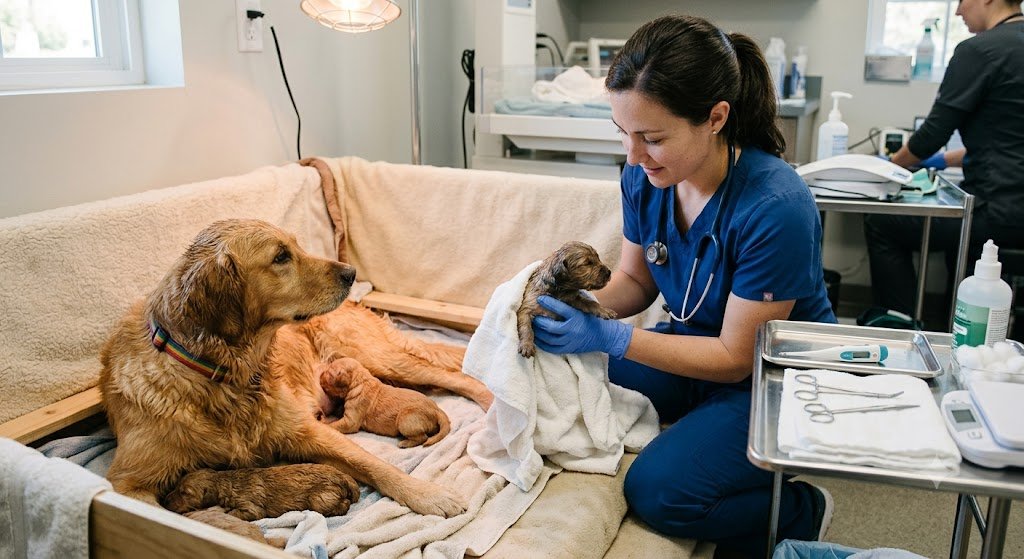
The first day after birth is one of the most important stages of newborn puppy care. During this period, puppies should begin nursing as soon as possible to receive colostrum, the mother’s first milk, which contains antibodies that help protect against disease.
Caregivers should also check that each puppy is:
- Breathing normally.
- Warm and dry.
- Able to nurse successfully.
- Moving actively toward the mother.
- Free from obvious birth injuries or abnormalities.
If a puppy is weak, unable to nurse, or separated from the litter, immediate veterinary guidance is recommended.
Immediate Care Checklist
| Care Task | Why It Is Important |
|---|---|
| Dry each puppy if necessary | Helps prevent heat loss immediately after birth. |
| Confirm normal breathing | Ensures the puppy transitions successfully after delivery. |
| Encourage nursing | Allows puppies to receive valuable colostrum. |
| Keep puppies warm | Newborns cannot regulate their own body temperature. |
| Observe the mother | Confirms she is cleaning, nursing, and caring for the litter. |
| Record birth weight | Provides a baseline for monitoring healthy growth. |
Summary
Newborn puppy care begins the moment a puppy is born and plays a vital role in its survival and long-term health. The first 24 hours are especially important because puppies depend on warmth, early nursing, and careful observation to adapt successfully to life outside the womb. A consistent care routine during this period lays the foundation for healthy growth in the weeks ahead.
Keypoints
- Newborn puppy care covers the first 3–4 weeks of a puppy’s life.
- Puppies rely completely on their mother or caregiver during the neonatal period.
- The first 24 hours are critical for warmth, nursing, and health assessment.
- Colostrum provides essential antibodies that support the puppy’s immune system.
- Recording birth weight and observing each puppy daily helps detect potential health problems early.
Preparing a Safe Environment for Newborn Puppies
A clean, warm, and secure environment is one of the most important parts of newborn puppy care. During the first few weeks of life, puppies cannot regulate their own body temperature or move away from uncomfortable conditions. Providing the right surroundings helps reduce stress, supports healthy development, and lowers the risk of illness or injury.
Set Up a Comfortable Whelping Box
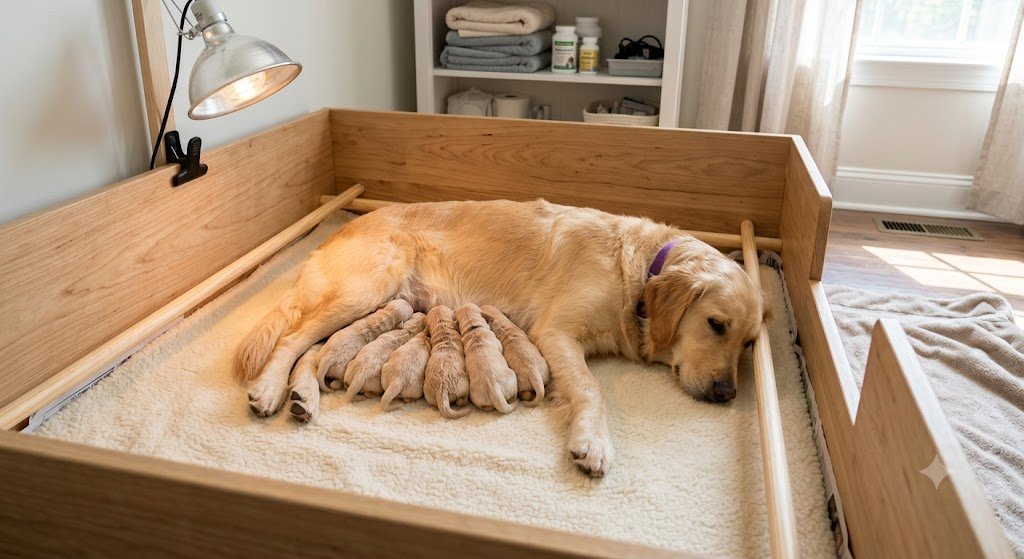
The whelping box serves as the puppies’ home during their first weeks. It should be spacious enough for the mother to lie down comfortably while allowing all puppies to nurse without being crowded.
A well-designed whelping box should:
- Have sturdy sides to keep puppies safely contained.
- Include pig rails or puppy safety rails to help prevent accidental crushing.
- Be easy to clean and disinfect.
- Be placed in a quiet, low-traffic area of the home.
- Protect the litter from drafts and sudden temperature changes.
Keeping the environment calm also helps the mother focus on nursing and caring for her puppies.
Maintain the Right Temperature
Unlike adult dogs, newborn puppies lose body heat very quickly. Maintaining the proper room temperature is essential throughout the neonatal period.
General temperature recommendations are:
| Puppy Age | Recommended Environmental Temperature |
|---|---|
| Birth to 7 days | 85–90°F (29–32°C) |
| 8–14 days | 80–85°F (27–29°C) |
| 15–21 days | 75–80°F (24–27°C) |
| Over 3 weeks | 70–75°F (21–24°C) |
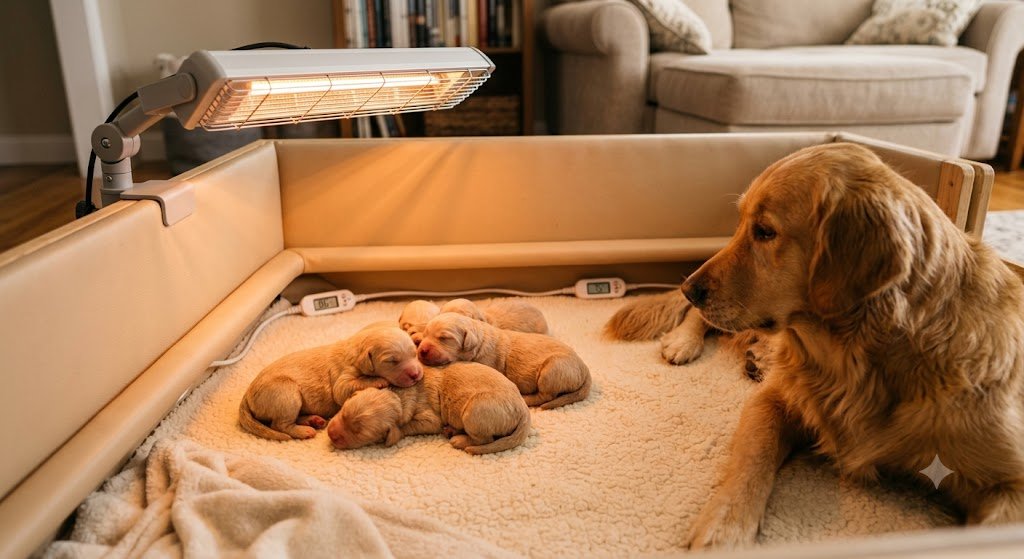
Avoid placing heating pads directly under puppies, as they can cause burns. Instead, warm one side of the whelping box using a safe heat source so puppies can move away if they become too warm.
Choose Clean and Safe Bedding
Soft, dry bedding keeps puppies comfortable and helps maintain body heat. Bedding should provide cushioning without creating hazards.
Suitable bedding options include:
- Washable fleece blankets.
- Vet bedding designed for puppies.
- Clean towels changed regularly.
- Absorbent puppy pads placed underneath washable blankets.
Replace wet or soiled bedding immediately to reduce moisture and bacterial growth.
Keep the Area Clean
Good hygiene is a key part of newborn puppy care because puppies have immature immune systems and are more susceptible to infections.
To maintain a healthy environment:
- Remove soiled bedding several times a day.
- Wash blankets and towels with pet-safe detergent.
- Disinfect the whelping box regularly using veterinarian-approved cleaners.
- Wash your hands before handling newborn puppies.
- Limit unnecessary visitors during the first few weeks.
A clean environment supports both the puppies’ health and the mother’s recovery after giving birth.
Reduce Stress and Disturbances
Newborn puppies spend most of their time sleeping and nursing. Excessive noise, frequent handling, or constant interruptions can stress both the puppies and their mother.
Help create a peaceful environment by:
- Keeping loud noises to a minimum.
- Allowing the mother uninterrupted nursing time.
- Handling puppies only when necessary during the first few days.
- Preventing other pets from entering the whelping area unless supervised.
As puppies grow stronger, they can gradually become accustomed to gentle human interaction.
Summary
Creating the right environment is a fundamental part of newborn puppy care. A properly prepared whelping box, appropriate temperature, clean bedding, and a quiet setting help newborn puppies stay warm, healthy, and comfortable while supporting their early development.
Keypoints
- A safe whelping box protects puppies and supports nursing.
- Maintain age-appropriate environmental temperatures to prevent hypothermia.
- Use clean, soft, and absorbent bedding, replacing it whenever it becomes soiled.
- Good hygiene reduces the risk of infection in newborn puppies.
- A calm, low-stress environment helps both the mother and her litter thrive.
Feeding Newborn Puppies
Proper nutrition is one of the most important aspects of newborn puppy care. During the first few weeks of life, puppies rely entirely on milk to receive the energy, fluids, and nutrients needed for healthy growth. Whether they are nursing from their mother or being bottle-fed, following an appropriate feeding routine helps support steady development and reduces the risk of malnutrition or dehydration.
The Importance of Colostrum
The first milk produced by the mother, known as colostrum, is rich in antibodies, proteins, and essential nutrients. Newborn puppies should nurse as soon as possible after birth because their ability to absorb these protective antibodies declines rapidly during the first day of life.
Colostrum helps:
- Strengthen the developing immune system.
- Protect against early infections.
- Provide concentrated nutrition.
- Support healthy growth during the neonatal period.
If a puppy is unable to nurse shortly after birth, contact a veterinarian promptly for guidance.
Natural Nursing
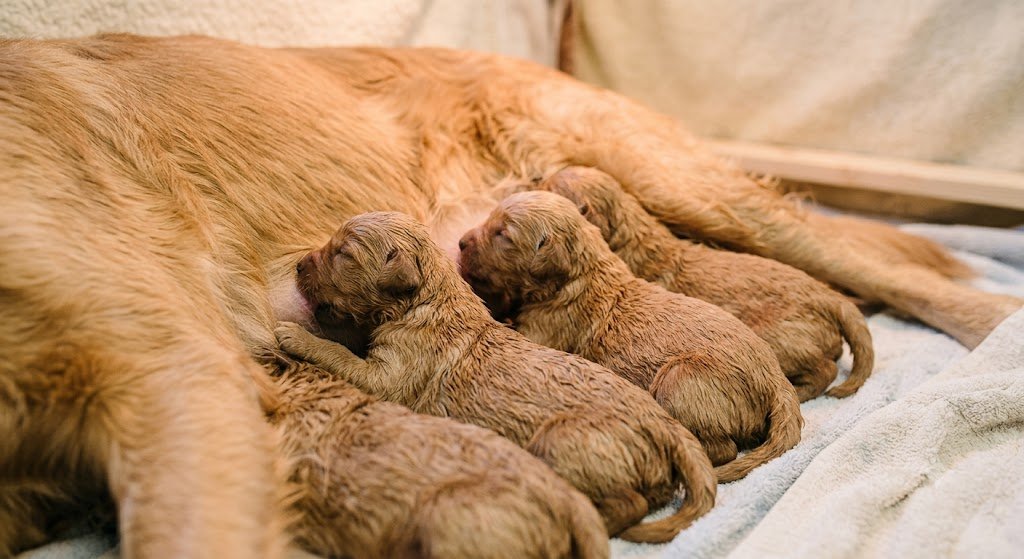
Healthy mother dogs usually nurse their puppies every few hours throughout the day and night. Puppies instinctively search for a nipple and should nurse quietly before falling asleep.
Signs that nursing is going well include:
- Puppies latch on easily.
- Nursing is calm and consistent.
- Puppies appear satisfied after feeding.
- They gain weight steadily.
- The mother remains comfortable while nursing.
If one puppy is consistently pushed away by littermates, gently rotate nursing positions so every puppy has an opportunity to feed.
Bottle Feeding Orphaned Puppies
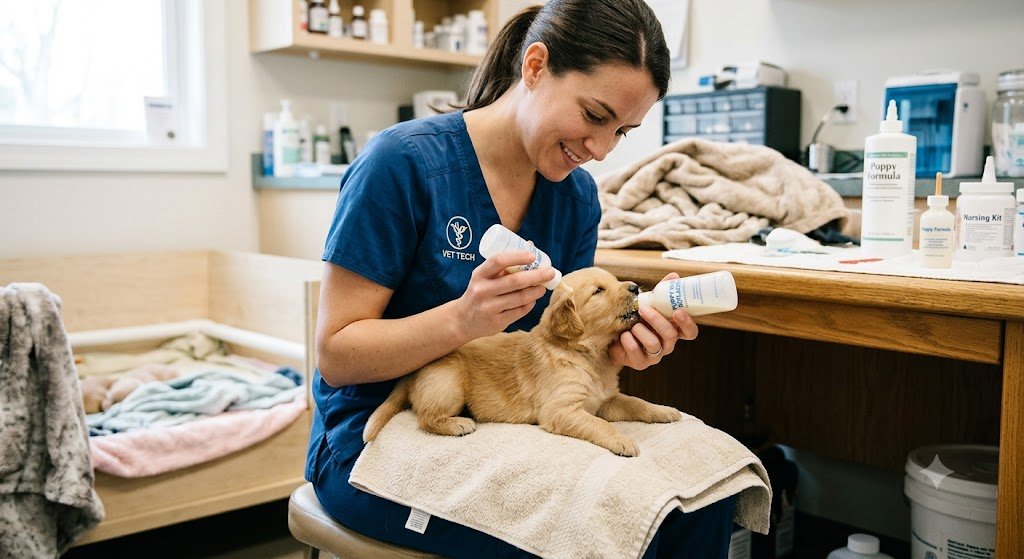
When the mother cannot nurse or puppies are orphaned, bottle feeding becomes an essential part of newborn puppy care. Always use a commercial puppy milk replacer formulated specifically for dogs, as cow’s milk and most other milk products do not provide the proper nutrition and may cause digestive upset.
For successful bottle feeding:
- Warm the milk replacer according to the manufacturer’s instructions.
- Hold the puppy in a natural, belly-down position while feeding.
- Allow the puppy to suckle at its own pace.
- Burp the puppy gently after feeding if recommended by your veterinarian.
- Clean bottles and nipples thoroughly after each use.
Feeding Schedule by Age
As puppies grow, the time between feedings gradually increases. Consistent feeding intervals are important to ensure healthy weight gain.
| Puppy Age | Recommended Feeding Frequency |
|---|---|
| Birth to 1 week | Every 2–3 hours (including overnight) |
| 1–2 weeks | Every 3 hours |
| 2–3 weeks | Every 4 hours |
| 3–4 weeks | Every 4–6 hours, while beginning the transition to solid food |
These are general guidelines. Puppies that are underweight, weak, or orphaned may require a feeding plan tailored by a veterinarian.
How to Tell if Puppies Are Getting Enough Milk
Daily observation is one of the easiest ways to evaluate whether feeding is successful.
Healthy, well-fed puppies generally:
- Gain weight every day.
- Sleep quietly between feedings.
- Nurse with enthusiasm.
- Have warm, pink bodies.
- Show good muscle tone and activity when awake.
Warning signs that a puppy may not be receiving enough milk include:
- Constant crying after feeding.
- Failure to gain weight.
- Weakness or lethargy.
- Difficulty nursing.
- Cool body temperature.
- Signs of dehydration.
These symptoms require prompt veterinary evaluation.
Summary
Feeding is the foundation of newborn puppy care. Colostrum, regular nursing, or properly managed bottle feeding provide the nutrition puppies need during their earliest weeks. Monitoring feeding behavior and daily weight gain helps identify problems early, giving puppies the best chance for healthy growth and development.
Keypoints
- Colostrum provides essential antibodies during the first day of life.
- Healthy puppies should nurse regularly and gain weight each day.
- Use only veterinary-recommended puppy milk replacer when bottle feeding.
- Follow an age-appropriate feeding schedule to support healthy growth.
- Monitor puppies closely for signs that they are not receiving enough milk.
Monitoring Growth and Development
Monitoring growth is a vital part of newborn puppy care because healthy puppies change rapidly during their first few weeks of life. Regular weight checks, observing developmental milestones, and watching each puppy’s behavior can help identify potential problems before they become serious. Consistent monitoring also allows you to confirm that every puppy in the litter is developing at a healthy pace.
Weigh Puppies Every Day
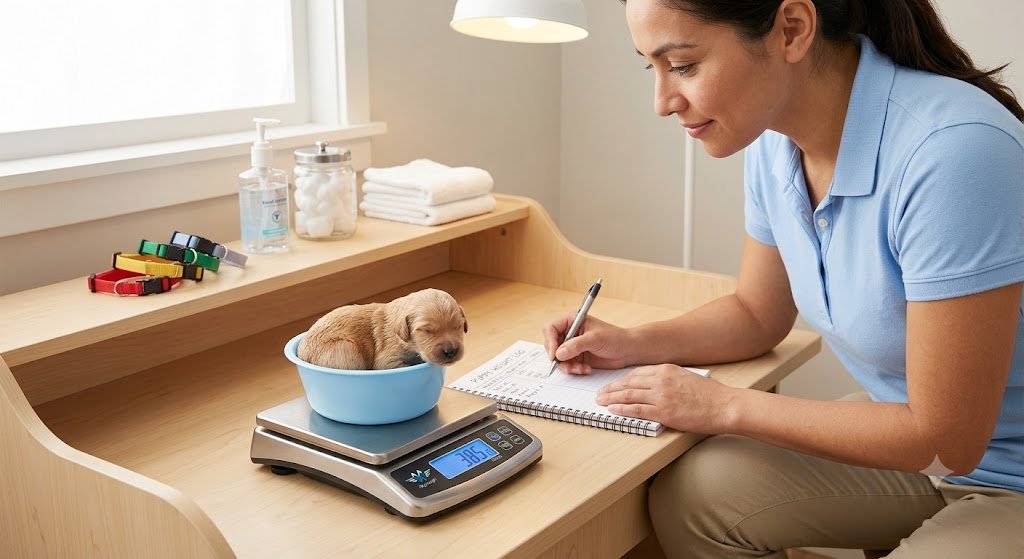
Daily weighing is one of the most reliable ways to assess a newborn puppy’s health. Puppies should be weighed at the same time each day using a digital kitchen or postal scale that measures small weight changes accurately.
When tracking weight:
- Record each puppy’s birth weight.
- Weigh puppies every 24 hours.
- Use the same scale for consistency.
- Keep a written or digital weight log for each puppy.
Healthy puppies generally gain weight steadily rather than remaining the same or losing weight.
Healthy Weight Gain
While weight gain varies by breed and litter size, newborn puppies should show consistent progress during the neonatal period. Temporary fluctuations may occur, but persistent weight loss or failure to gain weight is a warning sign that requires attention.
A healthy puppy will usually:
- Nurse frequently.
- Gain weight every day.
- Feel warm and well-hydrated.
- Sleep peacefully between feedings.
- Become gradually stronger and more active each week.
If a puppy repeatedly loses weight or struggles to nurse, consult your veterinarian as soon as possible.
Week-by-Week Development Milestones
Understanding normal developmental milestones helps caregivers recognize whether puppies are progressing appropriately.
| Puppy Age | Typical Development |
|---|---|
| Birth–1 Week | Puppies sleep and nurse almost constantly. Eyes and ears remain closed, and movement is limited to crawling. |
| 1–2 Weeks | Weight increases steadily, puppies become stronger, and the eyes begin to open toward the end of this stage. |
| 2–3 Weeks | Eyes are usually open, ear canals begin opening, puppies respond to sounds, and they start standing and taking their first unsteady steps. |
| 3–4 Weeks | Puppies walk more confidently, interact with littermates, begin exploring, and may show interest in softened puppy food. |
These milestones are general guidelines and may vary slightly depending on the breed and individual puppy.
Observe Behavior Daily
Behavior often reveals as much as weight measurements. During newborn puppy care, spend a few minutes observing the litter several times each day.
Healthy puppies typically:
- Sleep quietly after feeding.
- Nurse with good appetite.
- Stay close to the mother and littermates.
- Move actively when awake.
- Respond to gentle handling as they grow older.
Puppies that cry continuously, isolate themselves, or appear unusually weak should be monitored closely and examined by a veterinarian if the behavior persists.
Keep a Puppy Care Record
Maintaining a simple record for each puppy makes it easier to notice trends over time.
Your care log can include:
- Daily weight.
- Feeding observations.
- Nursing frequency.
- Development milestones.
- Any medications or veterinary visits.
- Unusual symptoms or concerns.
This information is especially valuable if a puppy becomes ill or requires veterinary care.
Summary
Careful monitoring is an essential part of newborn puppy care because it helps ensure every puppy is growing, feeding, and developing as expected. Daily weight checks, milestone tracking, and routine observations allow caregivers to detect problems early and provide timely veterinary care when needed.
Keypoints
- Weigh newborn puppies at the same time every day.
- Healthy puppies should gain weight consistently throughout the neonatal period.
- Track developmental milestones to monitor normal progress.
- Observe each puppy’s behavior, nursing habits, and activity level daily.
- Keeping a detailed care record helps identify health concerns before they become serious.
Keeping Newborn Puppies Healthy
Maintaining good health during the first few weeks is one of the most important goals of newborn puppy care. Because newborn puppies have immature immune systems and depend entirely on their mother or caregiver, even minor health issues can progress quickly. Daily hygiene, routine health checks, and early veterinary care all contribute to raising healthy puppies.
Practice Good Hygiene
A clean environment helps reduce the spread of bacteria, viruses, and parasites that can affect vulnerable newborn puppies.
Good hygiene practices include:
- Wash your hands before and after handling the puppies.
- Replace wet or soiled bedding immediately.
- Clean food and bottle-feeding equipment after every use.
- Keep the whelping box dry and free of waste.
- Limit unnecessary visitors during the first few weeks.
The mother also plays an important role by licking her puppies to keep them clean and stimulate normal bodily functions.
Care for the Umbilical Cord
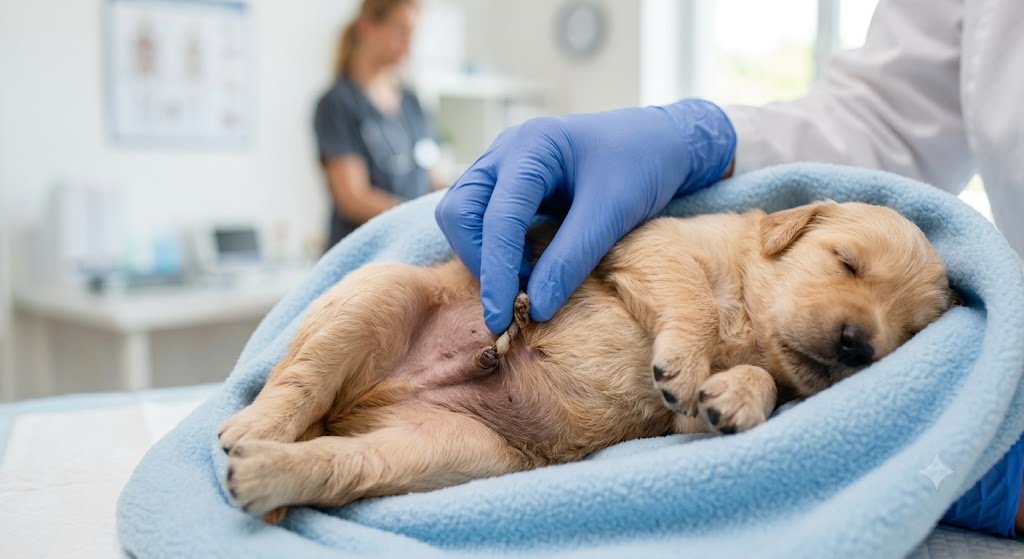
After birth, the umbilical cord naturally dries up and falls off within several days. During this time, it should remain clean and dry.
To care for the umbilical area:
- Check the cord daily for normal drying.
- Avoid pulling or cutting the remaining stump.
- Keep bedding clean to reduce contamination.
- Watch for redness, swelling, bleeding, or foul-smelling discharge.
Any signs of infection should be evaluated by a veterinarian promptly.
Monitor Body Temperature
Newborn puppies cannot regulate their body temperature effectively during their first weeks of life. Chilling can reduce nursing, weaken the immune system, and increase the risk of life-threatening complications.
Signs a puppy may be too cold include:
- Cool body or paws.
- Weakness.
- Poor nursing.
- Continuous crying.
- Slow movement.
If a puppy feels cold, warm them gradually using a safe heat source before attempting to feed them, and contact your veterinarian if they do not improve.
Schedule Early Veterinary Checkups
A veterinary examination shortly after birth helps ensure both the puppies and their mother are healthy.
During the visit, the veterinarian may:
- Perform a complete physical examination.
- Check for congenital abnormalities.
- Assess hydration and body condition.
- Evaluate nursing and weight gain.
- Recommend a deworming schedule.
- Discuss vaccination timing and future health care.
Routine veterinary care allows potential problems to be detected before they become more serious.
Watch for Early Warning Signs
Daily observation is one of the best ways to protect newborn puppies. Seek veterinary advice if you notice any of the following:
- Failure to nurse.
- Poor weight gain or weight loss.
- Constant crying.
- Difficulty breathing.
- Vomiting or diarrhea.
- Swollen abdomen.
- Pale gums.
- Extreme weakness or lethargy.
Early treatment greatly improves the chances of a successful recovery.
Summary
Keeping puppies healthy requires consistent hygiene, careful monitoring, and prompt veterinary care. As part of newborn puppy care, checking the umbilical cord, maintaining body temperature, observing daily behavior, and scheduling early health examinations help support healthy growth while reducing the risk of illness during the neonatal period.
Keypoints
- Maintain a clean environment to reduce the risk of infection.
- Check the umbilical cord daily until it naturally falls off.
- Monitor puppies for signs of chilling or illness.
- Schedule an early veterinary examination for the litter.
- Contact your veterinarian immediately if a puppy stops nursing or develops unusual symptoms.
Common Health Problems in Newborn Puppies
Even with excellent newborn puppy care, some puppies may develop health problems during their first few weeks of life. Because newborn puppies have limited energy reserves and immature immune systems, illnesses can progress rapidly. Recognizing early warning signs and seeking prompt veterinary care can make a significant difference in a puppy’s survival and recovery.
Fading Puppy Syndrome
Fading Puppy Syndrome is a general term used to describe newborn puppies that gradually become weak and fail to thrive during the first days or weeks of life. It is not a single disease but a condition that can result from infections, birth defects, poor nutrition, low body temperature, or other underlying problems.
Common signs include:
- Weak or poor nursing.
- Continuous crying.
- Weight loss or failure to gain weight.
- Low body temperature.
- Lethargy.
- Separation from the litter.
This condition is a veterinary emergency, and immediate treatment offers the best chance of survival.
Dehydration
Newborn puppies can become dehydrated quickly if they are not nursing adequately or are losing fluids through vomiting or diarrhea.
Possible signs include:
- Dry mouth.
- Weakness.
- Reduced skin elasticity.
- Weight loss.
- Constant crying.
Ensuring regular feeding and monitoring daily weight are essential parts of newborn puppy care that help detect dehydration early.
Hypothermia
Because newborn puppies cannot regulate their own body temperature, exposure to cold environments can quickly lead to hypothermia.
Symptoms may include:
- Cold body and paws.
- Weak movements.
- Difficulty nursing.
- Slow breathing.
- Lethargy.
Puppies should be warmed gradually before feeding, as feeding a severely chilled puppy can cause additional complications.
Digestive Problems
Occasional digestive issues may occur, particularly in bottle-fed puppies or puppies receiving inappropriate milk.
Common problems include:
- Diarrhea.
- Constipation.
- Bloating.
- Vomiting.
Persistent digestive symptoms require veterinary evaluation because dehydration can develop rapidly in newborn puppies.
Low Blood Sugar (Hypoglycemia)
Newborn puppies have very limited energy stores and may develop low blood sugar if they miss feedings or are unable to nurse effectively.
Signs include:
- Weakness.
- Trembling.
- Confusion.
- Lack of coordination.
- Collapse in severe cases.
Prompt veterinary treatment is essential if hypoglycemia is suspected.
Common Health Problems and Recommended Actions
| Health Problem | Common Signs | Recommended Action |
|---|---|---|
| Fading Puppy Syndrome | Weakness, poor nursing, weight loss | Seek immediate veterinary care. |
| Dehydration | Dry mouth, crying, weight loss | Improve fluid intake and contact a veterinarian. |
| Hypothermia | Cold body, lethargy, poor nursing | Warm the puppy gradually and seek veterinary advice. |
| Digestive Problems | Vomiting, diarrhea, constipation | Monitor closely and consult a veterinarian if symptoms persist. |
| Low Blood Sugar | Trembling, weakness, collapse | Seek emergency veterinary treatment immediately. |
When to Seek Emergency Veterinary Care
Do not wait if a newborn puppy shows any of the following:
- Refuses to nurse repeatedly.
- Loses weight for more than one day.
- Has difficulty breathing.
- Experiences seizures or collapse.
- Develops severe diarrhea or repeated vomiting.
- Becomes extremely weak or unresponsive.
- Has a persistently low body temperature.
Quick action can significantly improve the outcome for many newborn health emergencies.
Summary
Understanding common health problems is an important part of newborn puppy care. Conditions such as Fading Puppy Syndrome, dehydration, hypothermia, digestive disorders, and low blood sugar require early recognition and prompt veterinary attention. Daily monitoring and immediate action when problems arise give newborn puppies the best opportunity for healthy development.
Keypoints
- Newborn puppies can become seriously ill within a short period.
- Fading Puppy Syndrome requires immediate veterinary attention.
- Monitor puppies daily for weight loss, weakness, and poor nursing.
- Hypothermia, dehydration, and low blood sugar are common neonatal emergencies.
- Contact a veterinarian immediately if a puppy shows persistent or worsening symptoms.
Helping Orphaned Puppies
Caring for orphaned puppies requires extra time, attention, and consistency because they do not have their mother to provide warmth, nutrition, cleaning, or protection. Successful newborn puppy care for orphaned puppies focuses on replacing these essential maternal functions while closely monitoring each puppy’s health and development.
Provide Warmth Before Feeding
Newborn puppies should always be warm before they are fed. A chilled puppy may be unable to digest milk properly and can become seriously ill if fed while its body temperature is too low.
To keep orphaned puppies warm:
- Use a heating pad designed for pets or a heat lamp safely positioned away from direct contact.
- Warm only one side of the nesting area so puppies can move if they become too warm.
- Check the bedding regularly to ensure it stays dry.
- Monitor the environmental temperature according to the puppy’s age.
Never place puppies directly on a heating pad, as this may cause burns or overheating.
Bottle Feed Using Puppy Milk Replacer
Without a nursing mother, orphaned puppies depend entirely on bottle feeding. Use only a commercial puppy milk replacer, as cow’s milk and other household milk products do not meet a puppy’s nutritional needs.
For safe feeding:
- Prepare the milk replacer exactly as directed.
- Warm the formula to body temperature before feeding.
- Feed puppies in a natural belly-down position.
- Allow them to suckle at their own pace.
- Clean feeding equipment thoroughly after each use.
Consistent feeding is one of the most important aspects of newborn puppy care for orphaned litters.
Stimulate Urination and Defecation
During the first few weeks, puppies cannot urinate or defecate without assistance. Normally, the mother stimulates elimination by licking the puppies after each feeding.
When hand-raising puppies:
- Dampen a soft cotton ball or cloth with warm water.
- Gently rub the genital and anal area after every feeding.
- Continue until the puppy urinates or passes stool.
- Clean and dry the area before returning the puppy to its bedding.
This routine is usually necessary until puppies begin eliminating independently at around 3–4 weeks of age.
Monitor Weight and Feeding Closely
Because orphaned puppies do not have access to their mother’s milk on demand, careful monitoring is essential.
Keep a daily record of:
- Body weight.
- Feeding times.
- Formula intake.
- Urination and bowel movements.
- Activity level.
- Any unusual behavior.
Steady weight gain is one of the best indicators that your feeding routine is meeting the puppies’ nutritional needs.
Support Early Social Development
Although orphaned puppies can survive without their mother, they still benefit from gentle social interaction.
As they grow:
- Handle them gently for short periods each day.
- Keep littermates together whenever possible.
- Introduce new experiences gradually after their eyes and ears open.
- Avoid overwhelming them with excessive noise or handling during the neonatal stage.
Proper socialization helps puppies develop confidence and normal behavior as they mature.
Summary
Providing newborn puppy care for orphaned puppies involves much more than bottle feeding. Caregivers must also maintain warmth, stimulate elimination, monitor growth, and provide gentle social interaction. With consistent care and regular veterinary guidance, many orphaned puppies can grow into healthy, well-adjusted adult dogs.
Keypoints
- Warm orphaned puppies before every feeding.
- Feed only a veterinary-approved puppy milk replacer.
- Stimulate urination and defecation after each meal.
- Track daily weight and feeding records carefully.
- Gentle handling and appropriate socialization support healthy behavioral development.

When to Start Weaning Newborn Puppies
Weaning is the gradual process of transitioning puppies from their mother’s milk or puppy milk replacer to solid food. As part of newborn puppy care, weaning should begin only when puppies are developmentally ready. Starting too early can lead to nutritional problems, while delaying weaning may slow the puppies’ progress toward independent eating.
When Are Puppies Ready to Wean?
Most puppies begin showing signs of readiness at around 3 to 4 weeks of age. At this stage, their teeth start emerging, they become more mobile, and they begin exploring objects in their environment—including food.
Common signs that puppies are ready for weaning include:
- Walking with better coordination.
- Showing interest in the mother’s food.
- Chewing or licking food bowls.
- Developing baby teeth.
- Nursing less frequently as they grow.
Although puppies become curious about solid food, milk remains their primary source of nutrition during the early stages of weaning.
How to Introduce Solid Food
The transition to solid food should be slow and gradual to avoid digestive upset.
A simple approach includes:
- Mix high-quality puppy food with warm water or puppy milk replacer to create a soft gruel.
- Offer small portions in a shallow dish.
- Allow puppies to explore and lick the mixture at their own pace.
- Continue regular nursing or bottle feeding while gradually increasing the amount of solid food.
- Reduce the amount of liquid over time until the puppies comfortably eat dry or moistened puppy food.
Patience is important because some puppies adapt more quickly than others.
Weaning Timeline
| Puppy Age | Feeding Stage |
|---|---|
| Birth–3 Weeks | Mother’s milk or puppy milk replacer only. |
| 3–4 Weeks | Introduce soft puppy food while continuing regular milk feedings. |
| 4–6 Weeks | Gradually increase solid food and reduce dependence on milk. |
| 6–8 Weeks | Most puppies eat solid puppy food and complete the weaning process. |
These timeframes are general guidelines and may vary depending on the breed, litter size, and individual puppy.
Monitor Puppies During Weaning
During weaning, continue observing each puppy to ensure they are adapting well.
Watch for:
- Consistent weight gain.
- Good appetite.
- Normal stools.
- Active behavior.
- Adequate water intake.
- Smooth transition from milk to solid food.
If a puppy refuses food, loses weight, or develops digestive problems, consult your veterinarian.
Support the Mother During Weaning
Weaning also affects the mother. As puppies nurse less frequently, her milk production naturally decreases.
To help the mother during this transition:
- Allow nursing sessions to decrease gradually.
- Avoid abruptly separating the puppies unless advised by your veterinarian.
- Continue feeding the mother a nutritious diet while milk production declines.
- Monitor her mammary glands for swelling, redness, or signs of mastitis.
A gradual process is generally more comfortable for both the mother and her puppies.
Summary
Weaning is an important milestone in newborn puppy care that introduces puppies to solid food while reducing their dependence on milk. Beginning the process around 3–4 weeks of age and progressing gradually helps support healthy growth, proper digestion, and a smooth transition to independent eating.
Keypoints
- Most puppies begin weaning between 3 and 4 weeks of age.
- Introduce softened puppy food gradually while continuing milk feedings.
- Monitor weight, appetite, and digestion throughout the transition.
- Most puppies complete weaning by 6–8 weeks of age.
- Gradual weaning supports both puppy development and the mother’s comfort.
Daily Newborn Puppy Care Checklist
A consistent daily routine is one of the best ways to ensure successful newborn puppy care. Newborn puppies change rapidly, and small problems can become serious if they go unnoticed. Following a structured checklist helps caregivers monitor feeding, weight, hygiene, and overall health while providing puppies with the stable environment they need to thrive.
Morning Care Routine
Begin each day by checking both the puppies and their environment.
Morning tasks include:
- Check that every puppy is warm and active.
- Observe the mother’s behavior and nursing.
- Weigh each puppy and record the results.
- Replace any wet or soiled bedding.
- Ensure the whelping area is clean and at the correct temperature.
- Bottle-feed orphaned puppies if needed.
Starting the day with these checks helps identify concerns before they become emergencies.
Afternoon Care Routine
During the afternoon, continue monitoring feeding and puppy activity.
Daily afternoon tasks:
- Confirm each puppy is nursing or feeding normally.
- Watch for any puppy being pushed away during feeding.
- Check for normal urination and bowel movements.
- Inspect the puppies for signs of dehydration or illness.
- Refill fresh water for the mother and provide her with nutritious meals.
- Keep the environment quiet and comfortable.
Frequent observation helps ensure every puppy receives equal care.
Evening Care Routine
Before bedtime, perform another complete health check.
Evening checklist:
- Verify all puppies have fed successfully.
- Recheck the room temperature.
- Change bedding if necessary.
- Clean feeding bottles and equipment thoroughly.
- Observe each puppy for unusual crying or restlessness.
- Record any health concerns or changes in your care log.
A final evening assessment helps maintain a safe overnight environment.
Weekly Care Tasks
Some responsibilities only need to be completed once or twice each week but remain an important part of newborn puppy care.
Weekly tasks include:
- Review each puppy’s weight gain trend.
- Clean and disinfect the entire whelping box.
- Wash all blankets and reusable bedding.
- Trim the mother’s nails if they become too long to reduce accidental scratches.
- Review developmental milestones for each puppy.
- Schedule or attend veterinary appointments when recommended.
Keeping weekly records makes it easier to track long-term progress.
Daily Newborn Puppy Care Checklist
| Care Task | Frequency |
|---|---|
| Check body temperature and activity | Several times daily |
| Nursing or bottle feeding | Every 2–4 hours, depending on age |
| Weigh each puppy | Once daily |
| Replace wet bedding | As needed |
| Clean feeding equipment | After every feeding |
| Observe urination and bowel movements | Daily |
| Monitor weight gain | Daily |
| Disinfect the whelping box | Weekly or whenever heavily soiled |
| Review development milestones | Weekly |
| Veterinary health checks | As recommended |
Summary
Following a structured routine makes newborn puppy care more organized and helps ensure every puppy receives proper nutrition, warmth, hygiene, and health monitoring. Daily observations, combined with regular record-keeping, allow caregivers to detect potential problems early and support healthy development during the critical first weeks of life.
Keypoints
- A daily care routine helps maintain healthy growth and development.
- Weigh puppies and monitor feeding every day.
- Keep the whelping area clean, warm, and dry.
- Record important observations to track each puppy’s progress.
- Consistent care and early problem detection give newborn puppies the best chance to thrive.
Conclusion
Newborn puppy care requires patience, consistency, and close observation during the first few weeks of life. From providing warmth and proper nutrition to monitoring daily weight gain and recognizing early signs of illness, every aspect of care contributes to a puppy’s healthy development. Whether puppies are being raised by their mother or hand-reared, establishing a structured routine helps ensure they receive the support they need during this critical stage.
As puppies grow, their needs gradually change from constant nursing and temperature regulation to exploring their surroundings and transitioning to solid food. By following proper newborn puppy care practices and working closely with a veterinarian whenever concerns arise, you can give every puppy the strongest possible start and help them develop into healthy, active adult dogs.
Frequently Asked Questions (FAQs)
How often should newborn puppies eat?
Newborn puppies generally need to nurse or be bottle-fed every 2–3 hours during the first week of life, including overnight. As they grow, feeding intervals gradually become longer.
How warm should newborn puppies be kept?
Newborn puppies cannot regulate their own body temperature. The whelping area should generally be maintained at 85–90°F (29–32°C) during the first week, with the temperature gradually reduced as the puppies mature.
When do newborn puppies open their eyes?
Most puppies begin opening their eyes between 10 and 14 days after birth. Vision develops gradually, so their eyesight may remain blurry for several days after the eyes first open.
When do puppies start walking?
Puppies usually begin standing and taking their first unsteady steps at around 2 to 3 weeks of age. Their coordination continues to improve over the following weeks.
Can newborn puppies drink water?
During the first few weeks, healthy puppies receive the hydration they need from their mother’s milk or a commercial puppy milk replacer. Fresh water is typically introduced as puppies begin weaning onto solid food.
How can I tell if a newborn puppy is healthy?
Healthy newborn puppies usually nurse regularly, gain weight every day, sleep quietly between feedings, feel warm to the touch, and become gradually more active as they grow.
When should I contact a veterinarian?
Seek veterinary care immediately if a puppy refuses to nurse, loses weight, has difficulty breathing, develops persistent diarrhea or vomiting, becomes unusually weak, or shows signs of hypothermia or dehydration.
Can orphaned puppies survive without their mother?
Yes. With proper newborn puppy care, including bottle feeding, warmth, hygiene, and regular veterinary supervision, many orphaned puppies grow into healthy adult dogs.