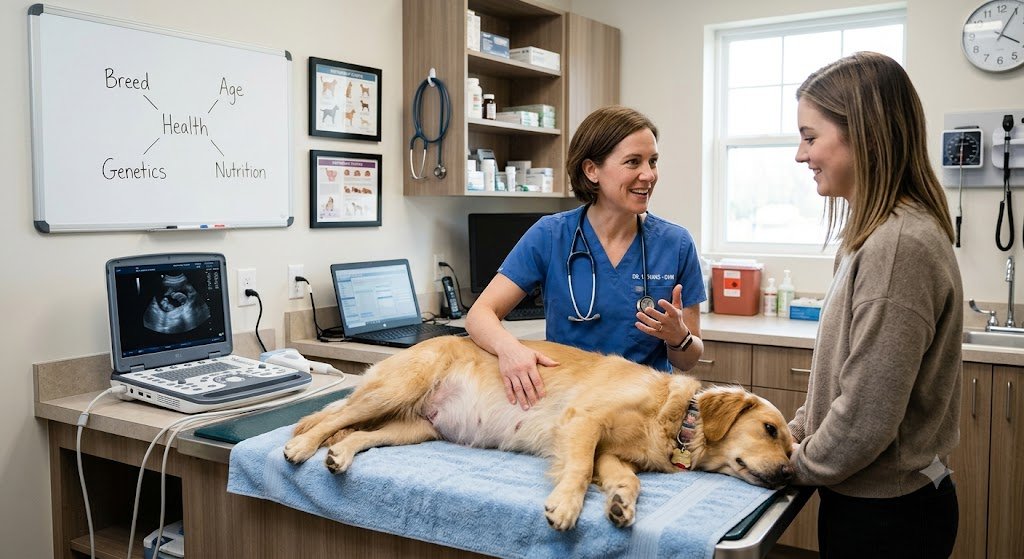
How many puppies can a dog have? On average, a dog can have 1 to 12 puppies in a single litter, although the exact number varies depending on the dog’s breed, size, age, genetics, and overall health. Small breeds often give birth to 1–4 puppies, while large and giant breeds may have 8–12 puppies or even more in some cases.
Although most litters fall within this range, there are exceptions. Some dogs have only one puppy, known as a singleton litter, while others may deliver exceptionally large litters under favorable breeding conditions.
What Is the Average Dog Litter Size?
The average dog litter size is generally 5 to 6 puppies. However, there is no fixed number that applies to every dog. A Chihuahua and a Great Dane, for example, have very different reproductive capacities, making breed one of the biggest influences on litter size.
Other factors—such as whether it is the dog’s first pregnancy, reproductive health, and breeding history—can also affect how many puppies are born.
Why Does Litter Size Vary?
Every pregnancy is unique, so the number of puppies can differ even between litters from the same dog.
Some of the main factors that influence litter size include:
- Breed and body size.
- Age of the mother.
- Genetics.
- Overall health and nutrition.
- Timing of breeding.
- Reproductive history.
These factors work together to determine how many fertilized eggs successfully develop into healthy puppies.
Can a Dog Have More or Fewer Puppies Than Average?
Yes. Some dogs naturally have smaller litters, while others produce much larger ones. It is completely normal for one pregnancy to result in only a few puppies and another to produce significantly more.
Veterinarians typically estimate the expected litter size during pregnancy using ultrasound or X-rays, although the exact number may not always be confirmed until delivery.
Summary
How many puppies can a dog have? Most dogs give birth to 1 to 12 puppies, with the average litter containing 5 to 6 puppies. Breed, size, age, genetics, and overall health all influence litter size, making every pregnancy unique. Veterinary examinations during pregnancy can provide a more accurate estimate of how many puppies to expect.
Keypoints
- Most dogs have 1–12 puppies in a litter.
- The average dog litter size is 5–6 puppies.
- Small breeds usually have fewer puppies than large breeds.
- Breed, age, health, and genetics all affect litter size.
- Ultrasound and X-rays help veterinarians estimate the number of puppies before birth.
Average Dog Litter Size by Breed
The average litter size varies significantly between dog breeds. In general, larger breeds tend to have more puppies, while smaller breeds usually have fewer. Although every pregnancy is different, understanding typical litter sizes can help owners set realistic expectations and prepare for whelping.
Small Breeds
Small dog breeds generally have the smallest litters because of their size and reproductive capacity.
Examples include:
- Chihuahua: 1–3 puppies
- Pomeranian: 1–4 puppies
- Yorkshire Terrier: 2–5 puppies
- Shih Tzu: 3–5 puppies
While some small breeds may occasionally have larger litters, most produce only a few puppies at a time.
Medium Breeds
Medium-sized dogs often have moderate litter sizes, balancing the characteristics of both small and large breeds.
Common examples include:
- Beagle: 4–6 puppies
- Cocker Spaniel: 4–7 puppies
- Border Collie: 4–8 puppies
These breeds typically produce healthy litters within the average range.
Large Breeds
Large breeds usually have more space to carry developing puppies, resulting in larger litters.
Examples include:
- Labrador Retriever: 6–8 puppies
- Golden Retriever: 6–8 puppies
- German Shepherd: 6–10 puppies
- Rottweiler: 8–12 puppies
These breeds commonly have litters above the overall average.
Giant Breeds
Giant breeds are capable of producing some of the largest litters among domestic dogs.
Examples include:
- Great Dane: 8–12 puppies
- Great Pyrenees: 7–12 puppies
- Mastiff: 8–12 puppies
- Irish Wolfhound: 6–10 puppies
Although giant breeds often have larger litters, proper prenatal care and veterinary monitoring remain essential throughout pregnancy.
Average Litter Size by Breed Size
| Breed Size | Average Puppies per Litter |
|---|---|
| Small Breeds | 1–4 puppies |
| Medium Breeds | 4–6 puppies |
| Large Breeds | 6–8 puppies |
| Giant Breeds | 8–12 puppies |
These ranges are averages and may vary depending on the individual dog’s health, genetics, and breeding history.
Summary
When asking how many puppies can a dog have, breed size is one of the biggest determining factors. Small breeds usually produce 1–4 puppies, while large and giant breeds commonly have 6–12 puppies per litter. Although these averages provide a helpful guide, each pregnancy is unique and litter size can vary.
Keypoints
- Breed size is one of the strongest predictors of litter size.
- Small breeds usually have the fewest puppies.
- Large and giant breeds generally produce the largest litters.
- Individual dogs may have more or fewer puppies than the average for their breed.
- Veterinary examinations during pregnancy can provide a more accurate estimate of litter size.

What Affects the Number of Puppies a Dog Can Have?
Although breed size is the biggest influence, several other factors determine how many puppies a dog can have. Two dogs of the same breed may have different litter sizes because of differences in age, health, genetics, and breeding conditions.
Breed and Body Size
A dog’s breed and overall size have the greatest impact on litter size. Small breeds generally produce fewer puppies, while large and giant breeds often have larger litters because they can support more developing puppies during pregnancy.
Age of the Mother
The age of the mother can affect fertility and litter size. Dogs in their prime reproductive years often have larger litters than very young or older females.
- First-time mothers may have smaller litters.
- Mature adult dogs often produce average or larger litters.
- Senior dogs may experience reduced fertility and smaller litters.
Genetics
Genetics also plays an important role. Some bloodlines naturally produce larger litters than others, even within the same breed. A dog’s inherited reproductive traits can influence the number of eggs released and the likelihood of successful pregnancies.
Health and Nutrition
A healthy dog is generally more likely to have a normal-sized litter than one with underlying health problems.
Important factors include:
- Maintaining a healthy body weight.
- Eating a balanced, high-quality diet.
- Receiving regular veterinary care.
- Staying up to date on vaccinations and parasite prevention before breeding.
Good health supports both the mother and her developing puppies throughout pregnancy.
Timing of Breeding
Successful breeding at the optimal time during the heat cycle increases the chances of fertilization. Poor timing may reduce the number of fertilized eggs, resulting in a smaller litter.
Experienced breeders often work with veterinarians to determine the most suitable breeding period.
First Pregnancy
Many first-time mothers have slightly smaller litters than they may have in future pregnancies. However, this is not always the case, and some first litters are average or even larger than expected.
Summary
When considering how many puppies can a dog have, breed is only one part of the answer. Age, genetics, health, nutrition, breeding timing, and reproductive history all contribute to the final litter size. Providing excellent care before and during pregnancy helps support a healthy mother and the best possible outcome for her puppies.
Keypoints
- Breed and body size are the biggest factors affecting litter size.
- Dogs in their prime reproductive years often have larger litters.
- Genetics influence natural litter size within each breed.
- Good nutrition and overall health support healthy pregnancies.
- First-time mothers may have slightly smaller litters than experienced females.
Dog Breeds with the Largest and Smallest Litters
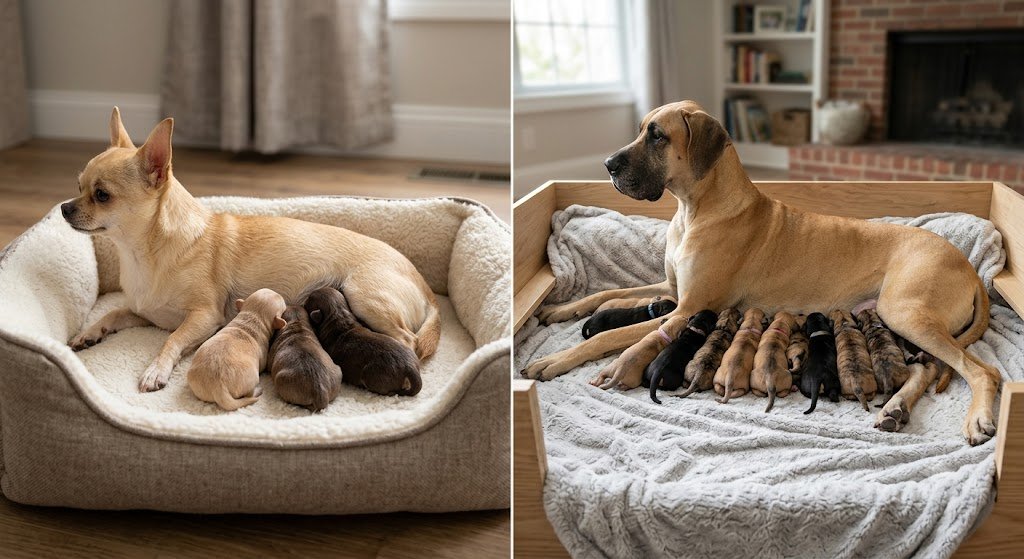
While every pregnancy is unique, some breeds are known for producing consistently larger litters, whereas others typically have only a few puppies. Understanding these breed tendencies provides a clearer answer to how many puppies can a dog have and helps owners know what to expect.
Dog Breeds with the Largest Litters
Large and giant breeds generally produce the highest number of puppies because of their larger body size and reproductive capacity.
Breeds commonly known for larger litters include:
- Great Dane
- Labrador Retriever
- German Shepherd
- Golden Retriever
- Rottweiler
- Great Pyrenees
These breeds often have 6–12 puppies in a single litter, although exceptionally large litters can occasionally exceed this range.
Dog Breeds with the Smallest Litters
Small and toy breeds usually produce fewer puppies per pregnancy.
Examples include:
- Chihuahua
- Pomeranian
- French Bulldog
- Shih Tzu
- Yorkshire Terrier
- Maltese
These breeds commonly have 1–4 puppies, with singleton litters occurring more frequently than in larger breeds.
Largest vs. Smallest Litter Sizes
| Breed | Typical Litter Size |
|---|---|
| Great Dane | 8–12 puppies |
| German Shepherd | 6–10 puppies |
| Labrador Retriever | 6–8 puppies |
| Golden Retriever | 6–8 puppies |
| Chihuahua | 1–3 puppies |
| Pomeranian | 1–4 puppies |
| French Bulldog | 2–4 puppies |
| Shih Tzu | 3–5 puppies |
These figures are general averages and individual dogs may have more or fewer puppies than expected.
Can Record-Breaking Litters Happen?
Yes. Although uncommon, some dogs have delivered exceptionally large litters. One of the largest recorded dog litters contained 24 puppies, demonstrating that, under rare circumstances, dogs can produce far more puppies than the typical average.
However, extremely large litters often require close veterinary supervision, and supplemental feeding may be necessary if the mother cannot nurse every puppy adequately.
Summary
When asking how many puppies can a dog have, breed-specific tendencies provide a useful guide. Large and giant breeds usually have the biggest litters, while toy and small breeds tend to have the fewest. Even so, every pregnancy is different, and litter size can vary from one dog to another.
Keypoints
- Large and giant breeds generally produce the largest litters.
- Small and toy breeds usually have fewer puppies.
- Great Danes and German Shepherds are among the breeds known for larger litters.
- Chihuahuas and Pomeranians commonly have small litters.
- Record-breaking litters are extremely rare and often require intensive veterinary care.
How Do Veterinarians Count Puppies Before Birth?
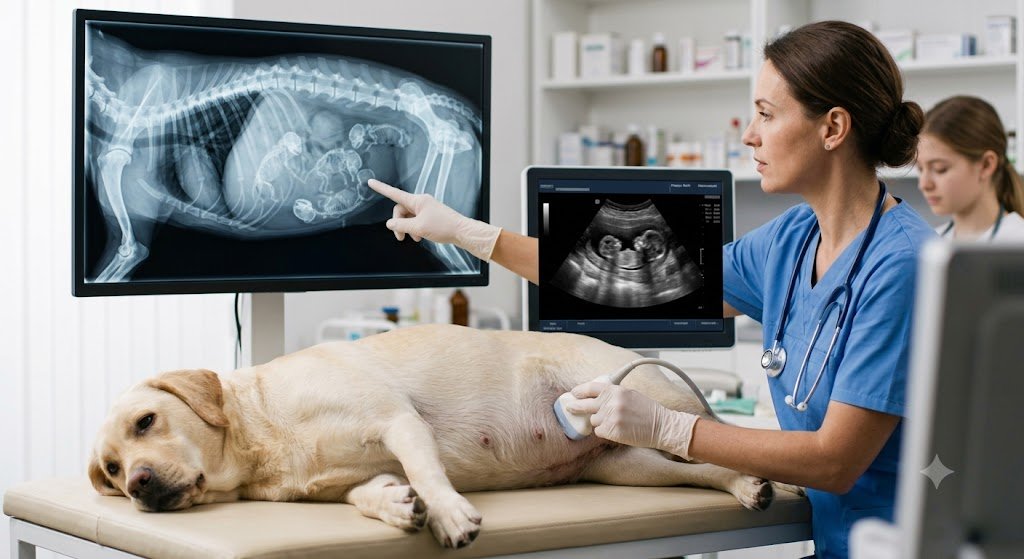
While owners often wonder how many puppies can a dog have, the exact number usually cannot be confirmed until the puppies are born. However, veterinarians use several diagnostic methods during pregnancy to estimate litter size and monitor the health of both the mother and her developing puppies.
Ultrasound
Ultrasound is commonly performed around 25–35 days of pregnancy. It is one of the earliest ways to confirm that a dog is pregnant and check whether the puppies are developing normally.
An ultrasound can:
- Confirm pregnancy.
- Detect fetal heartbeats.
- Assess puppy viability.
- Provide a rough estimate of litter size.
Because puppies may overlap during the scan, ultrasound is not always the most accurate method for counting every puppy.
X-ray (Radiographs)
An X-ray is typically the most accurate way to estimate litter size. It is usually performed after day 45 of pregnancy, when the puppies’ skeletons have become visible on radiographs.
X-rays help veterinarians:
- Count the puppies more accurately.
- Estimate litter size before labor.
- Identify unusually large puppies.
- Prepare owners for the expected delivery.
Many veterinarians recommend X-rays during late pregnancy because they provide the clearest picture of how many puppies to expect.
Abdominal Palpation
During the early stages of pregnancy, a veterinarian may gently feel the abdomen to detect developing puppies.
Palpation is generally performed between days 28 and 35 and may help confirm pregnancy, although it cannot accurately determine the exact number of puppies.
Methods Used to Estimate Litter Size
| Method | Best Time | Main Purpose |
|---|---|---|
| Ultrasound | Days 25–35 | Confirm pregnancy and check fetal heartbeats |
| Abdominal Palpation | Days 28–35 | Detect developing puppies |
| X-ray | After Day 45 | Estimate litter size more accurately before birth |
Summary
Veterinarians use ultrasound, abdominal palpation, and X-rays to estimate litter size during pregnancy. While ultrasound is ideal for confirming pregnancy early, X-rays provide the most accurate estimate of how many puppies a dog can have before labor begins.
Keypoints
- Ultrasound can confirm pregnancy from approximately 25–35 days.
- Abdominal palpation may detect puppies during the first month of pregnancy.
- X-rays after day 45 provide the most accurate litter count.
- No method can guarantee the exact number until the puppies are delivered.
- Veterinary examinations help monitor both the mother’s health and the developing puppies.
Can a Dog Have Only One Puppy or More Than 10?
Yes. A dog can give birth to just one puppy or more than 10 puppies, depending on factors such as breed, age, genetics, and overall reproductive health. While most litters contain 5–6 puppies on average, both very small and very large litters are possible.
Can a Dog Have Only One Puppy?
Yes. A litter consisting of only one puppy is called a singleton litter. This is more common in small breeds, first-time mothers, or older dogs, although it can occur in any breed.
Singleton puppies may require additional veterinary monitoring because:
- They can grow larger than average due to having more space in the uterus.
- A larger puppy may make delivery more difficult.
- They do not have littermates to help with early social development after birth.
With proper care, most singleton puppies grow into healthy adult dogs.
Can a Dog Have More Than 10 Puppies?
Yes. Large and giant breeds are more likely to produce litters of 10 or more puppies. Breeds such as Great Danes, German Shepherds, Labrador Retrievers, and Rottweilers occasionally have exceptionally large litters.
Large litters may require:
- More frequent monitoring during pregnancy.
- Veterinary assistance during whelping if needed.
- Supplemental bottle feeding if the mother cannot produce enough milk for every puppy.
- Daily weight checks to ensure each puppy is thriving.
When Should You Contact a Veterinarian?
Regardless of litter size, veterinary care is important if:
- Labor is prolonged or difficult.
- A puppy appears stuck during delivery.
- The mother becomes weak or distressed.
- Puppies are not nursing after birth.
- You suspect additional puppies remain after labor has stopped.
Prompt veterinary attention helps protect both the mother and her puppies.
Summary
If you’re wondering how many puppies can a dog have, the answer ranges from a single puppy to well over 10 puppies, depending on the individual dog. While singleton and very large litters are less common than average-sized litters, both are normal possibilities and may require additional monitoring before, during, or after birth.
Keypoints
- Dogs can have as few as one puppy or more than 10 puppies.
- Singleton litters are more common in some small breeds and first-time mothers.
- Large and giant breeds are more likely to produce very large litters.
- Both unusually small and unusually large litters may benefit from closer veterinary supervision.
- Proper prenatal care and veterinary monitoring help support healthy pregnancies and safe deliveries.
Conclusion
How many puppies can a dog have? Most dogs give birth to 1 to 12 puppies, with the average litter consisting of 5 to 6 puppies. However, litter size is not the same for every dog. Breed, body size, age, genetics, health, and breeding conditions all influence how many puppies a dog may have during pregnancy.
While small breeds typically have fewer puppies and large breeds often have bigger litters, every pregnancy is unique. Regular veterinary care, proper nutrition, and prenatal monitoring help support a healthy pregnancy and provide the most accurate estimate of litter size before birth. Understanding these factors allows dog owners and breeders to prepare for a safe whelping and give both the mother and her puppies the best possible care.
Frequently Asked Questions (FAQs)
How many puppies does a dog usually have?
Most dogs have an average litter of 5 to 6 puppies, although litter sizes commonly range from 1 to 12 puppies depending on the breed and other factors.
What dog breed has the largest litters?
Large and giant breeds such as the Great Dane, German Shepherd, Labrador Retriever, and Great Pyrenees are known for producing some of the largest litters, often ranging from 6 to 12 puppies.
Can a first-time dog have a large litter?
Yes. While first-time mothers sometimes have slightly smaller litters, they can still have average-sized or even large litters depending on their breed, genetics, and overall health.
Can a dog have only one puppy?
Yes. A dog can have a singleton litter, meaning only one puppy is born. This is more common in some small breeds and first pregnancies.
How do veterinarians know how many puppies a dog is carrying?
Veterinarians use ultrasound to confirm pregnancy during the early stages and X-rays after about 45 days of pregnancy to estimate litter size more accurately.
What is the largest dog litter ever recorded?
One of the largest recorded dog litters consisted of 24 puppies, although such cases are extremely rare and usually require intensive veterinary care.