How to Measure Your Dog for a Harness
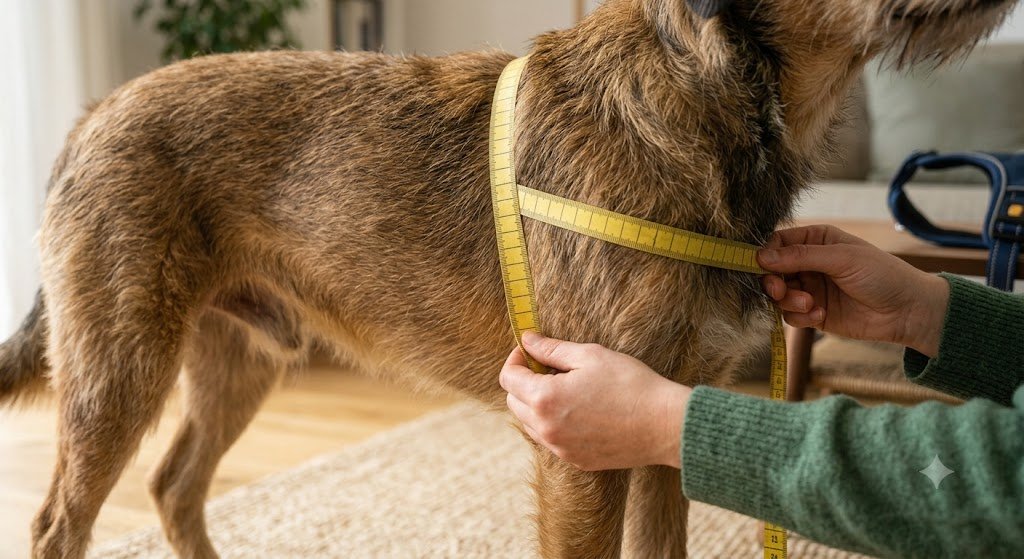
The most important measurement for estimating a dog harness size is usually chest girth. Measure around the widest part of your dog’s rib cage, typically just behind the front legs. Keep the measuring tape snug against the coat without pulling it tightly.
Measure the Chest Girth
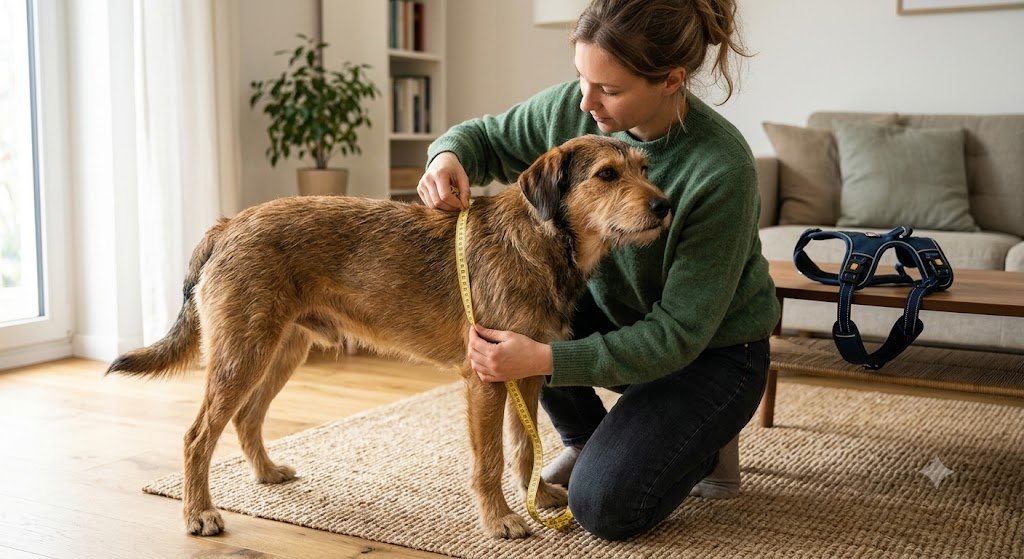
Have your dog stand naturally on all four legs. Wrap a soft measuring tape around the deepest part of the chest, passing it behind the front legs and around the rib cage.
Record the measurement in inches or centimeters. This measurement can then be entered into the Dog Harness Size Calculator to estimate the appropriate size range.
Where to Place the Measuring Tape
The tape should go around the widest part of the rib cage rather than directly behind the front legs or around the neck. Keep it level around the dog’s body for a more consistent measurement.
For dogs with thick or long coats, avoid compressing the fur excessively. The tape should be secure but comfortable.
Measure the Neck if Required
Some harness designs also use neck circumference when determining fit. If the manufacturer’s size chart asks for a neck measurement, measure around the lower part of the neck where the harness will sit.
Always compare your measurements with the specific manufacturer’s size chart because harness dimensions and sizing ranges can differ between brands.
Summary
Measure your dog’s chest girth around the widest part of the rib cage, just behind the front legs. Use this measurement with the calculator for an estimated harness size, then confirm the result against the manufacturer’s sizing chart.
Keypoints
- Chest girth is the main measurement for a general harness-size estimate.
- Measure around the widest part of the rib cage.
- Keep the tape snug but not tight.
- Measure the neck too if the harness brand requires it.
- Always check the manufacturer’s size chart before purchasing.
Dog Harness Size Chart
A dog harness size chart provides a general guide for matching your dog’s chest measurement with a harness size. However, there is no universal sizing standard across all harness brands. Use a general chart as a starting point, then confirm the measurement against the specific manufacturer’s size guide.
Common Harness Size Ranges
Harness sizes commonly progress from extra-small to extra-large, with larger sizes designed for dogs with greater chest girth. The exact measurements can vary significantly between brands and harness designs.
| Harness Size | General Chest Range | Typical Dog Type |
|---|---|---|
| XXS | Very small chest | Toy and very small dogs |
| XS | Small chest | Small dogs |
| S | Small to medium chest | Small and medium dogs |
| M | Medium chest | Medium-sized dogs |
| L | Large chest | Large dogs |
| XL | Very large chest | Giant or large-breed dogs |
These categories are only general references. Your dog’s actual chest measurement should take priority over breed or size labels.
Why Harness Sizes Vary by Brand
Different manufacturers design harnesses with different strap layouts, materials, adjustment ranges, and body shapes in mind. As a result, the same dog may wear a medium in one harness and a large in another.
For this reason, the Dog Harness Size Calculator should be treated as an estimate rather than a universal sizing system.
How to Use a Manufacturer’s Size Chart
After getting the calculator result, find the manufacturer’s official size chart for the harness you plan to buy. Compare your dog’s chest girth with the listed measurement range.
If the manufacturer’s chart uses both chest girth and weight, check both measurements. When they point to different sizes, follow the brand’s specific fitting instructions rather than relying only on a generic size category.
Summary
A general dog harness size chart can help estimate the right size, but harness sizing is not universal. Use your dog’s chest girth as the main reference and always verify the result against the manufacturer’s specific size chart.
Keypoints
- Harness sizes vary between brands and designs.
- Chest girth is more useful than breed labels for general sizing.
- Generic size categories should be treated as estimates.
- Always check the manufacturer’s official size chart before buying.
- If measurements suggest different sizes, follow the brand’s fitting guidance.
How to Use the Dog Harness Size Calculator
The Dog Harness Size Calculator uses your dog’s measurements to provide an estimated harness size. For the most useful result, enter an accurate chest-girth measurement taken around the widest part of the rib cage.
Enter Your Dog’s Chest Girth
Measure your dog’s chest in inches or centimeters and enter the value into the calculator. Make sure the measurement is taken while your dog is standing naturally.
If your measuring tape shows a value between two measurements, use the actual measurement rather than rounding it substantially up or down.
Add Weight for a Secondary Check
If the calculator includes a weight field, enter your dog’s current weight using the requested unit.
Weight can provide additional context, but it should not replace chest girth when estimating harness size. Dogs of the same weight can have different body proportions and chest shapes.
Understand the Recommended Size
The calculator provides an estimated harness size based on the information entered. Use that result as a starting point rather than treating it as a guaranteed fit.
Before purchasing, compare your dog’s measurements with the specific harness manufacturer’s size chart. If the recommended size differs from the calculator’s estimate, the manufacturer’s measurements should take priority.
Summary
Use an accurate chest-girth measurement as the main calculator input and weight as a secondary reference when available. The result is an estimate, so always confirm the recommended size using the manufacturer’s own sizing information.
Keypoints
- Enter your dog’s actual chest girth for the most useful estimate.
- Measure your dog while standing naturally.
- Use weight as a secondary reference, not the main sizing factor.
- Treat the calculator result as an estimate.
- Check the manufacturer’s size chart before buying a harness.
How Should a Dog Harness Fit?
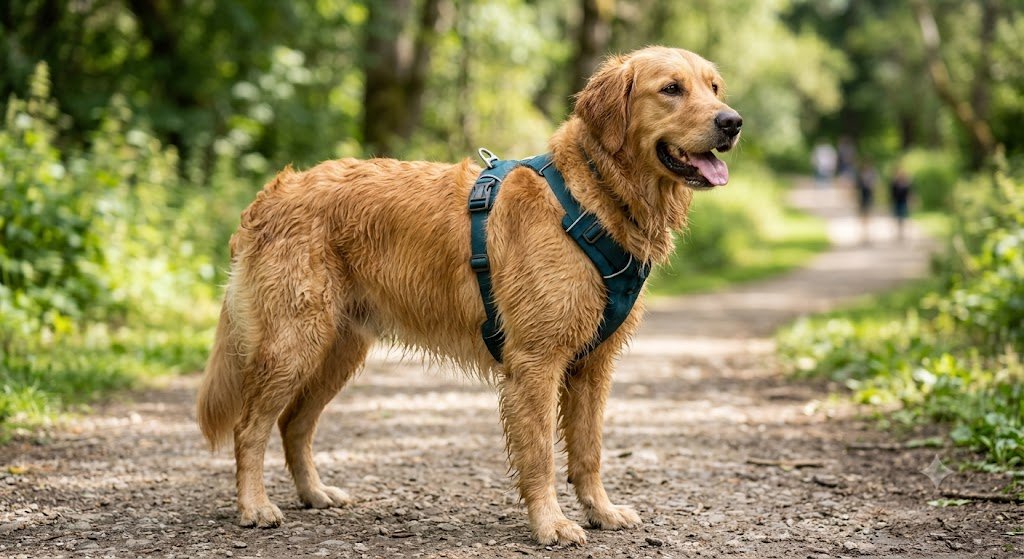
A properly fitted harness should be secure without restricting your dog’s breathing or movement. It should stay in position during walking without shifting excessively, rubbing the skin, or allowing your dog to easily back out of it.
The Two-Finger Fit Check
After putting the harness on your dog, slide two fingers between the harness and your dog’s body. The straps should feel snug but should not press tightly against the skin.
If you cannot comfortably fit two fingers underneath the straps, the harness may be too tight. If you can fit several fingers underneath or the harness moves excessively, it may be too loose.
Check Shoulder and Leg Movement
Watch your dog walk naturally after adjusting the harness. The straps should not dig into the shoulders, rub behind the front legs, or interfere with normal leg movement.
A properly positioned harness should allow your dog to walk, sit, and move comfortably without obvious restriction.
Signs the Harness Is Too Tight
A harness may be too tight if you notice:
- Redness or rubbing around the skin
- Difficulty moving the shoulders or front legs
- Straps pressing deeply into the coat or skin
- Your dog showing discomfort while wearing it
- Restricted or uncomfortable movement
Loosen or reposition the harness if these problems occur.
Signs the Harness Is Too Loose
A harness may be too loose if:
- It shifts significantly while your dog walks
- You can easily pull it away from the body
- Your dog can back out of the harness
- The straps move toward the legs
- The harness changes position during normal movement
Adjust the straps according to the manufacturer’s instructions and check the fit again before walking your dog.
Summary
A correctly fitted harness should be snug, secure, and comfortable without restricting normal movement. Use the two-finger check, watch your dog’s movement, and look for signs of rubbing, pressure, or excessive looseness.
Keypoints
- The harness should be snug but not restrictive.
- Use the two-finger fit check after adjustment.
- Make sure the shoulders and front legs can move freely.
- Check regularly for rubbing or skin irritation.
- A loose harness can increase the risk of your dog backing out.
What If Your Dog Is Between Harness Sizes?
If your dog’s measurements fall between two harness sizes, do not automatically choose the larger or smaller option. Compare the dog’s chest measurement with the manufacturer’s sizing range and consider how much adjustment the harness provides.
Adult Dogs Between Sizes
For an adult dog between two sizes, check the harness manufacturer’s fitting instructions first. An adjustable harness may provide enough flexibility to achieve a secure fit, while a less-adjustable design may require choosing the size whose measurement range better matches your dog’s chest.
After putting the harness on, use the adjustment points and perform a fit check before walking your dog.
Growing Puppies Between Sizes
Puppies can outgrow a harness quickly as their chest and body develop. Measure a growing puppy regularly instead of relying on an old measurement.
Avoid buying a harness that is excessively large simply to allow for growth. A loose harness may shift during movement or allow the puppy to back out of it.
Dogs With Broad or Deep Chests
Some dogs have body shapes that do not fit neatly into standard size categories. A dog with a broad or deep chest may need a harness with a larger adjustment range or a design made for its particular body shape.
In these cases, chest girth alone may not tell the whole story. Check the manufacturer’s measurements for the neck, chest, and adjustment range when those details are provided.
Summary
When a dog falls between harness sizes, use the manufacturer’s measurement range and fitting instructions rather than choosing by size label alone. Growing puppies and dogs with unusual body shapes may need more frequent measurements or a harness with greater adjustability.
Keypoints
- Check the manufacturer’s sizing instructions when measurements fall between sizes.
- Choose based on body measurements, not the size label alone.
- Re-measure puppies as they grow.
- Do not choose an excessively large harness just for future growth.
- Dogs with broad or deep chests may need a more adjustable harness design.
Does Dog Breed or Weight Determine Harness Size?
Dog breed and body weight can provide general context, but neither should replace an accurate chest measurement when choosing a harness. Dogs of the same breed or weight can have noticeably different body proportions.
Why Chest Girth Matters More Than Breed
Breed names do not provide a precise harness measurement. Two dogs of the same breed may have different chest widths, body lengths, muscle mass, or coat thickness.
Chest girth gives a direct measurement of the dog’s body where the harness is designed to sit, making it a more useful starting point for sizing.
When Weight Is Useful
Weight can be helpful as a secondary check, particularly when a manufacturer’s size chart lists both weight and chest girth.
However, weight alone should not determine the harness size. A heavier dog may have a relatively narrow chest, while a lighter dog may have a broad or deep rib cage.
For the most reliable estimate, enter the dog’s chest girth into the Dog Harness Size Calculator and use weight only when the calculator or manufacturer’s sizing chart requests it.
Summary
Breed and weight can help provide context, but chest girth is generally the more useful measurement for estimating dog harness size. Always prioritize the dog’s actual measurements and the manufacturer’s sizing guidance over breed-based assumptions.
Keypoints
- Breed alone cannot determine the correct harness size.
- Dogs of the same breed can have different body proportions.
- Weight is useful as a secondary sizing reference.
- Chest girth should be the primary measurement for a general estimate.
- Always compare measurements with the manufacturer’s size chart.
Common Dog Harness Sizing Mistakes
Choosing a harness based only on a size label can lead to an uncomfortable or insecure fit. Using accurate measurements and checking the harness after putting it on your dog can help avoid common sizing problems.
Choosing by Breed Alone
Breed is not a precise sizing measurement. Dogs within the same breed can have different chest shapes, body proportions, and weights.
Use your dog’s actual chest girth instead of assuming that a particular breed always needs a specific harness size.
Ignoring the Brand’s Size Chart
A medium harness from one manufacturer may not have the same dimensions as a medium harness from another. Size labels such as XS, S, M, or L are not universal.
After using the calculator, compare the result with the manufacturer’s current size chart for the exact harness you plan to purchase.
Measuring Over a Thick Coat Incorrectly
A thick coat can affect the measurement. The tape should rest around the dog’s body without being pulled tightly enough to compress the coat significantly.
For dogs with heavy coats, take the measurement consistently and follow the harness manufacturer’s instructions if they provide specific guidance.
Assuming a Larger Harness Is Always Safer
A harness should not be intentionally oversized simply because it seems more comfortable. Excessive looseness can allow the harness to shift or give the dog an opportunity to back out.
The goal is a secure fit that allows normal movement without excessive pressure or rubbing.
Summary
Common sizing mistakes include choosing by breed, relying on size labels, measuring inaccurately, and selecting an unnecessarily large harness. Accurate chest measurement and the manufacturer’s size chart provide a better basis for choosing a suitable fit.
Keypoints
- Do not choose harness size by breed alone.
- Size labels are not standardized between manufacturers.
- Measure carefully, especially when your dog has a thick coat.
- Do not intentionally oversize a harness.
- Always check the final fit after putting the harness on your dog.
Dog Harness Size Calculator: Quick Answer
A Dog Harness Size Calculator estimates the appropriate harness size using your dog’s body measurements, with chest girth being the most useful starting measurement. Measure around the widest part of the rib cage, enter the result into the calculator, and then compare the recommended size with the manufacturer’s sizing chart before purchasing.
Summary
The calculator provides a quick estimate based primarily on chest girth, but the final harness choice should always be confirmed using the specific manufacturer’s measurements and fitting instructions.
Keypoints
- Measure your dog’s chest girth around the widest part of the rib cage.
- Enter the measurement into the calculator.
- Treat the result as an estimate, not a guaranteed fit.
- Compare the result with the manufacturer’s size chart.
- Check the harness fit on your dog before walking.
Conclusion
Choosing the right dog harness starts with an accurate chest measurement. The Dog Harness Size Calculator can provide a useful size estimate based primarily on chest girth, while weight can serve as a secondary reference.
Because harness sizing varies between manufacturers, use the calculator result as a starting point and always compare your dog’s measurements with the specific harness manufacturer’s size chart. After putting the harness on, check that it is secure, comfortable, and allows normal movement.
Summary
Accurate chest girth measurement is the key to estimating dog harness size. Use the calculator for guidance, verify the result with the manufacturer’s sizing chart, and check the final fit on your dog.
Keypoints
- Measure your dog’s chest girth accurately.
- Use the calculator as a sizing estimate.
- Check the manufacturer’s specific size chart.
- Do not rely on breed or weight alone.
- Confirm the harness is secure and comfortable before use.
FAQs
How do I know what size harness my dog needs?
Measure your dog’s chest girth around the widest part of the rib cage, then compare the measurement with the harness manufacturer’s size chart. A dog harness size calculator can provide an initial estimate.
What measurement is most important for a dog harness?
Chest girth is generally the most useful measurement for estimating harness size. Measure around the widest part of your dog’s rib cage, just behind the front legs.
Can I choose a dog harness by weight?
Weight can be used as a secondary reference, but it should not be the only sizing factor. Dogs with the same weight can have different chest shapes and body proportions.
Are dog harness sizes the same for every brand?
No. Harness sizes and measurement ranges can vary between manufacturers and harness designs. Always check the size chart for the specific harness you plan to purchase.
What if my dog is between two harness sizes?
Compare the dog’s chest measurement with the manufacturer’s sizing range and check how adjustable the harness is. Follow the brand’s fitting instructions rather than choosing solely by the XS, S, M, or L label.
How tight should a dog harness be?
A properly adjusted harness should be snug without restricting movement. A common fit check is to place two fingers between the harness and your dog’s body while ensuring the harness does not shift excessively.
Do puppies need to be measured for a harness more often?
Yes. Puppies grow quickly, so their chest measurement can change significantly. Re-measure a growing puppy regularly and adjust or replace the harness when the fit becomes too tight or too loose.
References
- American Kennel Club (AKC) — Guidance on selecting and fitting dog harnesses, including chest/girth fit, two-finger fit checks, shoulder movement, and risks associated with poorly fitted harnesses.
- VCA Animal Hospitals — Veterinary guidance on body harnesses, proper fit, movement, adjustment, escape risk, and supervision while dogs wear harnesses.