A Dog Raisin Toxicity Calculator is a tool that estimates your dog’s potential risk after eating raisins by considering factors such as body weight, the number of raisins consumed, and the time since ingestion. While the calculator can provide a helpful risk estimate, it cannot determine whether your dog will develop poisoning and should never replace professional veterinary advice.
Raisins are highly toxic to dogs and can cause acute kidney injury (acute kidney failure). Unlike many other toxic foods, there is no known safe amount of raisins because some dogs become seriously ill after eating only a small quantity, while others may consume more without immediate symptoms. Since veterinarians cannot predict which dogs will be affected, every raisin ingestion should be treated seriously.
If your dog has eaten raisins, using the Dog Raisin Toxicity Calculator can help you understand the potential level of risk. However, because raisin poisoning can progress rapidly, you should contact your veterinarian or an emergency animal hospital immediately rather than relying on the calculator alone.
What the Calculator Estimates
The calculator uses information such as:
- Your dog’s body weight.
- The estimated number of raisins eaten.
- Whether your dog ate raisins or fresh grapes.
- The approximate time since ingestion.
The result provides an estimated level of risk and guidance on whether urgent veterinary attention may be needed.
Why Immediate Action Matters
Raisin poisoning is unpredictable. Even dogs that appear normal shortly after eating raisins can develop serious kidney damage within hours or days. Early veterinary treatment offers the best chance of preventing severe complications.
For this reason, the Dog Raisin Toxicity Calculator should be used as a decision-support tool while you arrange professional veterinary care if raisin ingestion is suspected.
Summary
A Dog Raisin Toxicity Calculator helps estimate the potential risk after a dog eats raisins or grapes based on body weight, the amount consumed, and the time since ingestion. Because there is no established safe amount of raisins for dogs, every exposure should be taken seriously, and veterinary advice should be sought as soon as possible.
Keypoints
- The Dog Raisin Toxicity Calculator estimates poisoning risk after raisin or grape ingestion.
- There is no known safe amount of raisins for dogs.
- Raisins can cause acute kidney injury in susceptible dogs.
- The calculator provides guidance but does not diagnose poisoning.
- Contact a veterinarian immediately if your dog has eaten raisins, even if no symptoms are present.

How Many Raisins Are Toxic to Dogs?
One of the most common questions dog owners ask is, “How many raisins are toxic to dogs?” Unfortunately, there is no universally safe number. Some dogs have developed serious poisoning after eating only a few raisins, while others have consumed larger amounts with milder effects. Because individual sensitivity varies so much, veterinarians recommend treating any raisin ingestion as a potential emergency.
The Dog Raisin Toxicity Calculator estimates the potential level of risk by considering your dog’s body weight and the approximate number of raisins eaten. However, the calculator cannot predict exactly how your dog will respond.
Does Your Dog’s Weight Matter?
Yes. Smaller dogs generally face a higher risk because the same number of raisins represents a larger dose relative to their body weight. Larger dogs may eat more raisins before reaching a similar exposure level, but they are not immune to raisin poisoning.
Body weight is one of the factors used by the Dog Raisin Toxicity Calculator, but it should never be used to assume that a certain amount is safe.
Estimated Risk by Dog Size
The table below provides a general guide to help understand why body weight matters. It is not a safe-dose chart, as any amount of raisins may be harmful.
| Dog Weight | Potential Risk if Raisins Are Eaten |
|---|---|
| Under 10 lb (4.5 kg) | High risk, even after a few raisins |
| 10–25 lb (4.5–11 kg) | Moderate to high risk |
| 26–50 lb (12–23 kg) | Risk varies depending on the amount eaten |
| Over 50 lb (23 kg) | Risk still exists; veterinary advice is recommended |
Because no safe threshold has been identified, every case should be evaluated individually.
Does the Number of Raisins Matter?
Yes, but it is not the only factor. The number of raisins consumed helps estimate exposure, yet some dogs experience kidney injury after eating only a small quantity.
The risk also depends on:
- Your dog’s body weight.
- Individual sensitivity.
- How quickly treatment begins.
- Whether the raisins were eaten alone or as part of another food.
This is why the Dog Raisin Toxicity Calculator should be viewed as a screening tool rather than a way to determine whether your dog is safe.
Should You Wait for Symptoms?
No. Waiting for symptoms can delay treatment, and kidney damage may begin before obvious signs appear. If you know or suspect your dog has eaten raisins, contact your veterinarian immediately, even if your dog seems completely normal.
Summary
There is no known safe number of raisins that a dog can eat. The Dog Raisin Toxicity Calculator helps estimate the potential risk based on body weight and the estimated number of raisins consumed, but because every dog responds differently, prompt veterinary advice is recommended for any suspected raisin ingestion.
Keypoints
- There is no established safe amount of raisins for dogs.
- Small dogs generally face a higher risk, but dogs of any size can be affected.
- The number of raisins eaten is only one factor in determining risk.
- Kidney damage can occur even if symptoms are not immediately visible.
- Use the Dog Raisin Toxicity Calculator as a guide and contact a veterinarian as soon as possible.

Why Are Raisins Dangerous for Dogs?
Raisins are dangerous because they can cause acute kidney injury (AKI), also known as acute kidney failure, in dogs. Although veterinarians know that raisins and grapes are toxic, the exact substance responsible for the poisoning has not yet been identified. This uncertainty makes it impossible to predict which dogs will become seriously ill after eating raisins.
For this reason, the Dog Raisin Toxicity Calculator is designed to estimate the potential risk based on your dog’s weight and the estimated amount consumed, but it cannot determine whether poisoning will occur.
How Do Raisins Affect Dogs?
After a dog eats raisins, the toxic compounds are absorbed through the digestive system. In susceptible dogs, these toxins can damage the kidneys, reducing their ability to filter waste and maintain normal fluid balance.
Without prompt treatment, kidney injury may progress rapidly and become life-threatening.
Why Do Some Dogs Become Sicker Than Others?
One of the biggest challenges with raisin poisoning is that every dog responds differently.
Some dogs may develop severe kidney injury after eating only a few raisins, while others may show mild symptoms after consuming a larger amount. Because veterinarians cannot predict an individual dog’s sensitivity, every case should be treated seriously.
Factors that may influence the severity include:
- Individual sensitivity.
- Body weight.
- The amount consumed.
- How quickly veterinary treatment begins.
Are Grapes and Raisins Equally Dangerous?
Yes. Both grapes and raisins are considered toxic to dogs and should never be fed intentionally. Since raisins are dried grapes, they are more concentrated, meaning a small handful of raisins may contain the toxic equivalent of several grapes.
Whether your dog eats fresh grapes or raisins, immediate veterinary advice is recommended.
Can Kidney Damage Be Prevented?
Yes, in many cases. Dogs treated soon after eating raisins often have a much better chance of recovery than dogs whose treatment is delayed.
Early veterinary care may include:
- Inducing vomiting when appropriate.
- Administering activated charcoal in selected cases.
- Providing intravenous (IV) fluids.
- Monitoring kidney function with blood and urine tests.
Using the Dog Raisin Toxicity Calculator immediately after ingestion can help you assess the urgency of the situation, but it should never delay professional treatment.
Summary
Raisins are dangerous because they can cause acute kidney injury, and there is no reliable way to predict which dogs will be affected. Since the toxic compound remains unknown and sensitivity varies greatly, every raisin ingestion should be treated as a potential emergency. The Dog Raisin Toxicity Calculator provides an initial risk estimate, but prompt veterinary care offers the best chance of preventing serious complications.
Keypoints
- Raisins can cause acute kidney injury in dogs.
- The exact toxic substance has not yet been identified.
- Dogs can react differently to the same amount of raisins.
- Raisins are more concentrated than fresh grapes and are equally dangerous.
- Early veterinary treatment significantly improves the chances of recovery.

Symptoms of Raisin Toxicity in Dogs
The symptoms of raisin poisoning can appear within a few hours of ingestion, although some dogs may not show obvious signs until 24–48 hours later. Because kidney damage can begin before severe symptoms develop, it’s important to seek veterinary advice immediately rather than waiting to see if your dog becomes sick.
If the Dog Raisin Toxicity Calculator indicates a moderate or high risk, or your dog begins showing any of the following symptoms, contact your veterinarian or an emergency animal hospital without delay.
Early Symptoms
The first signs of raisin toxicity usually affect the digestive system.
Common early symptoms include:
- Vomiting.
- Diarrhea.
- Loss of appetite.
- Excessive drooling.
- Abdominal discomfort.
- Lethargy or unusual tiredness.
These symptoms often develop within the first several hours after ingestion.
Signs of Kidney Injury
As poisoning progresses, the kidneys may become damaged, leading to more serious symptoms.
Watch for signs such as:
- Extreme weakness.
- Increased thirst.
- Increased urination during the early stages.
- Little or no urination as kidney function worsens.
- Dehydration.
- Bad breath with a urine-like odor.
These symptoms require immediate veterinary attention.
Severe Symptoms
Without prompt treatment, raisin poisoning can become life-threatening.
Serious warning signs include:
- Collapse.
- Difficulty breathing.
- Severe dehydration.
- Confusion or disorientation.
- Seizures (rare).
- Coma in advanced cases.
Emergency veterinary care is essential if any of these symptoms occur.
When Do Symptoms Appear?
| Time After Eating Raisins | Possible Signs |
|---|---|
| 0–6 Hours | Vomiting, diarrhea, drooling, loss of appetite |
| 6–24 Hours | Lethargy, weakness, abdominal pain, dehydration |
| 24–48 Hours | Increased or decreased urination, kidney injury signs |
| After 48 Hours | Severe kidney failure, collapse, emergency symptoms |
The timing and severity of symptoms vary between dogs, which is why every raisin ingestion should be taken seriously.
Summary
Symptoms of raisin poisoning can progress from mild digestive upset to severe kidney failure. The Dog Raisin Toxicity Calculator helps estimate the potential risk, but it cannot predict how an individual dog will respond. If your dog develops vomiting, lethargy, changes in urination, or any other concerning symptoms after eating raisins, seek veterinary care immediately.
Keypoints
- Symptoms may appear within a few hours or take up to 48 hours to develop.
- Early signs commonly include vomiting, diarrhea, and loss of appetite.
- Changes in urination may indicate kidney injury.
- Severe cases can lead to kidney failure, collapse, and other life-threatening complications.
- Use the Dog Raisin Toxicity Calculator as a guide and contact a veterinarian immediately if raisin ingestion is suspected.
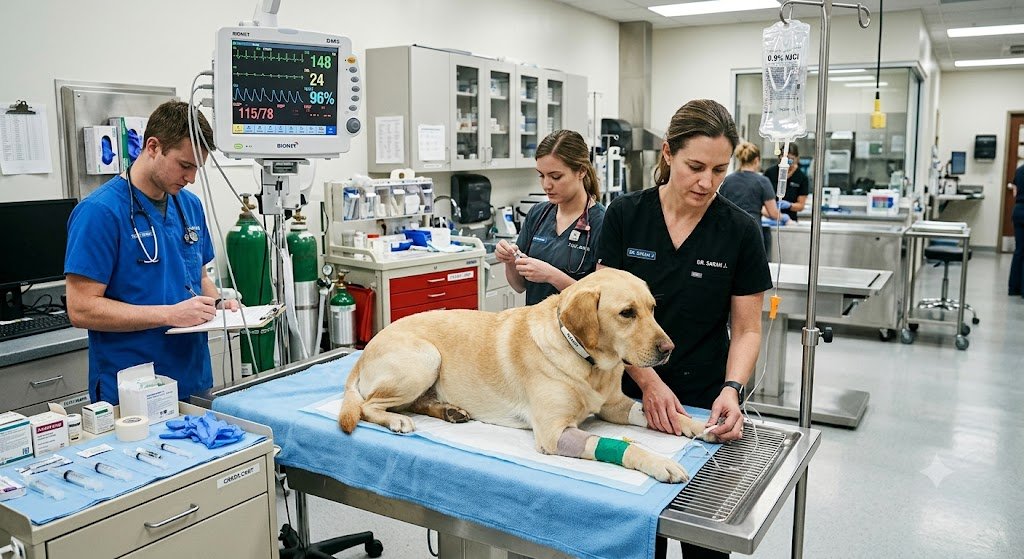
What to Do If Your Dog Eats Raisins
If your dog eats raisins, taking quick action can make a significant difference. Even if your dog appears healthy, raisin poisoning can develop rapidly and may lead to serious kidney damage. The Dog Raisin Toxicity Calculator can help estimate the potential risk, but it should never delay contacting a veterinarian.
1. Remove Any Remaining Raisins
Prevent your dog from eating more raisins by removing any remaining fruit or raisin-containing foods from the area.
If possible, determine:
- Approximately how many raisins were eaten.
- Whether your dog ate raisins, grapes, or a food containing raisins.
- The time of ingestion.
- Your dog’s current body weight.
This information is useful when using the Dog Raisin Toxicity Calculator and speaking with your veterinarian.
2. Use the Dog Raisin Toxicity Calculator
Enter the available information into the calculator, including:
- Dog’s body weight.
- Estimated number of raisins eaten.
- Whether raisins or grapes were consumed.
- Time since ingestion.
The calculator provides an estimated level of risk to help guide your next steps, but it cannot diagnose poisoning.
3. Contact Your Veterinarian Immediately
Because there is no known safe amount of raisins for dogs, it’s best to contact your veterinarian as soon as possible—even if your dog has not developed symptoms.
If your regular veterinary clinic is unavailable, call an emergency veterinary hospital or a pet poison helpline without delay.
4. Do Not Induce Vomiting Unless Directed
Never try to make your dog vomit unless a veterinarian specifically instructs you to do so. Inducing vomiting incorrectly can create additional risks and may not be appropriate in every situation.
Always follow professional veterinary guidance before attempting any treatment at home.
5. Monitor Your Dog Closely
Continue observing your dog for at least the next 24–48 hours, as symptoms may not appear immediately.
Watch for:
- Vomiting or diarrhea.
- Loss of appetite.
- Lethargy.
- Increased or decreased urination.
- Excessive thirst.
- Weakness.
- Signs of dehydration.
If any of these symptoms develop, seek emergency veterinary care immediately.
Summary
If your dog eats raisins, act quickly by removing any remaining raisins, using the Dog Raisin Toxicity Calculator to estimate the potential risk, and contacting your veterinarian right away. Early treatment provides the best chance of preventing kidney damage and improving your dog’s recovery.
Keypoints
- Remove any remaining raisins immediately.
- Gather details about the amount eaten and the time of ingestion.
- Use the Dog Raisin Toxicity Calculator for an initial risk estimate.
- Contact a veterinarian immediately, even if your dog appears normal.
- Do not induce vomiting unless specifically instructed by a veterinary professional.
When Should You Visit an Emergency Veterinarian?
Because raisin poisoning is unpredictable, it is safest to treat any suspected raisin ingestion as a medical emergency. The Dog Raisin Toxicity Calculator can help estimate the level of risk, but it cannot determine whether your dog will develop kidney damage. If there is any doubt, contact an emergency veterinarian immediately.
Seek Emergency Care Immediately If:
Take your dog to the nearest emergency veterinary clinic if:
- Your dog ate an unknown or large number of raisins.
- Your dog is a puppy or a small breed.
- Your dog has eaten raisins within the last few hours.
- Your dog begins vomiting or has repeated diarrhea.
- Your dog becomes weak, lethargic, or collapses.
- Your dog is drinking much more or much less than normal.
- Your dog urinates very little or stops urinating.
- You are unsure whether the food contained raisins.
Prompt treatment can significantly reduce the risk of permanent kidney damage.
What Will the Veterinarian Do?
The veterinarian will recommend treatment based on how long ago the raisins were eaten, the estimated amount consumed, and your dog’s overall condition.
Treatment may include:
- A complete physical examination.
- Blood and urine tests to evaluate kidney function.
- Inducing vomiting if it is safe and appropriate.
- Administering activated charcoal in selected cases.
- Intravenous (IV) fluids to protect the kidneys.
- Hospitalization for monitoring and supportive care.
- Repeat blood tests over the next 24–72 hours to detect early kidney injury.
Early treatment often leads to much better outcomes than waiting for symptoms to appear.
Can Dogs Recover from Raisin Poisoning?
Yes. Many dogs recover completely when they receive prompt veterinary care before significant kidney damage occurs. Recovery depends on several factors, including how quickly treatment begins and how severely the kidneys are affected.
Dogs treated shortly after eating raisins generally have a much better prognosis than those treated after kidney failure has already developed.
Summary
Emergency veterinary care is recommended whenever a dog eats raisins, especially if the amount is unknown, symptoms develop, or the dog is small or vulnerable. The Dog Raisin Toxicity Calculator is a useful screening tool, but it should never replace immediate veterinary evaluation when raisin poisoning is suspected.
Keypoints
- Any raisin ingestion should be taken seriously because there is no known safe amount.
- Puppies and small dogs may face a higher risk of serious poisoning.
- Blood and urine tests help veterinarians monitor kidney function.
- Early treatment greatly improves the chances of a full recovery.
- The Dog Raisin Toxicity Calculator provides an estimate only and is not a substitute for professional veterinary care.
Conclusion
The Dog Raisin Toxicity Calculator is a useful tool for estimating your dog’s potential risk after eating raisins or grapes. By considering your dog’s body weight, the estimated amount consumed, and the time since ingestion, it provides a quick assessment to help guide your next steps. However, it should always be used as a guide and never as a substitute for professional veterinary care.
Unlike many other foods, there is no known safe amount of raisins for dogs. Even a small quantity can cause serious kidney injury in some dogs. If your dog has eaten raisins or grapes, contact your veterinarian or an emergency animal hospital as soon as possible, even if your dog appears healthy. Early treatment offers the best chance of preventing kidney damage and ensuring a full recovery.
Frequently Asked Questions (FAQs)
Can one raisin hurt a dog?
Yes. Some dogs have developed serious poisoning after eating only a small number of raisins. Because individual sensitivity varies, there is no safe amount.
Are grapes and raisins equally toxic to dogs?
Yes. Both grapes and raisins are toxic to dogs and can cause acute kidney injury. Raisins are dried grapes, making them more concentrated.
How quickly do symptoms of raisin poisoning appear?
Symptoms may begin within a few hours, but some dogs do not show signs until 24–48 hours after ingestion.
Can dogs recover from raisin poisoning?
Yes. Many dogs recover fully when they receive prompt veterinary treatment before severe kidney damage develops.
Should I make my dog vomit after eating raisins?
No. Do not induce vomiting unless a veterinarian specifically instructs you to do so. The safest approach is to contact your veterinarian immediately.
Does the Dog Raisin Toxicity Calculator replace a veterinarian?
No. The Dog Raisin Toxicity Calculator provides an estimated risk only. It cannot diagnose poisoning or determine whether your dog will develop kidney injury.
Can puppies eat raisins?
No. Puppies should never eat raisins or grapes. Because of their small body size, they may be at an even greater risk of serious poisoning.