Understanding the Stages of Labor in Dogs
Dog labor is the natural process through which a pregnant dog prepares for birth, delivers her puppies, and passes the placentas. Understanding the dog labor stages helps owners recognize normal labor signs, prepare for delivery, and identify when veterinary assistance may be needed.
Most dogs progress through three stages of labor. The first involves physical preparation and early contractions, the second is the delivery of puppies, and the third is the passage of placentas. These stages may overlap, particularly the second and third stages.
Key Points
- Stage 1: The cervix dilates, and early uterine contractions begin.
- Stage 2: The mother dog actively pushes and delivers puppies.
- Stage 3: The placentas are expelled after delivery.
- The timing varies between individual dogs and litters.
- Prolonged labor, strong contractions without a puppy, or signs of severe distress require prompt veterinary advice.
How Long Does Dog Labor Usually Last?
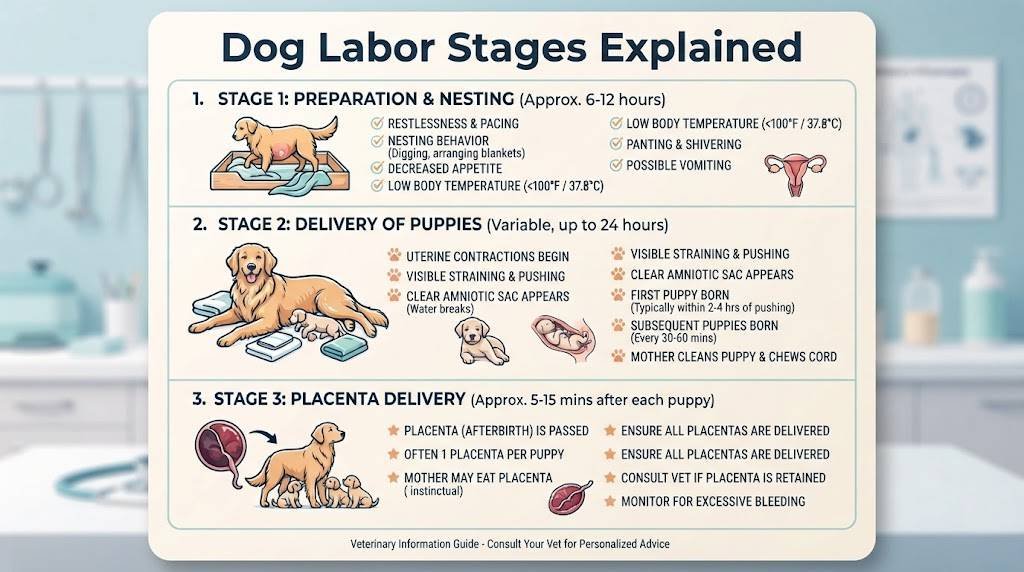
The first stage of labor often lasts around 6–12 hours, although it can take longer, especially in first-time mothers. The second stage may continue for several hours as individual puppies are delivered, with intervals between puppies varying considerably. The third stage occurs alongside puppy delivery as placentas pass.
The entire process depends on litter size, the mother’s health, and whether complications develop. There is no single timeline that applies to every dog.
Important: Contact a veterinarian urgently if your dog has strong, persistent contractions for 20–30 minutes without delivering a puppy, appears severely weak or distressed, or has a puppy visibly stuck. Do not wait for a general labor timeline if something seems wrong.
Stage 1 of Dog Labor: Early Signs and Preparation
Stage 1 of dog labor is the preparation phase, when the cervix begins to dilate and the mother’s body gets ready for delivery. During this stage, behavioral and physical changes often signal that puppies may arrive within hours.
Common Signs of Stage 1 Labor
- Restlessness: The dog may pace, repeatedly change positions, or struggle to settle comfortably.
- Nesting behavior: She may dig at blankets, scratch her bedding, or search for a quiet place to give birth.
- Panting and trembling: Hormonal changes and early contractions can cause panting or mild shaking.
- Reduced appetite: Some dogs lose interest in food as labor approaches.
- Clinginess or withdrawal: A dog may seek extra attention or prefer to be alone.
- Clear vaginal discharge: A small amount of clear mucus may appear as the cervix prepares for delivery.
Not every dog displays all these signs. First-time mothers may behave differently from dogs that have given birth before.
How Long Does Stage 1 Labor Last?
Stage 1 commonly lasts around 6–12 hours but may extend to 24 hours or longer in some cases. During this time, uterine contractions begin, although visible abdominal pushing usually has not started.
A veterinarian should be contacted if this stage continues beyond 24 hours without progressing, particularly if the dog appears unwell or distressed.
How to Care for Your Dog During Stage 1
Provide a quiet, clean, warm whelping area where your dog feels safe. Keep fresh water nearby, allow her to move around comfortably, and observe her behavior without unnecessary disturbance.
Prepare clean towels, a clock to record important events, and your veterinarian’s emergency contact details. Avoid giving medications or attempting to induce labor unless specifically instructed by a veterinarian.
Important: A drop in body temperature may occur before labor, but it does not predict the exact delivery time. Monitor your dog’s overall condition and contact your veterinarian if you notice unusual discharge, severe pain, weakness, or other concerning symptoms.
Stage 2 of Dog Labor: Delivering the Puppies
Stage 2 of dog labor is the active delivery phase, when the mother experiences stronger abdominal contractions and begins pushing puppies through the birth canal. This stage requires close observation because puppies should be delivered without prolonged or difficult straining.
Signs of Stage 2 Labor
The signs of active labor are usually more noticeable than those of the first stage:
- Visible abdominal pushing: The dog’s belly tightens as she contracts to deliver a puppy.
- Fluid discharge: The fetal sac may break, releasing fluid before or during delivery.
- Puppy emerging: A puppy may appear headfirst or hind legs first; both presentations can occur normally.
- Licking the newborn: The mother usually removes the membrane, cleans the puppy, and stimulates breathing.
- Rest between puppies: She may rest, nurse, or care for newborns before contractions resume.
How Long Between Puppies Is Normal?
Puppies are often born approximately 30–60 minutes apart, but the interval can vary. Some mothers rest for a longer period between puppies, particularly when they are comfortable and not actively straining.
However, strong contractions for 20–30 minutes without producing a puppy require urgent veterinary attention. Contact a veterinarian if more than two hours pass between puppies and you suspect more remain, or sooner if the mother appears distressed.
How to Help Your Dog During Delivery
Keep the whelping area quiet and clean, and allow the mother to deliver naturally whenever possible. Observe each newborn to ensure the mother removes the birth sac and the puppy begins breathing.
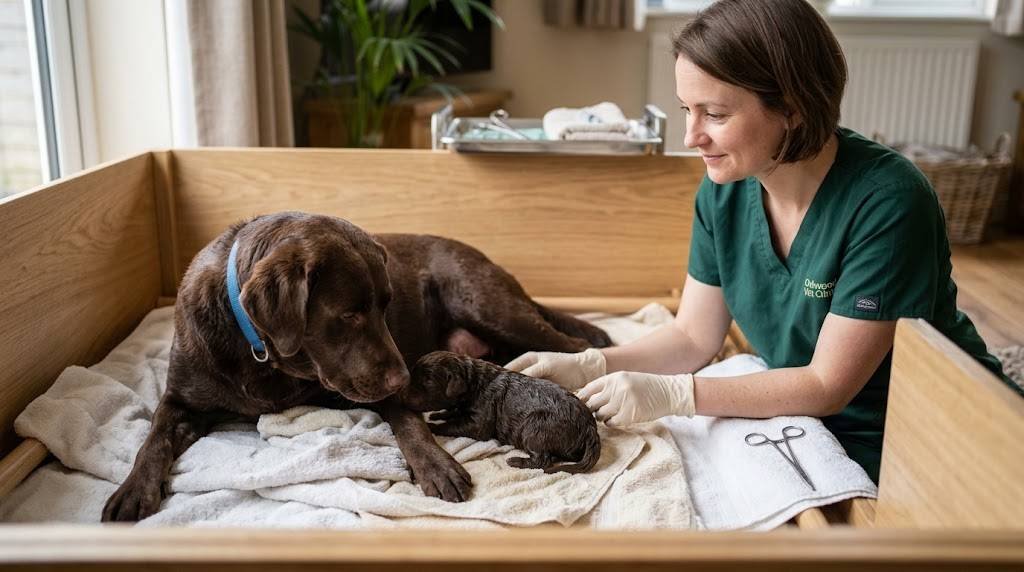
If a puppy remains enclosed in its sac and the mother does not remove it promptly, gently open the membrane around the face, clear visible fluid from the nose and mouth, and rub the puppy with a clean, dry towel. Seek veterinary guidance if the puppy does not begin breathing normally.
Never pull forcefully on a puppy or insert fingers or instruments into the birth canal. Difficult delivery can injure both the mother and puppy, so veterinary assistance is essential when labor does not progress normally.
Stage 3 of Dog Labor: Passing the Placentas
Stage 3 of dog labor involves the delivery of the placentas, which are the organs that supplied oxygen and nutrients to the puppies during pregnancy. The placentas are usually passed shortly after each puppy is born, although several may be delivered close together.
What Happens During Stage 3?
After a puppy is delivered, the mother may continue having mild uterine contractions that help expel the placenta. She often licks her newborn, chews through the umbilical cord, and may eat the placenta.
It is common for a dog to eat some placentas, but eating too many can cause vomiting or diarrhea. You do not need to encourage this behavior.
How Many Placentas Should a Dog Pass?
Ideally, there should be one placenta for each puppy. However, placentas may pass together or go unnoticed because the mother eats them or cleans the whelping area.
Keep a record of the puppies and placentas whenever possible. If you suspect that a placenta has been retained, contact your veterinarian for advice.
Signs of a Retained Placenta or Complication
Contact a veterinarian if your dog develops any of the following signs after delivery:
- Foul-smelling vaginal discharge.
- Fever, marked lethargy, or loss of appetite.
- Persistent straining after the puppies have been delivered.
- Heavy bleeding or worsening abdominal discomfort.
- Neglect of the puppies or signs of severe illness.
Some dark green or reddish-brown discharge can occur normally around whelping. However, discharge with a foul odor or accompanied by illness should not be ignored.
Proper monitoring during this stage helps identify possible complications early and supports a safer recovery for the mother and her newborn puppies.
How to Tell If Your Dog Has Finished Giving Birth
A dog has usually finished giving birth when contractions stop, she becomes comfortable, and she focuses on cleaning and nursing her puppies. However, a quiet period does not always mean labor is complete, especially if more puppies are expected.
Signs Your Dog Has Finished Labor
- Contractions have stopped: Active pushing ends, and the mother appears relaxed.
- She cares for her puppies: She cleans, nurses, and stays close to the newborns.
- Her breathing settles: Panting and restlessness gradually decrease.
- No more puppies arrive: Delivery has stopped, and the mother shows no signs of renewed active labor.
- Her behavior returns to normal: She becomes calmer and may drink water or rest.
These signs can suggest that delivery is complete, but they cannot confirm it with certainty.
How Do You Know If More Puppies Are Still Inside?
The most reliable way to confirm that all puppies have been delivered is to compare the birth with a veterinarian’s assessment of the expected litter size. Prenatal X-rays taken late in pregnancy can help count puppies, while veterinary examination or imaging may be needed if the number delivered is uncertain.
If your dog stops delivering puppies for more than two hours and you believe more remain, contact your veterinarian. Seek urgent help sooner if she has strong contractions without producing a puppy, heavy bleeding, severe pain, or weakness.
What to Do After the Last Puppy Is Born
Once delivery appears complete, provide fresh water, a comfortable resting area, and an opportunity for the puppies to nurse. Check that each newborn is breathing normally and staying warm.
Arrange postpartum veterinary care as recommended, particularly if the birth was difficult or you are uncertain whether every puppy and placenta has been delivered. Early assessment can help identify problems before they become serious.
How to Care for Your Dog During Labor
Proper care during labor means keeping your dog comfortable, monitoring the delivery, and recognizing problems early. Most dogs can give birth naturally without much intervention, but they need a clean environment and access to veterinary help if complications occur.
Essential Care Tips During Labor
- Provide a quiet space: Keep the whelping area clean, warm, and free from unnecessary disturbances.
- Keep fresh water nearby: Encourage drinking when your dog is comfortable enough.
- Monitor each puppy: Check that newborns are breathing, staying warm, and nursing.
- Record delivery times: Note when each puppy is born and watch for prolonged gaps.
- Avoid unnecessary handling: Let the mother care for her puppies unless they need assistance.
- Keep your veterinarian’s number ready: Difficult labor can require urgent treatment.
When Should You Contact a Veterinarian?
Seek urgent veterinary assistance if your dog has strong contractions for 20–30 minutes without delivering a puppy, a puppy becomes stuck, or she develops heavy bleeding, severe weakness, or obvious distress.
Do not give medications to speed up labor or attempt to pull out a puppy without veterinary guidance. These actions can cause serious harm.
The most important rule is to observe without interfering unnecessarily. A calm environment, careful monitoring, and timely veterinary care help protect both the mother and her puppies.
Warning Signs of Complications During Dog Labor
Complications during dog labor can put both the mother and her puppies at risk. Recognizing warning signs early and contacting a veterinarian promptly can prevent serious outcomes.
Signs That Require Veterinary Attention
- Strong contractions without a puppy: Straining for 20–30 minutes without delivery may indicate obstructed labor.
- Long delays between puppies: Contact your veterinarian if more than two hours pass and you suspect additional puppies remain.
- A stuck puppy: Never pull forcefully; seek immediate veterinary help.
- Heavy bleeding: Significant bleeding or continuous fresh blood requires urgent assessment.
- Abnormal discharge: Foul-smelling discharge or concerning discharge before the first puppy may signal a problem.
- Severe weakness or collapse: These are emergencies and require immediate veterinary care.
- Green discharge before the first puppy: Contact your veterinarian promptly, especially if a puppy does not follow soon.
What Should You Do If Labor Stops?
A pause does not always mean something is wrong. Some dogs rest between puppies, but it can be difficult to distinguish normal rest from stalled labor.
If delivery stops unexpectedly, the mother appears uncomfortable, or you are unsure whether more puppies remain, contact your veterinarian for advice. Do not wait if she is actively straining, bleeding heavily, or becoming weak.
Never administer oxytocin, calcium, or other labor medications without veterinary direction. The wrong treatment can worsen an obstruction and endanger the mother and puppies.
What Happens After Dog Labor Is Complete?
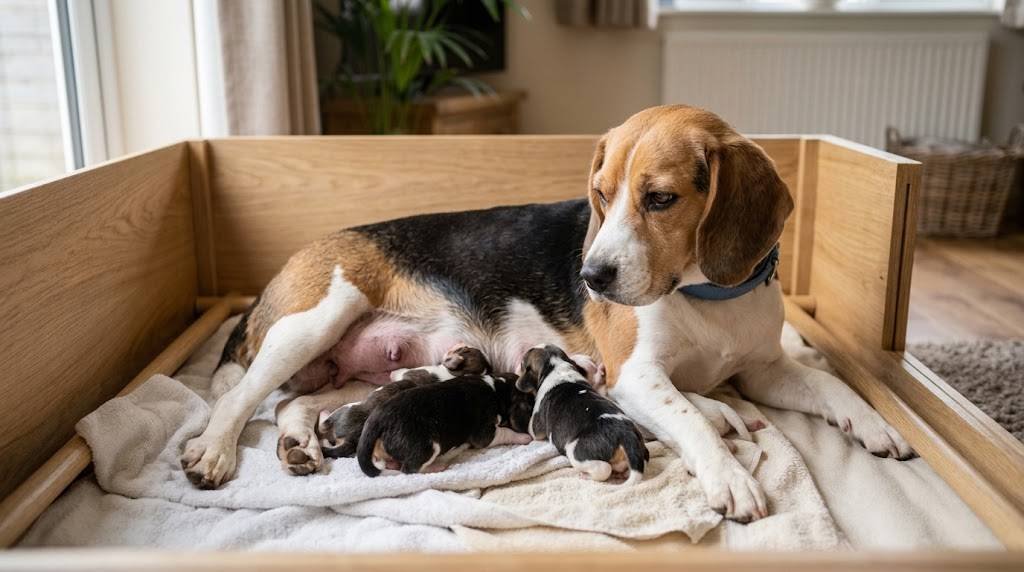
After labor ends, the mother dog needs rest, water, nutritious food, and a clean environment to recover and care for her puppies. The first 24–48 hours are especially important for checking that both the mother and newborns are doing well.
Caring for the Mother After Birth
- Provide fresh water: Nursing increases her fluid needs.
- Offer nutritious food: Feed a high-quality, complete diet suitable for pregnancy and lactation.
- Keep the bedding clean: Replace soiled bedding while maintaining a warm, comfortable nesting area.
- Allow uninterrupted rest: Keep visitors and unnecessary handling to a minimum.
- Monitor her condition: Watch for fever, foul-smelling discharge, heavy bleeding, painful mammary glands, or unusual weakness.
Checking the Newborn Puppies
Healthy newborn puppies should be warm, nurse regularly, and settle comfortably after feeding. Check that each puppy can reach a nipple and is not being pushed away by littermates.
Weigh puppies daily using a suitable digital scale. Failure to gain weight, persistent crying, weakness, or difficulty nursing can indicate a problem requiring prompt veterinary advice.
When Should the Mother and Puppies See a Vet?
Arrange a postpartum check as recommended by your veterinarian, commonly within 24–48 hours after birth. Seek help sooner if the mother appears ill or a puppy is cold, weak, struggling to breathe, or unable to nurse.
Early monitoring helps detect complications and gives the mother and puppies a healthier start.
Conclusion
Understanding the three dog labor stages helps you recognize when your dog is preparing for birth, delivering puppies, and recovering afterward. Most dogs give birth naturally, but careful monitoring is essential to spot problems early.
Prepare a clean, quiet whelping area, keep your veterinarian’s contact details handy, and check that every puppy is breathing normally and nursing. If your dog strains without delivering a puppy, develops heavy bleeding, or appears seriously unwell, seek veterinary help immediately.
With proper preparation and timely care, you can help your dog and her puppies get off to a healthier start.
Frequently Asked Questions About Dog Labor Stages
How many stages of labor do dogs have?
Dogs have three stages of labor: cervical dilation and early contractions, delivery of puppies, and passage of the placentas. The second and third stages often overlap.
How long does dog labor usually last?
The first stage commonly lasts 6–12 hours, while puppy delivery may take several hours. The total duration varies with litter size and individual circumstances.
How can I tell if my dog is in labor?
Common signs include restlessness, nesting, panting, trembling, reduced appetite, and clear vaginal discharge. Active labor usually becomes noticeable when abdominal pushing begins.
How long should a dog wait between puppies?
Puppies may arrive around 30–60 minutes apart, although longer resting periods can occur. Contact a veterinarian if more than two hours pass and you suspect more puppies remain, or sooner if your dog shows distress.
Is it normal for a dog to eat her puppies’ placentas?
Yes, many mother dogs eat the placentas after delivery. However, eating several may cause digestive upset, so there is no need to encourage this behavior.
When should I call a veterinarian during dog labor?
Seek urgent veterinary help if strong contractions continue for 20–30 minutes without producing a puppy, a puppy becomes stuck, heavy bleeding occurs, or the mother becomes severely weak or distressed.
Can I leave my dog alone while she is giving birth?
No. Monitor her from a comfortable distance so you can recognize complications and check newborn puppies. Avoid unnecessary interference, but remain available to provide help or contact a veterinarian.