What Is Eclampsia in Nursing Dogs?
Eclampsia in nursing dogs is a life-threatening condition caused by dangerously low blood calcium (hypocalcemia). It most often develops during lactation, when milk production places heavy demands on the mother’s calcium supply. Without prompt veterinary treatment, it can progress to muscle spasms, seizures, coma, and even death.
Understanding Canine Eclampsia
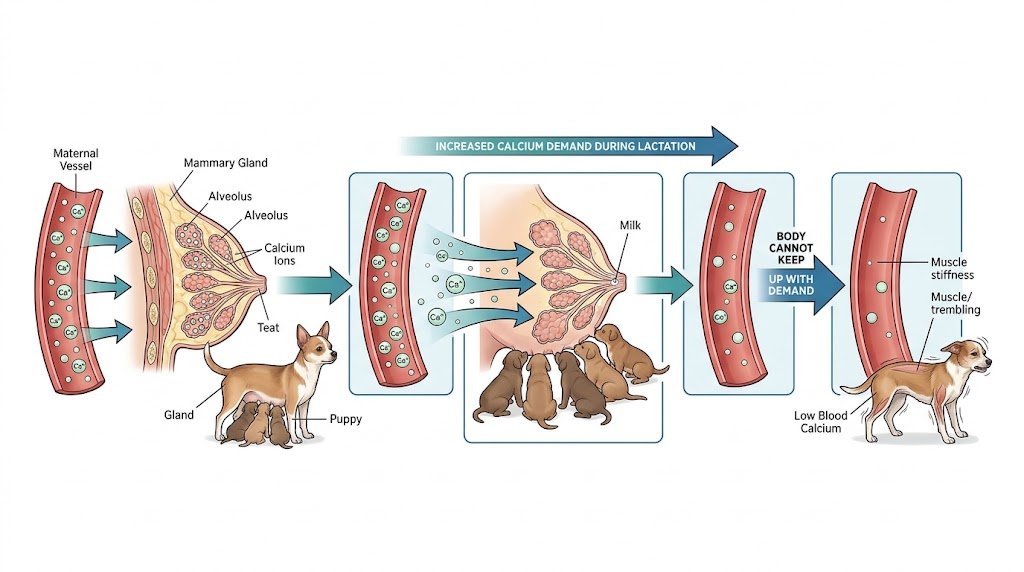
After giving birth, a mother dog uses significant amounts of calcium to produce milk for her puppies. Calcium is essential for normal muscle contractions, nerve function, and other important body processes.
When her body cannot maintain enough calcium in the bloodstream to meet these demands, hypocalcemia can develop. If calcium levels fall severely, the resulting condition is known as eclampsia.
Veterinary references report that the condition most commonly affects small-breed nursing dogs, particularly those feeding large litters. However, any nursing dog can develop eclampsia, regardless of breed or litter size.
Is Milk Fever in Dogs the Same as Eclampsia?
Yes. Milk fever in dogs is a common name for eclampsia, also known as postpartum hypocalcemia or puerperal tetany.
These terms describe the same underlying problem: dangerously low blood calcium associated with pregnancy or, more commonly, lactation.
When Does Eclampsia Usually Occur?
Eclampsia most commonly develops around 2–3 weeks after giving birth, when the mother’s milk production is often at its highest. However, it can occur at other stages of lactation and, less commonly, during late pregnancy or labor.
Key points:
- Eclampsia results from dangerously low blood calcium.
- It is more common in small-breed dogs nursing large litters.
- Peak lactation is an important risk period.
- It is a veterinary emergency, not a normal part of motherhood.
If your nursing dog shows unusual panting, restlessness, muscle twitching, or stiffness, contact a veterinarian immediately. Do not wait for seizures to develop.
What Causes Eclampsia in Nursing Dogs?
Eclampsia in nursing dogs develops when the mother’s blood calcium level drops dangerously low because her body cannot replace calcium as quickly as it is being used. The main trigger is the high calcium demand of milk production, especially when a mother is nursing a large or rapidly growing litter.
Calcium Loss During Milk Production
A nursing dog transfers significant amounts of calcium to her puppies through milk. As the puppies grow, their milk intake may increase, placing even greater demands on the mother’s calcium supply.
If her body cannot release or absorb enough calcium to keep up, blood calcium levels can fall. This condition is called hypocalcemia, and severe hypocalcemia can lead to eclampsia.
Why Some Nursing Dogs Cannot Maintain Normal Calcium Levels
A dog’s body normally controls blood calcium through hormones, including parathyroid hormone. These hormones help regulate calcium absorption, release calcium from bones, and maintain a stable blood calcium level.
During lactation, calcium demand can rise faster than the body can compensate. This imbalance is more likely to become dangerous in dogs producing large amounts of milk.
Can Calcium Supplements During Pregnancy Cause Eclampsia?
Yes. Giving a pregnant dog extra calcium without veterinary guidance can increase the risk of eclampsia after birth.
When a dog receives excessive calcium during pregnancy, her body may reduce its natural calcium-regulating response. After delivery, when milk production suddenly increases calcium demand, her body may struggle to maintain normal blood calcium levels.
Important: Do not give calcium supplements during pregnancy or lactation unless your veterinarian recommends them. A complete, balanced diet and veterinary guidance are safer than routine supplementation.
When Does Eclampsia Usually Occur After a Dog Gives Birth?
Eclampsia in nursing dogs most commonly develops during the first few weeks after giving birth, particularly when puppies are around 1–4 weeks old. Many cases occur approximately 2–3 weeks after whelping, when milk production and the puppies’ demand for calcium are increasing.
Why the Risk Increases During the First Few Weeks
During early lactation, puppies grow quickly and depend heavily on their mother’s milk. As milk production increases, the mother loses more calcium, which can cause her blood calcium level to drop if her body cannot replace it adequately.
The risk may be higher when:
- The mother is nursing a large litter.
- Puppies are growing rapidly and feeding frequently.
- The mother is small or has limited nutritional reserves.
Can Eclampsia Occur Immediately After Birth or Later?
Yes. Although eclampsia is most common during early lactation, it can develop at other times while a dog is producing milk. It may occur shortly after delivery or later during the nursing period.
Do not assume your dog is safe just because she has passed the first few weeks after giving birth. Watch for warning signs throughout lactation and contact a veterinarian immediately if you notice unusual panting, restlessness, muscle twitching, stiffness, or weakness.
Which Dogs Are at Higher Risk of Eclampsia?
Although any nursing dog can develop eclampsia, some mothers are more vulnerable because of their size, milk production, or the demands of their litter. Small and toy breeds are particularly at risk, but larger dogs are not completely protected.
Small and Toy Breeds
Breeds such as Chihuahuas, Pomeranians, Toy Poodles, and Dachshunds are commonly associated with eclampsia. Their smaller bodies have less capacity to maintain calcium balance when milk production places heavy demands on them.
However, breed alone does not determine whether a dog will develop the condition.
Dogs Nursing Large Litters
A mother nursing many puppies may produce more milk and lose more calcium than a dog feeding a smaller litter. This increased demand can make it harder for her body to maintain normal blood calcium levels.
Dogs With High Milk Production
Some mothers naturally produce substantial amounts of milk. Their calcium requirements may rise significantly during lactation, increasing the risk of hypocalcemia.
First-Time Mothers and Dogs With Previous Eclampsia
A first-time mother can develop eclampsia, just like an experienced dog. A previous episode is also important because eclampsia can recur during a future pregnancy or nursing period.
Key Points:
- Small and toy breeds have a higher risk.
- Large, rapidly growing litters can increase calcium demand.
- High milk production places additional pressure on calcium reserves.
- Any nursing dog can develop eclampsia, regardless of breed or litter size.
If your dog has several risk factors, ask your veterinarian about a lactation monitoring plan rather than waiting for symptoms to appear.
What Are the Symptoms of Eclampsia in Nursing Dogs?
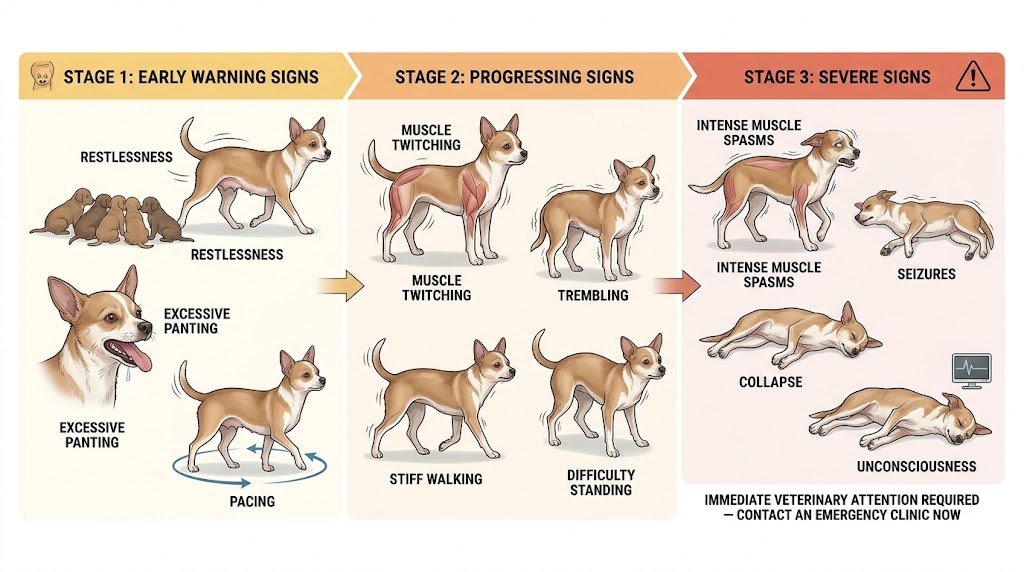
The symptoms of eclampsia in nursing dogs often begin with subtle behavioural changes before progressing to muscle spasms, stiffness, and seizures. Recognizing the early warning signs is critical because this condition can become life-threatening within a short time.
Early Signs of Dog Eclampsia
Early symptoms may look like ordinary tiredness or discomfort after giving birth. However, unusual behaviour in a nursing mother should never be ignored.
Watch for:
- Restlessness, nervousness, or unusual agitation
- Excessive panting, even when the dog is resting
- Pacing or difficulty settling down
- Stiff walking or an unusual gait
- Increased sensitivity or unusual behaviour
- Reduced interest in eating or caring for puppies
Advanced Symptoms of Eclampsia
As blood calcium levels fall further, the nervous and muscular systems become increasingly affected. Signs may include:
- Muscle twitching or trembling
- Facial muscle spasms
- Stiff legs or difficulty walking
- Muscle cramps and uncontrolled movements
- Fever and a rapid heartbeat
- Disorientation or inability to stand normally
Severe Symptoms: Seizures and Collapse
Without emergency treatment, eclampsia can progress to severe muscle spasms, seizures, loss of consciousness, coma, and death.
<blockquote>
**Emergency warning:** If your nursing dog develops muscle twitching, stiffness, severe panting, or seizures, seek emergency veterinary care immediately. Do not wait for symptoms to become more severe.
</blockquote>
Eclampsia Symptoms at a Glance
| Stage | Common signs |
|---|---|
| Early | Restlessness, panting, pacing |
| Progressing | Trembling, twitching, stiff walking |
| Severe | Muscle spasms, seizures, collapse, unconsciousness |
Remember: Not every dog develops symptoms in the same order. Even mild-looking signs can indicate an emergency in a nursing mother.
What Should You Do If Your Nursing Dog Shows Signs of Eclampsia?
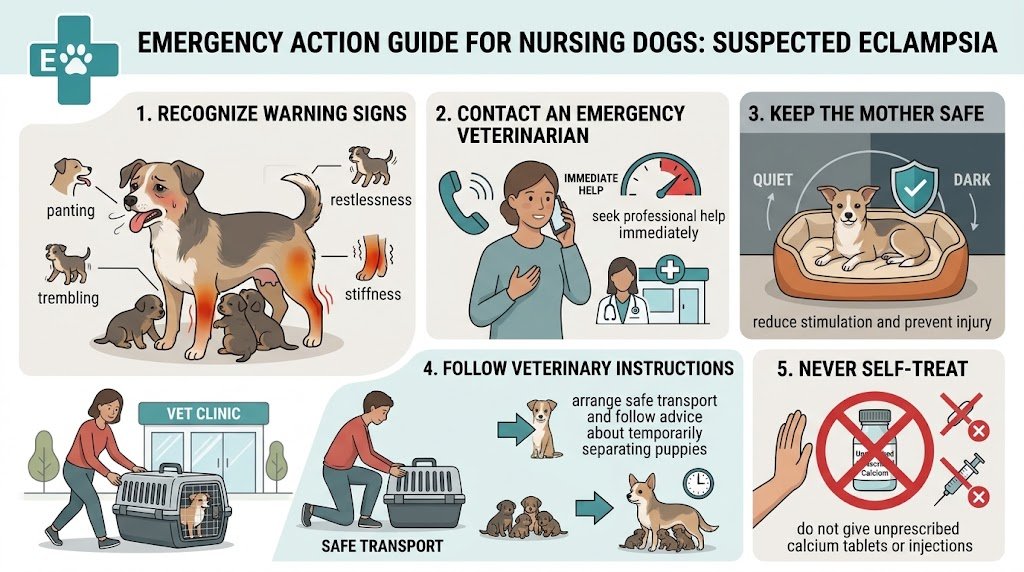
If you suspect eclampsia in your nursing dog, treat it as a veterinary emergency. Her condition can deteriorate rapidly, so contact an emergency veterinarian and arrange immediate transport. Do not wait for a seizure or attempt to treat her at home.
Step-by-Step Actions to Take
- Contact a veterinarian immediately. Explain that your dog recently gave birth and may have signs of low blood calcium.
- Keep her calm and comfortable. Reduce noise, activity, and unnecessary handling.
- Prevent injuries. If she is trembling or having spasms, move nearby objects away and keep her in a safe space.
- Do not force food, water, or supplements. A dog with muscle spasms or altered awareness may choke or aspirate.
- Arrange safe transport. Follow the veterinary team’s instructions while taking her to the clinic.
What Should You Do With the Puppies?
If the mother is showing signs of eclampsia, separate the puppies from her during the emergency and keep them warm in a safe place. Nursing increases the mother’s calcium demand, so your veterinarian may recommend temporarily stopping nursing or using an appropriate milk replacer.
Ask the veterinarian how to feed and care for the puppies while the mother receives treatment. Do not return them to nursing until the veterinarian confirms it is safe.
What You Should Never Do
- Do not give human calcium tablets or injections without veterinary instructions.
- Do not attempt to administer injectable calcium at home.
- Do not wait to see whether symptoms disappear.
- Do not assume panting and restlessness are normal postpartum behaviour.
How Do Veterinarians Diagnose Eclampsia in Dogs?
Veterinarians diagnose eclampsia in dogs by evaluating the mother’s symptoms, recent pregnancy and nursing history, physical condition, and blood calcium levels. Because the condition can progress quickly, treatment may begin before all test results are available if eclampsia is strongly suspected.
Physical Examination and Medical History
The veterinarian will ask when the dog gave birth, how many puppies she is nursing, and when the symptoms started. They will also check for muscle twitching, stiffness, tremors, abnormal movement, elevated body temperature, and changes in heart rate.
These findings help identify whether the symptoms are consistent with dangerously low calcium during lactation.
Blood Calcium Testing
A blood test is essential for confirming hypocalcemia. The veterinarian may measure:
- Total blood calcium: Measures the overall calcium concentration in the blood.
- Ionized calcium: Measures the biologically active form of calcium and can provide additional diagnostic information.
A total blood calcium level below approximately 7 mg/dL is strongly suggestive of eclampsia in dogs when the clinical signs fit.
Additional Tests
Depending on the dog’s condition, the veterinarian may recommend additional blood tests to assess glucose, electrolytes, kidney function, and other possible causes of neurological or muscular symptoms.
An electrocardiogram (ECG) may also be used when calcium treatment is given because changes in blood calcium can affect the heart’s electrical activity.
Why Early Diagnosis Matters
Eclampsia can resemble other conditions that cause trembling, weakness, or seizures. Prompt examination and calcium testing help veterinarians identify the problem and begin appropriate treatment before life-threatening complications develop.
How Is Eclampsia in Dogs Treated?
Eclampsia in dogs is treated as an emergency, usually with carefully administered intravenous (IV) calcium under veterinary supervision. The main goal is to restore a safe blood calcium level, control symptoms, and prevent complications such as seizures and dangerous heart rhythm changes.
Intravenous Calcium Treatment
The standard treatment for a dog with clinical eclampsia is slow IV calcium gluconate administration. The veterinarian calculates the appropriate dose based on the dog’s condition and monitors her heart rate and ECG during treatment.
Calcium must be given carefully because administering it too quickly or in excessive amounts can cause serious heart complications. Many dogs begin improving during treatment, but they still require veterinary observation.
Additional Supportive Care
Depending on symptom severity, treatment may also include:
- Medication to control seizures when necessary.
- Cooling measures if the dog has an elevated body temperature.
- Monitoring of blood calcium and other important blood values.
- Additional calcium supplementation when prescribed after initial stabilization.
- Treatment of any underlying or related health problems.
Should Puppies Continue Nursing?
The veterinarian may recommend temporarily separating the puppies from their mother to reduce calcium loss through milk. Depending on the mother’s recovery and the puppies’ age, they may need a suitable commercial puppy milk replacer or another feeding plan.
The mother should not resume nursing until the veterinarian considers it safe. Follow-up monitoring is important because calcium levels can fall again.
Can Eclampsia Be Treated at Home?
No. Suspected eclampsia requires immediate veterinary care. Oral calcium alone is not an appropriate substitute for emergency treatment in a dog experiencing clinical signs.
How Long Does It Take a Dog to Recover From Eclampsia?
A dog with eclampsia may begin improving during veterinary calcium treatment, but full recovery depends on how severe the condition has become and whether calcium levels remain stable. Even when symptoms disappear quickly, she needs veterinary monitoring because low calcium can return.
Early Improvement After Treatment
Many dogs show noticeable improvement as their blood calcium levels return toward a safe range. Muscle twitching, trembling, restlessness, and stiffness may gradually decrease after treatment begins.
However, improvement does not mean the emergency is over. The veterinarian may repeat blood tests and monitor the dog’s heart and neurological condition before allowing her to go home.
Recovery at Home
After discharge, follow the veterinarian’s instructions carefully. Your dog’s recovery plan may include:
- Prescribed oral calcium supplementation.
- A complete, balanced diet suitable for a nursing mother.
- Follow-up blood calcium testing.
- Temporary separation from puppies or a supervised return to nursing.
- Monitoring for recurring panting, restlessness, trembling, or stiffness.
Can Eclampsia Return?
Yes. Eclampsia can recur if the mother continues producing milk and her calcium demand remains high. Contact your veterinarian immediately if symptoms return, even if she has already received treatment.
Key takeaway: Recovery requires more than stopping the initial symptoms. Veterinary follow-up, an appropriate feeding plan, and careful monitoring help protect the mother during the remainder of lactation.
How to Prevent Eclampsia in Nursing Dogs
Preventing eclampsia in nursing dogs starts with proper nutrition, veterinary guidance, and monitoring the mother throughout lactation. Although the condition cannot always be prevented, reducing avoidable risk factors can help protect the mother from dangerously low blood calcium.
Feed a Complete and Balanced Diet
Give your pregnant and nursing dog a high-quality, nutritionally complete diet appropriate for reproduction and lactation. Her nutritional needs increase during these stages, especially when she is producing milk for a growing litter.
Avoid unbalanced homemade diets unless they have been formulated by a veterinary nutritionist.
Avoid Unnecessary Calcium Supplements During Pregnancy
One of the most important prevention steps is avoiding routine calcium supplementation during pregnancy unless your veterinarian specifically recommends it.
Excess calcium during pregnancy can interfere with the body’s natural calcium regulation and increase the risk of eclampsia after birth.
Do not give calcium tablets, powders, or injections simply because your dog is pregnant or nursing.
Monitor the Mother During Lactation
Pay particular attention during the first few weeks after delivery, when eclampsia commonly develops.
Watch for:
- Unusual panting or restlessness.
- Muscle twitching or trembling.
- Stiff walking or difficulty standing.
- Changes in appetite or behaviour.
Contact your veterinarian immediately if these signs appear.
Manage Large Litters With Veterinary Guidance
A mother nursing many puppies may face greater calcium demands. Ask your veterinarian to assess her nutritional needs and advise whether the puppies need supplemental feeding to reduce the demands on the mother.
Arrange Postpartum Veterinary Checks
Regular veterinary checks help assess the mother’s health, body condition, nutrition, and recovery after birth. Dogs with a previous episode of eclampsia may need particularly careful monitoring during future pregnancies and nursing periods.
Prevention reminder: A balanced diet, avoiding unnecessary calcium supplements, and early recognition of symptoms are key steps in reducing the risk of eclampsia.
Common Mistakes and Misconceptions About Dog Milk Fever
Dog milk fever, also known as eclampsia, is sometimes misunderstood by dog owners, especially during the first weeks after birth. Certain well-intentioned care practices can increase risk or delay emergency treatment.
Mistake 1: Giving Calcium Supplements During Pregnancy
Many owners assume extra calcium will protect a pregnant dog from eclampsia. However, unnecessary calcium supplementation during pregnancy can interfere with normal calcium regulation and increase the risk of problems during lactation.
Only give calcium supplements when your veterinarian specifically recommends them.
Mistake 2: Assuming Only Small Dogs Develop Eclampsia
Small and toy breeds are at higher risk, but any nursing dog can develop eclampsia. Large breeds and mothers nursing small litters are not completely protected.
Mistake 3: Confusing Early Symptoms With Normal Postpartum Behaviour
Panting, restlessness, and unusual agitation may seem like ordinary tiredness after giving birth. However, these can be early dog eclampsia symptoms, particularly when they occur alongside muscle twitching or stiffness.
Do not dismiss unusual changes in a nursing mother’s behaviour.
Mistake 4: Trying to Treat Eclampsia With Home Remedies
Human calcium tablets, homemade remedies, and unprescribed supplements cannot replace emergency veterinary treatment. Giving the wrong dose or using injectable calcium without proper monitoring can be dangerous.
Mistake 5: Waiting Until the Dog Has a Seizure
Seizures are a severe sign, not a symptom owners should wait for before seeking help. Early veterinary treatment gives the mother a better chance of avoiding serious complications.
Remember: Eclampsia is a medical emergency, not a routine nutritional problem. Recognizing early symptoms and getting veterinary care promptly are essential for protecting a nursing dog.
Frequently Asked Questions About Eclampsia in Nursing Dogs
1. What Is the First Sign of Eclampsia in a Nursing Dog?
Early signs often include restlessness, excessive panting, pacing, and unusual agitation. Muscle twitching, trembling, and stiffness may develop as the condition progresses. Contact a veterinarian immediately if you notice these symptoms.
2. How Quickly Can Eclampsia Develop in Dogs?
Eclampsia can progress rapidly, sometimes within hours. A nursing dog may initially appear restless or uncomfortable before developing muscle spasms, seizures, or collapse. Prompt veterinary treatment is essential.
3. Can a Dog Die From Milk Fever?
Yes. Severe, untreated eclampsia can cause dangerous seizures, overheating, coma, and death. It is a life-threatening emergency that requires immediate veterinary attention.
4. Can Eclampsia Occur in Large-Breed Dogs?
Yes. Small and toy breeds are more commonly affected, but any nursing dog can develop eclampsia. Large litters and high milk production can increase calcium demands regardless of breed.
5. Should I Give My Nursing Dog Calcium Supplements?
Only give calcium supplements when your veterinarian recommends them. Unnecessary supplementation during pregnancy can increase the risk of eclampsia after birth. A nursing dog’s calcium needs should be assessed professionally.
6. Can Puppies Continue Nursing if Their Mother Has Eclampsia?
Not necessarily. The veterinarian may recommend temporarily separating the puppies to reduce calcium loss through milk. Puppies may need commercial puppy milk replacer until nursing can safely resume.
7. Can Eclampsia Happen Again After Treatment?
Yes. Eclampsia can recur during the same nursing period or in a future pregnancy. Veterinary follow-up, calcium monitoring, and an appropriate feeding plan help reduce the risk of another episode.
References
- MSD Veterinary Manual. Eclampsia in Dogs and Cats. Veterinary guidance on causes, symptoms, diagnosis, treatment, and prevention of eclampsia.
- VCA Animal Hospitals. Eclampsia in Dogs. Information on risk factors, clinical signs, emergency treatment, and nursing dog care.
- Veterinary Partner (VIN). Eclampsia in Dogs and Cats. Veterinary information about calcium imbalance, clinical management, and recurrence.